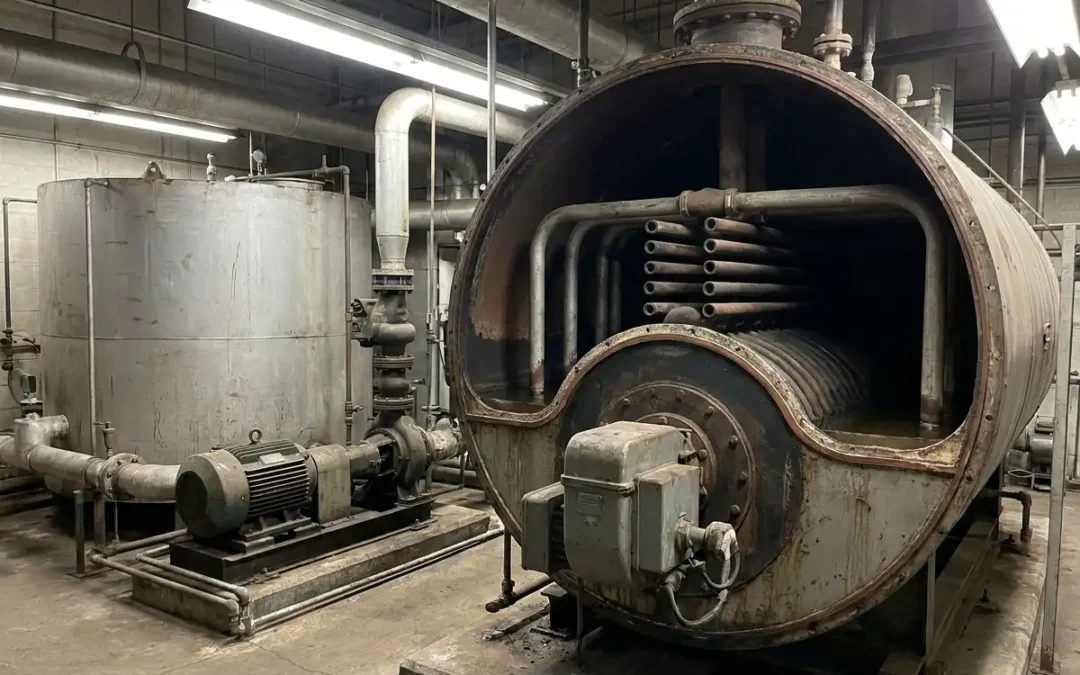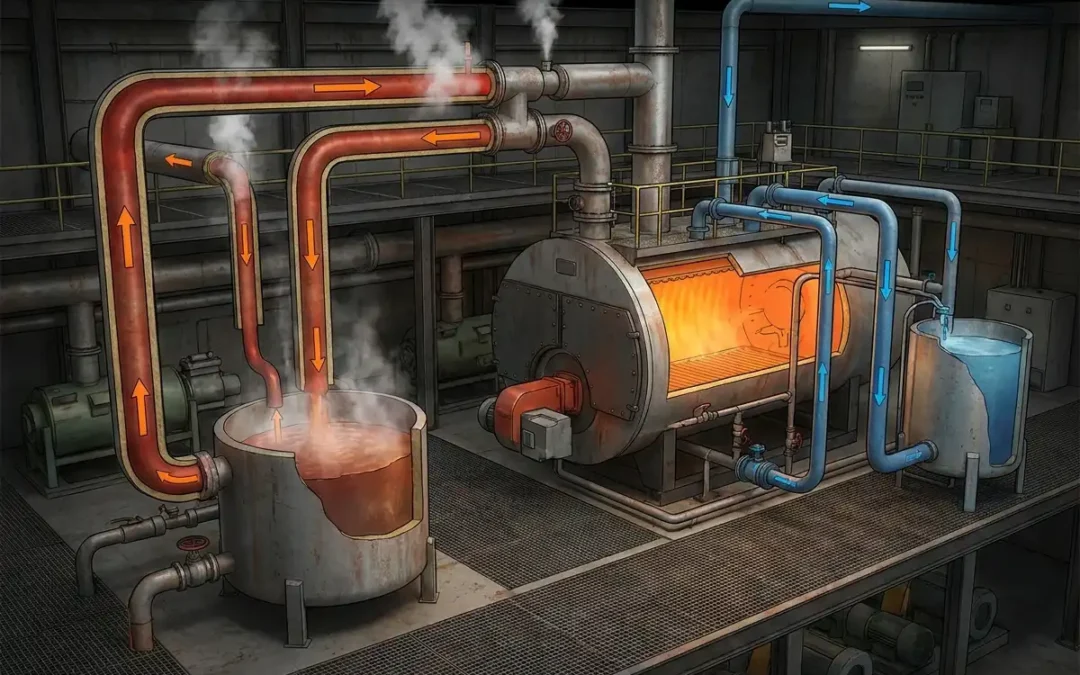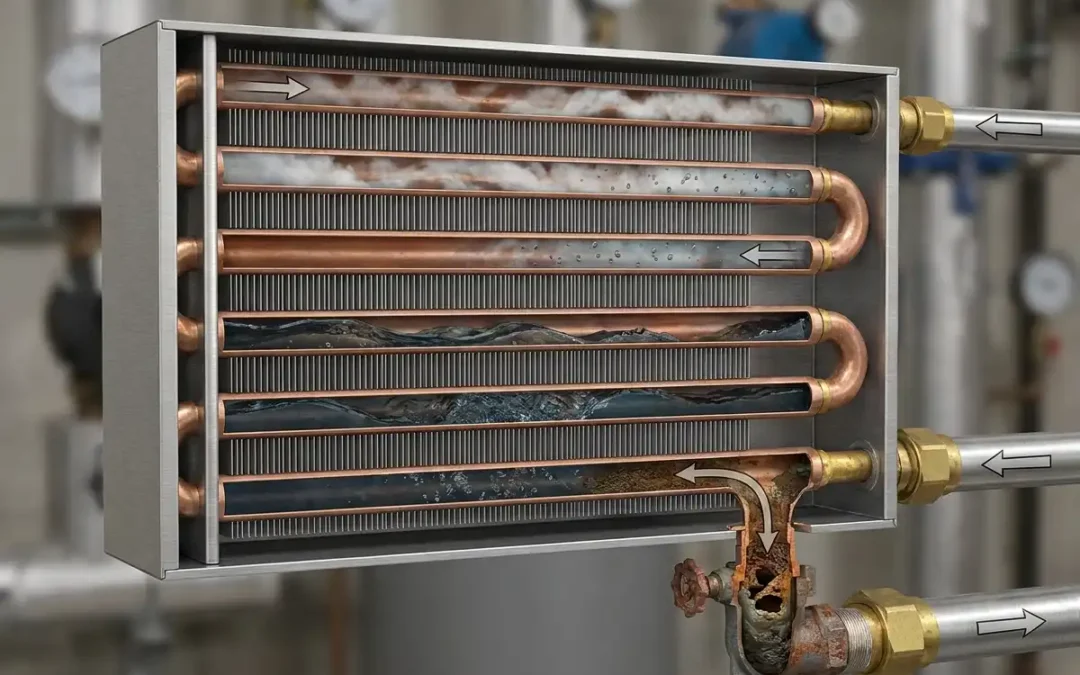
Boiler water may look clear while it is depositing hardness on tubes, carrying dissolved oxygen into pressure parts, foaming into the steam line, or concentrating dissolved solids beyond the treatment program’s control. By the time scale or corrosion becomes visible, heat-transfer surfaces may already be damaged.
Commercial boiler water treatment is a managed cycle. Incoming makeup water is conditioned, returned condensate is evaluated, oxygen is reduced, chemicals are applied where appropriate, boiler-water concentration is controlled, and results are sampled over time. No single chemical replaces that complete program. “Water treatment is not a drum of chemical beside the boiler. It is control of every place new water, oxygen, contamination, and concentration enter the cycle,” says one of Choice Mechanical’s lead boiler service technicians.
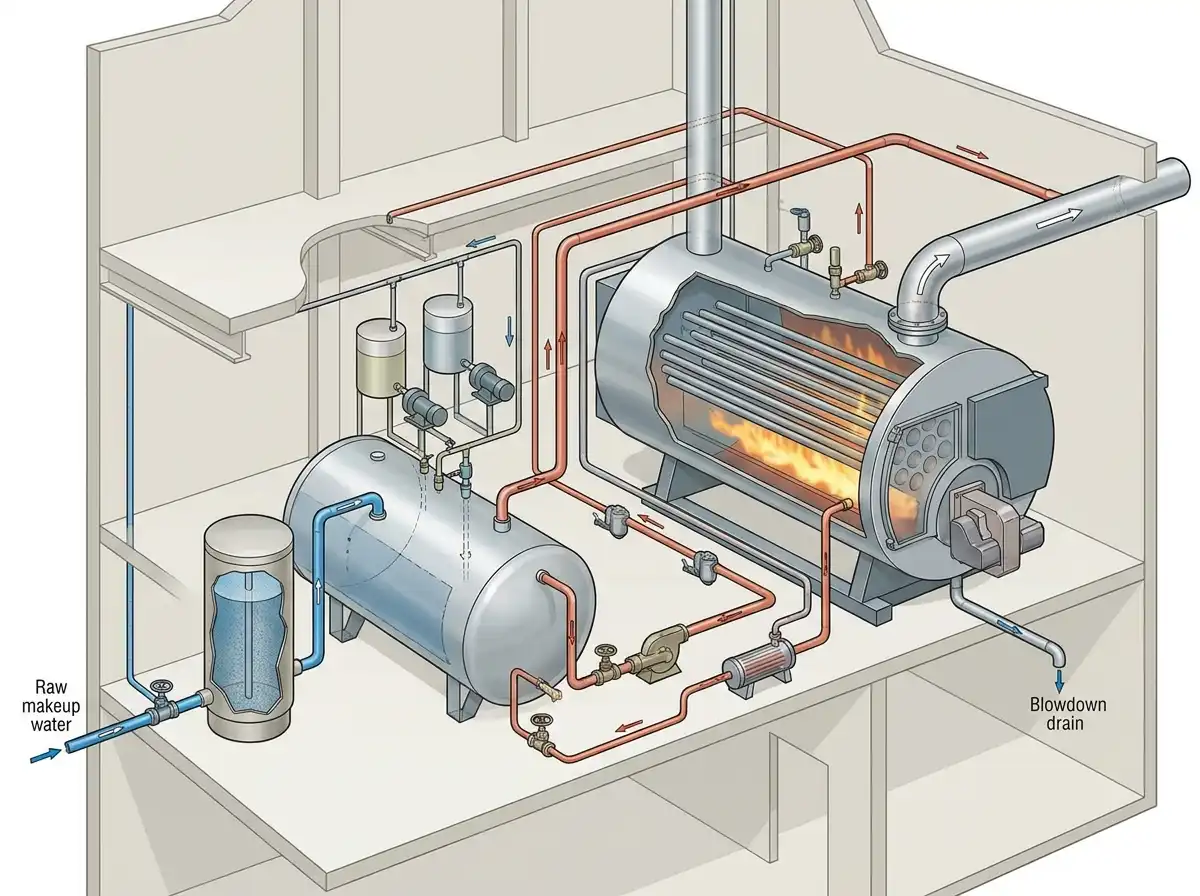
Follow the Water Through the Boiler Plant
- Raw makeup water enters the facility. Its hardness, alkalinity, dissolved solids, silica, oxygen, and other characteristics depend on the source.
- Pretreatment changes selected constituents. A softener may remove hardness; other applications may require filtration, reverse osmosis, or different treatment.
- Makeup blends with returned condensate. Clean condensate reduces the amount of new water, heat, and chemicals required.
- Feedwater equipment supplies the boiler. Heating and deaeration can reduce dissolved gases, while chemical feed supports the specified program.
- Steam leaves dissolved solids behind. As water boils, many impurities remain and become concentrated.
- Blowdown removes concentrated boiler water. The rate must balance chemistry control with heat and water loss.
The Four Problems a Treatment Program Must Control
| Problem | How it develops | Possible consequence |
|---|---|---|
| Scale and deposits | Hardness, silica, iron, or suspended material reaches hot surfaces | Reduced heat transfer, overheating, fuel waste, tube failure |
| Corrosion | Oxygen, carbon dioxide, low pH, chemical imbalance, or contamination attacks metal | Pitting, thinning, leaks, return-system damage |
| Foaming and carryover | High dissolved solids, oil, alkalinity, load changes, or poor level control affects steam separation | Wet or contaminated steam, unstable water level, deposits downstream |
| Excess blowdown | Manual settings or poor control discharge more hot water than necessary | Fuel, water, chemical, and sewer cost |
Hardness Can Become an Insulating Layer
Calcium and magnesium hardness can precipitate under boiler conditions and form scale. Because scale resists heat flow, tube metal runs hotter to transfer the same energy into the water. Thin deposits can have an outsized effect in high-heat-flux areas.
A softener must do more than exist. Brine, regeneration, valve operation, flow, resin condition, bypass position, and outlet hardness all need attention. A hardness excursion should trigger investigation before the boiler hides the evidence inside a deposit.
Dissolved Oxygen Creates Concentrated Pitting
Oxygen corrosion often appears as localized pits rather than uniform rust. Makeup-water temperature, deaerator operation, feed-tank venting, pump seals, chemical scavenger control, and idle layup can influence oxygen exposure.
High makeup-water demand deserves immediate attention. Every gallon replacing lost steam or condensate can introduce more oxygen and minerals while increasing fuel and treatment use. A “water problem” may begin with leaking returns, failed traps, open vents, or process loss elsewhere in the facility.
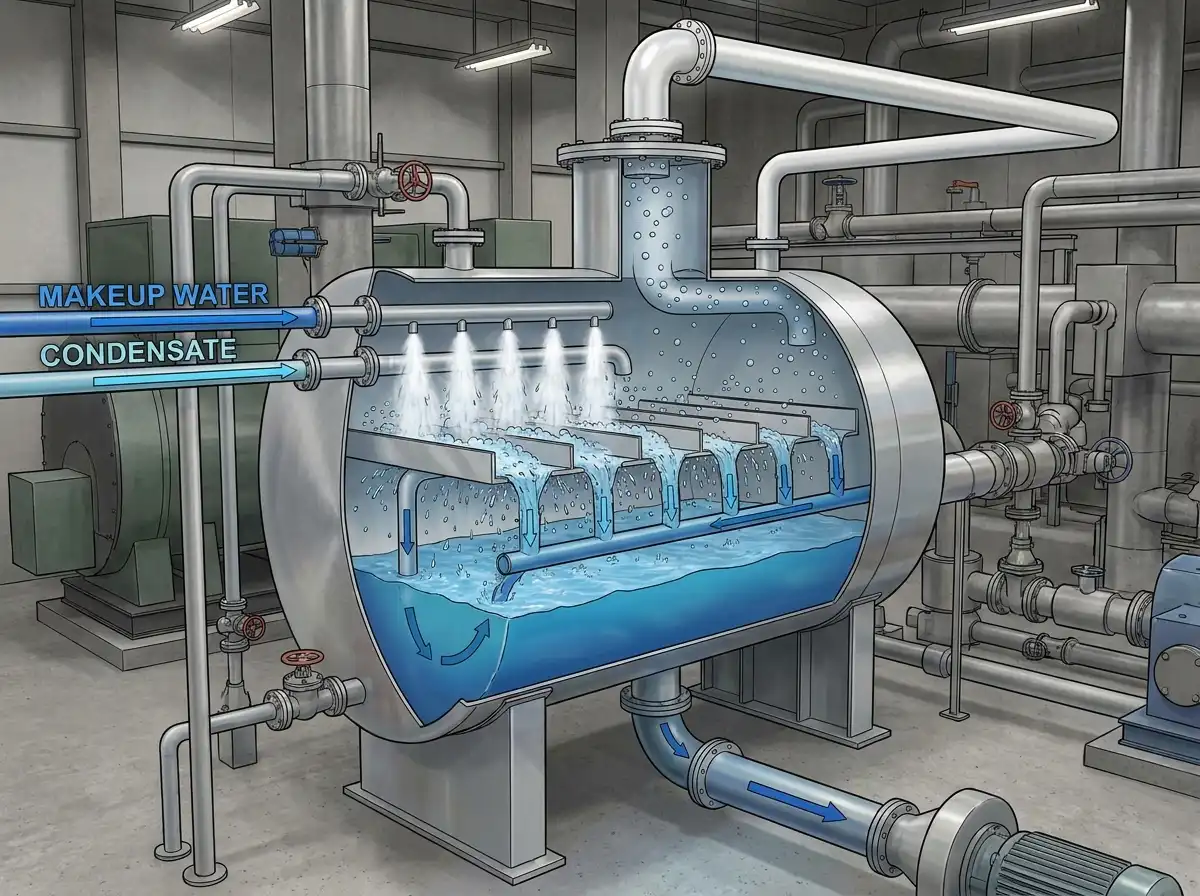
Condensate Is Valuable Only When It Is Clean
Returned condensate carries heat and treated water back to the plant. Recovering it can reduce fuel, makeup, softener loading, and chemical demand. Contaminated condensate, however, can introduce oil, process chemicals, or other material into the boiler.
Facilities should define which returns are monitored, which contaminants matter, and what action occurs when a limit is exceeded. Automatically returning every available stream is not always the safest choice.
Choice Mechanical services boiler feed and condensate tank systems, including the pumps, controls, and vessels that move treated water through the plant.
Blowdown Controls Concentration at a Cost
As steam leaves, dissolved solids remain. Blowdown removes part of the concentrated boiler water and replaces it with lower-concentration feedwater. Too little blowdown can contribute to solids, foaming, and carryover. Too much throws away hot treated water.
Surface or continuous blowdown and bottom blowdown serve different purposes. Conductivity control, operator testing, boiler design, pressure, load, and treatment-provider guidance determine the appropriate program. Blowdown heat recovery may be worth evaluating in larger or heavily loaded plants.
Sampling Location Changes the Meaning of a Test
A water result without a sample location can be difficult to interpret. Raw makeup, softened water, feedwater, boiler water, and condensate answer different questions. Sample coolers and safe procedures may be required to obtain representative boiler-water samples without exposing personnel to hot pressurized fluid. “A perfect test result from the wrong sample point can support the wrong conclusion. Label the source, time, load, and method with every reading. says one of Choice Mechanical’s lead boiler service technicians.
- Raw water: establishes incoming water characteristics and seasonal change.
- Softener outlet: confirms hardness removal and identifies breakthrough.
- Feedwater: reflects the blend of makeup, condensate, heat, and treatment entering the boiler.
- Boiler water: shows concentration and internal treatment conditions.
- Condensate return: helps evaluate corrosion and process contamination.
Example: The Softener Works Except During Peak Makeup
A food-production facility in Central Indiana records acceptable softener outlet hardness during morning rounds. Tube deposits continue to appear, and chemical use rises. The softener is considered functional because each manual sample passes.
Review shows that process steam loss drives high makeup flow during the afternoon. The softener approaches exhaustion before the scheduled regeneration, and hardness breaks through between manual tests. The corrective program reviews capacity, regeneration control, brine system, peak flow, makeup demand, and sampling schedule.
This representative scenario illustrates why timing and load matter. A single daily result may not represent a twenty-four-hour process.
What a Useful Water-Treatment Log Contains
Specific tests and limits belong to the qualified treatment program, boiler requirements, and facility conditions. A practical log may capture:
- Date, time, operator, boiler load, and equipment in service
- Makeup-water quantity or meter reading
- Softener status, regeneration, brine condition, and outlet hardness
- Feedwater and boiler-water test results
- Condensate findings and contamination alarms
- Chemical tank level, pump operation, and feed rate
- Conductivity and blowdown operation
- Unusual level behavior, carryover, leaks, or venting
- Corrective action and follow-up verification
Graphs reveal drift more clearly than isolated pass/fail entries. Trends can connect a chemistry excursion with makeup demand, process schedule, softener regeneration, or a failed pump.
Boiler Water Treatment FAQs
Can a water softener replace boiler chemicals?
No. A softener primarily addresses hardness. Oxygen, pH, alkalinity, corrosion, condensate, solids, and other conditions may require additional control defined by the treatment program.
Why is boiler makeup water increasing?
Possible causes include steam leaks, failed traps, condensate loss, tank or piping leaks, process use, venting, and level-control problems. The water meter and system survey help locate the loss.
Does clear boiler water mean treatment is correct?
No. Many harmful dissolved conditions are not visible. Representative testing and trend review are required.
Can too much treatment chemical cause problems?
Yes. Incorrect concentration or application can contribute to foaming, carryover, corrosion, deposits, cost, or handling risk. Follow the qualified program and safety procedures.
Should seasonal boilers be drained during shutdown?
Layup depends on boiler design, outage length, environment, water chemistry, and the approved wet or dry layup procedure. An uncontrolled partially wet boiler can corrode severely.
Manage the Water Before It Manages Boiler Life
Feedwater treatment protects the boiler only when pretreatment, return quality, oxygen control, chemical feed, concentration, blowdown, sampling, and recordkeeping function as one program.
Choice Mechanical provides commercial boiler repair and maintenance throughout Indianapolis and Central Indiana. For mechanical problems involving feed tanks, pumps, controls, blowdown equipment, leaking pressure parts, or recurring deposits, call (317) 885-0200 or request boiler service. Coordinate chemistry targets and chemical handling with a qualified water-treatment provider.