A hydronic pump rarely announces its remaining life with one unmistakable alarm. It may continue running while flow falls, vibration rises, a seal begins to weep, or the motor draws more current. Occupants notice cold zones, while the boiler plant sees unstable temperature difference and assumes the heating equipment is at fault.
Recognizing commercial boiler pump failure early means combining hydraulic performance with mechanical and electrical condition. Noise alone is not enough. Neither is motor amperage, differential pressure, or a BAS run status. The evidence must show whether the pump is moving the required water under the actual system conditions.
Separate Pump Condition From System Condition
A healthy pump can perform poorly in a system with air, closed valves, a plugged strainer, inadequate fill pressure, incorrect VFD control, or a changed piping arrangement. A damaged pump can also appear acceptable when a second pump carries the load. “A run command proves the controller asked for the pump. It does not prove rotation, flow, or that the pump is operating where it was selected.” says one of the commercial and industrial hydronic technicians at Choice Mechanical Services in Indianapolis.
Before condemning the pump, answer four questions:
- Is the pump rotating in the correct direction?
- What differential pressure is it producing?
- What flow does that pressure represent for the pump and system?
- Is the operating point within the pump’s intended range?
Three Evidence Groups for a Failing Pump
| Evidence group | Examples | What it may indicate |
|---|---|---|
| Hydraulic | Low differential pressure, reduced flow, unstable delta T, cavitation | Impeller damage, blockage, air, low suction pressure, wrong speed or rotation |
| Mechanical | Vibration, bearing noise, seal leakage, heat, coupling wear | Misalignment, wear, pipe strain, imbalance, poor lubrication, cavitation |
| Electrical and control | High or unstable current, VFD faults, phase imbalance, speed mismatch | Motor problem, binding, power issue, incorrect parameters, overloaded operating point |
Warning Sign: The Pump Sounds Like Gravel
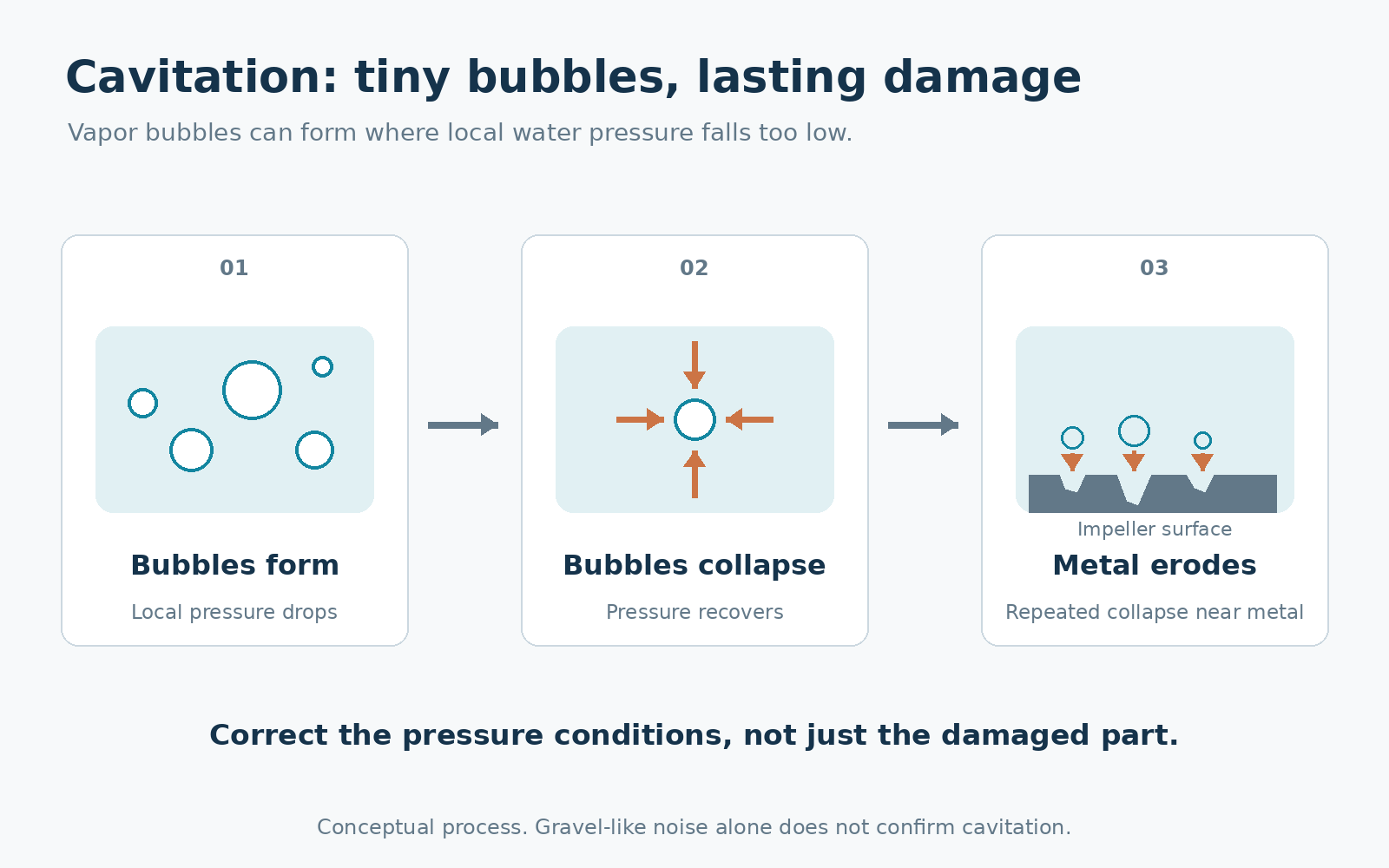
A crackling or gravel-like sound may indicate cavitation—the formation and collapse of vapor bubbles where local pressure falls too low. Cavitation can erode the impeller, increase vibration, reduce flow, and damage seals or bearings.
Possible contributors include inadequate system fill pressure, excessive water temperature, restricted suction, closed or throttled valves, clogged strainers, poor expansion-tank condition, air, excessive speed, or incorrect pump selection. Replacing an eroded impeller without correcting suction conditions invites repeat damage.
Warning Sign: Seal Leakage Changes Over Time
A small stain or intermittent drip should be documented rather than ignored. Mechanical seals can leak because of wear, dry running, misalignment, vibration, poor water quality, temperature, pressure, or pipe strain.
Water near motors, VFDs, wiring, or walking surfaces needs prompt attention. Do not tighten or adjust a rotating assembly while energized. Follow isolation, lockout, pressure-relief, and hot-water safety procedures.
Warning Sign: Differential Pressure Falls
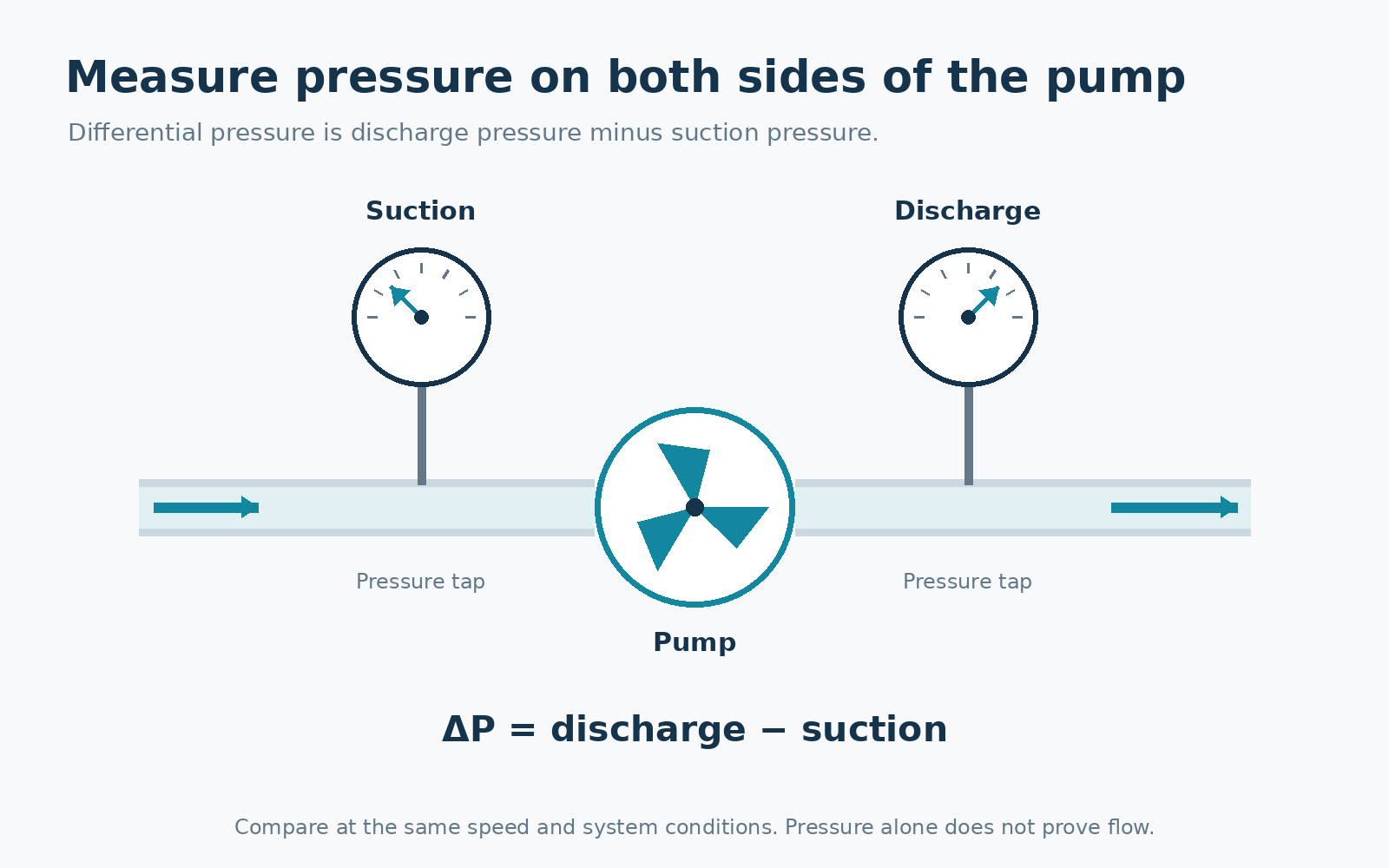
Differential pressure is the change between pump discharge and suction pressure. A declining value at the same speed and system configuration can indicate impeller wear, rotation problems, bypassing, air, or loss of capacity.
But pressure can also fall because control valves open and the system curve changes. Compare speed, valve positions, operating pumps, system fill pressure, and flow. A single pressure snapshot without system context can mislead.
Warning Sign: Motor Current or VFD Behavior Changes
Rising current may accompany bearing damage, binding, higher flow, voltage problems, or motor deterioration. Low current may reflect reduced load, low flow, broken coupling, wrong rotation, or a command-speed issue.
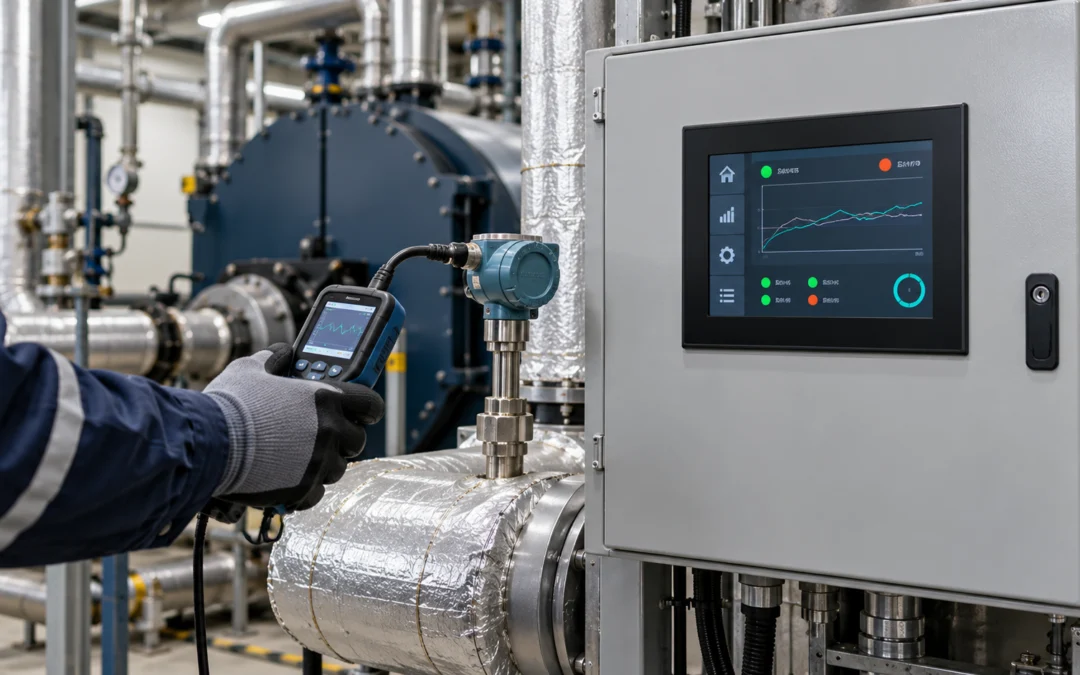
Review voltage, phase balance, frequency, motor data, drive faults, bypass status, and trend history. Electrical testing belongs to qualified personnel using appropriate procedures and protective equipment.
Warning Sign: Heating Delta T No Longer Makes Sense
The difference between supply and return water temperature reflects load and flow. A very high delta T can occur when flow is low or load is high. A low delta T can result from excessive flow, low load, bypassing, or poor heat transfer.
Delta T alone cannot diagnose a pump, but it helps reveal how circulation changes affect the plant. Compare it with firing rate, outdoor temperature, valve positions, pump speed, and measured pressure.
Example: The Standby Pump Hides the Failure
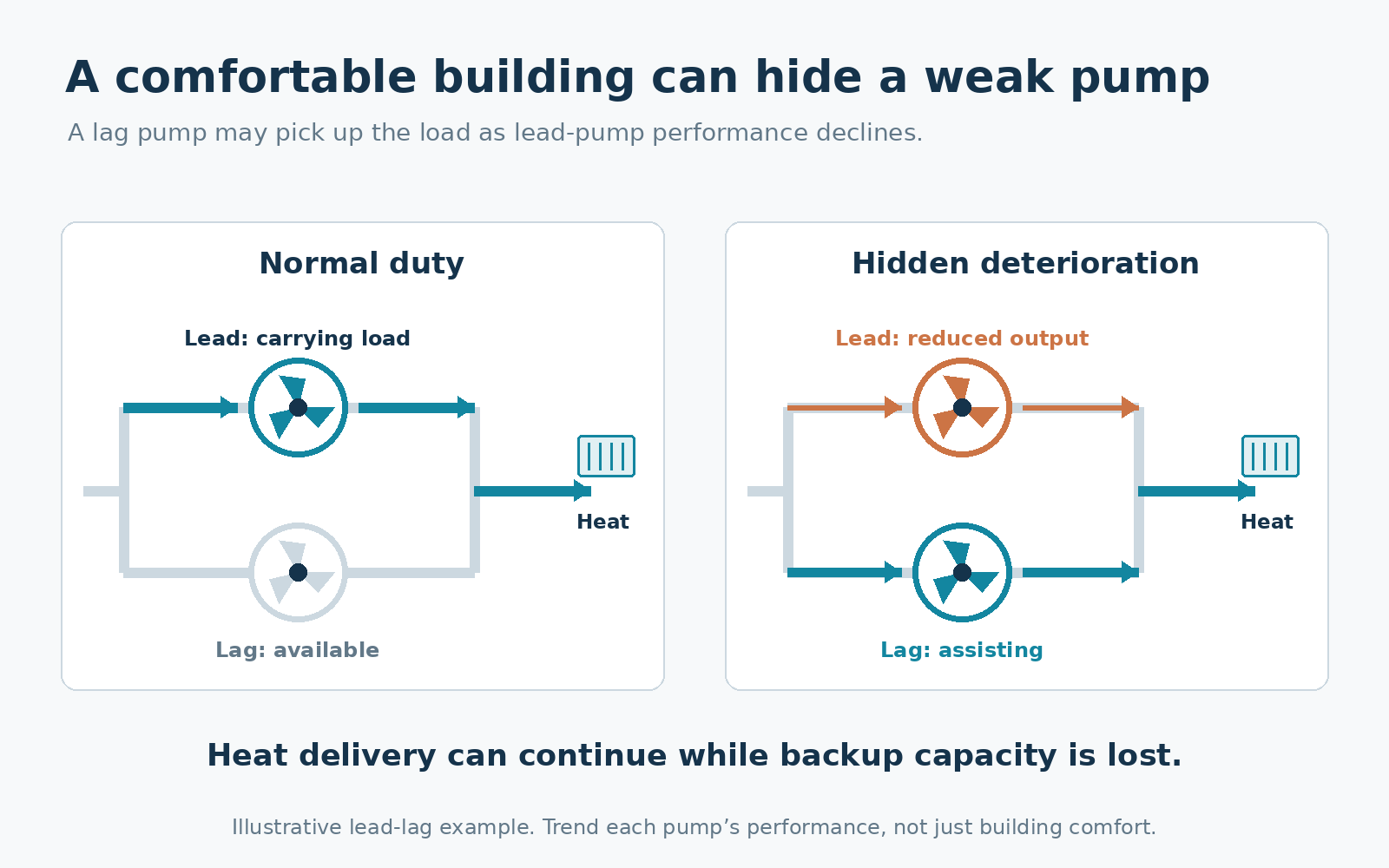
A Central Indiana office plant uses two pumps in lead-lag service. Occupants remain comfortable, but the lag pump begins starting more often. Operators assume the controls are rotating equipment for equal hours.
Trend review shows the lead pump can no longer maintain differential-pressure setpoint at its prior speed. The lag pump starts to compensate. Inspection finds impeller wear and seal leakage associated with prolonged cavitation after the expansion tank lost charge.
“When the backup pump starts carrying normal load, the building may still be comfortable—but the plant has already lost redundancy.” says one of the commercial and industrial hydronic pump technicians at Choice Mechanical Services in Indianapolis.
The repair addresses the pump and the expansion and fill conditions. This representative scenario shows how redundancy can conceal deteriorating capacity. Choice Mechanical supports commercial office boiler and hydronic systems throughout Indianapolis and Central Indiana.
Build a Pump Baseline Before Trouble
Condition monitoring is most useful when current readings can be compared with a known healthy state. A baseline may include:
- Suction and discharge pressure at representative loads
- Verified flow where instrumentation is available
- Pump speed or frequency
- Motor voltage, current, and power
- Bearing temperatures
- Vibration readings at consistent points and directions
- Seal condition
- Supply and return temperature
- System fill pressure and expansion-tank condition
- Control-valve and bypass positions
Use consistent instruments, locations, and operating conditions. A change from baseline is often more meaningful than comparison with a generic limit.
Repair, Rebuild, or Replace?
The decision considers casing and impeller condition, shaft, bearings, seal, motor, parts availability, efficiency, operating point, redundancy, outage window, and lifecycle cost. A pump selected for an old constant-flow system may no longer suit a variable-flow retrofit.
Before replacement, confirm design flow and head, actual system curve, control method, water temperature, pressure, material compatibility, and available suction conditions. “Same horsepower” does not guarantee the same hydraulic performance.
Hydronic Boiler Pump FAQs
Can a circulation pump run without moving water?
Yes. A broken coupling, air binding, closed valve, wrong rotation, blocked impeller, or other condition can allow a run indication without useful flow.
Is pump noise always cavitation?
No. Air, bearings, coupling damage, loose components, resonance, and debris can create similar sounds. Pressure, vibration, and inspection help distinguish them.
Why does the pump seal keep failing?
Possible causes include misalignment, pipe strain, cavitation, dry running, vibration, water quality, incorrect seal, pressure, or temperature. Replacing only the seal may not correct the cause.
Can a VFD save energy on a boiler pump?
It can when the system supports variable flow and controls are commissioned correctly. Minimum boiler flow, valve authority, pressure reset, and equipment requirements must be protected.
Should lead and lag pumps rotate automatically?
Often, but the sequence should also prove that each pump delivers required performance and should alarm when redundancy is lost.
Verify Flow Before Comfort Becomes the Alarm
Pump deterioration is easier to manage when pressure, flow, electrical condition, vibration, temperature, and system state are trended together. Waiting for complete failure turns a planned repair into a heating outage.
Flow requirements and protection logic differ among boiler designs. Choice Mechanical supports equipment including Kemco commercial boiler systems, with pump diagnosis based on the actual plant arrangement.
For hydronic pump noise, leakage, low differential pressure, or loss of redundancy, call Choice Mechanical at (317) 885-0200 or request commercial boiler and piping service. A tailored maintenance agreement can include pump baseline readings and follow-up trends for critical equipment.