by Choice Mechanical Team | Oct 5, 2026 | Boiler Articles
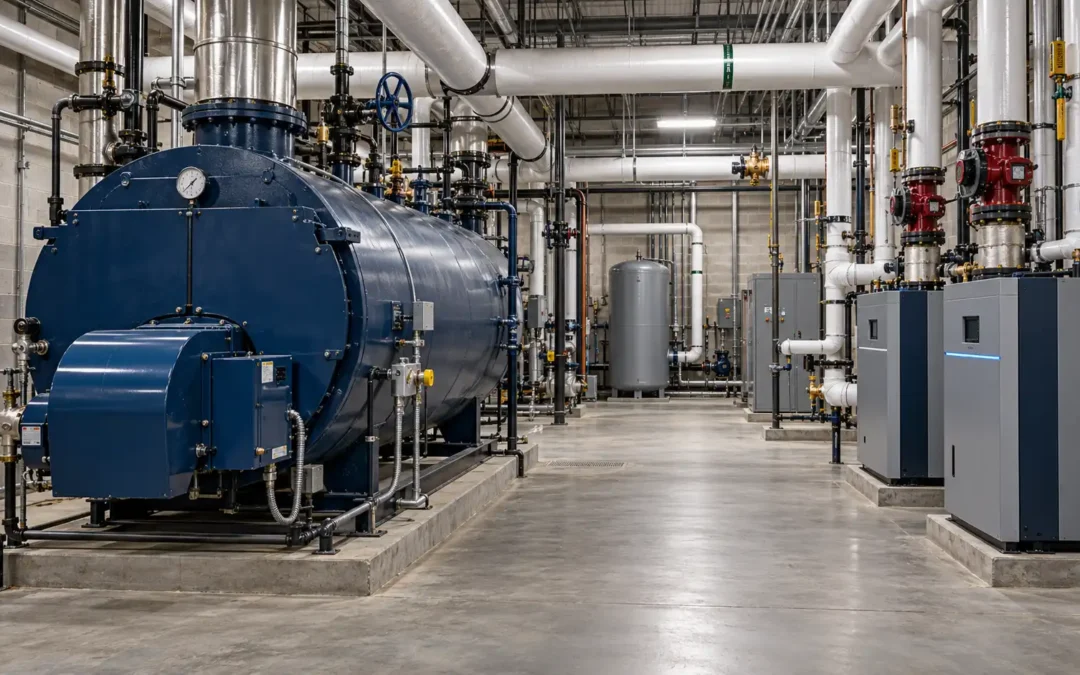
A steam boiler and a hot-water boiler can both heat a commercial building, but they move energy in fundamentally different ways. Steam carries latent heat as vapor and condenses at the load. A hydronic system circulates liquid water whose temperature falls as heat is...
by Choice Mechanical Team | Oct 5, 2026 | Boiler Articles
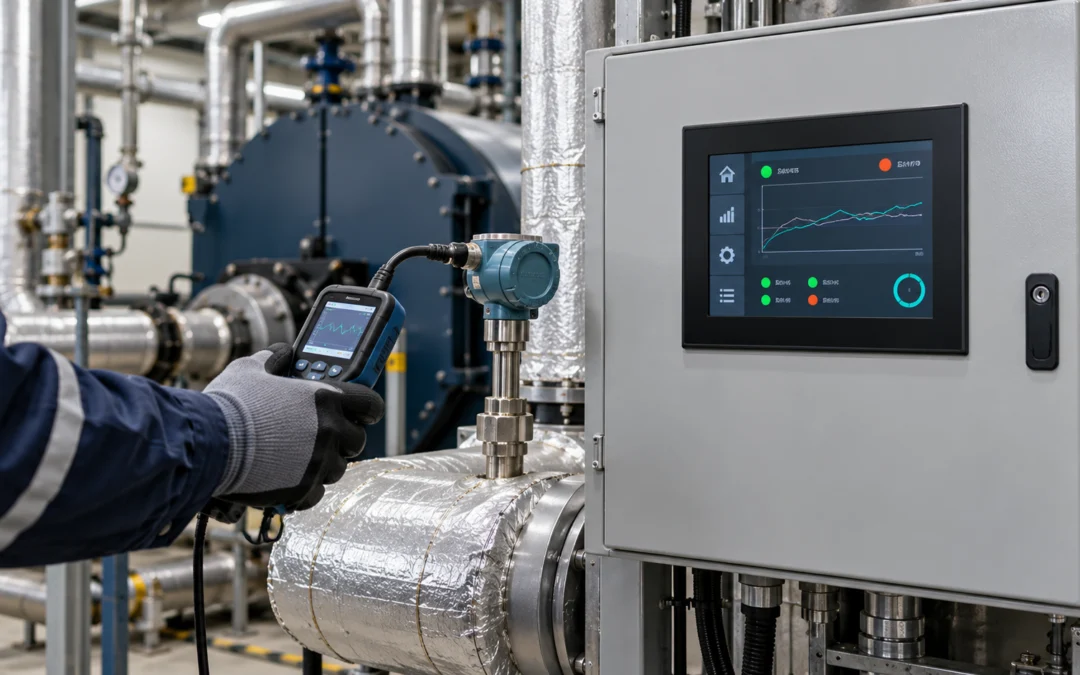
A commercial boiler can fire cleanly, circulate water, and show no local lockout while the building remains cold. The missing heat may be hidden in a sensor that reads five degrees high, an outdoor-reset curve that lowers water temperature too aggressively, a staging...
by Choice Mechanical Team | Oct 5, 2026 | Boiler Articles
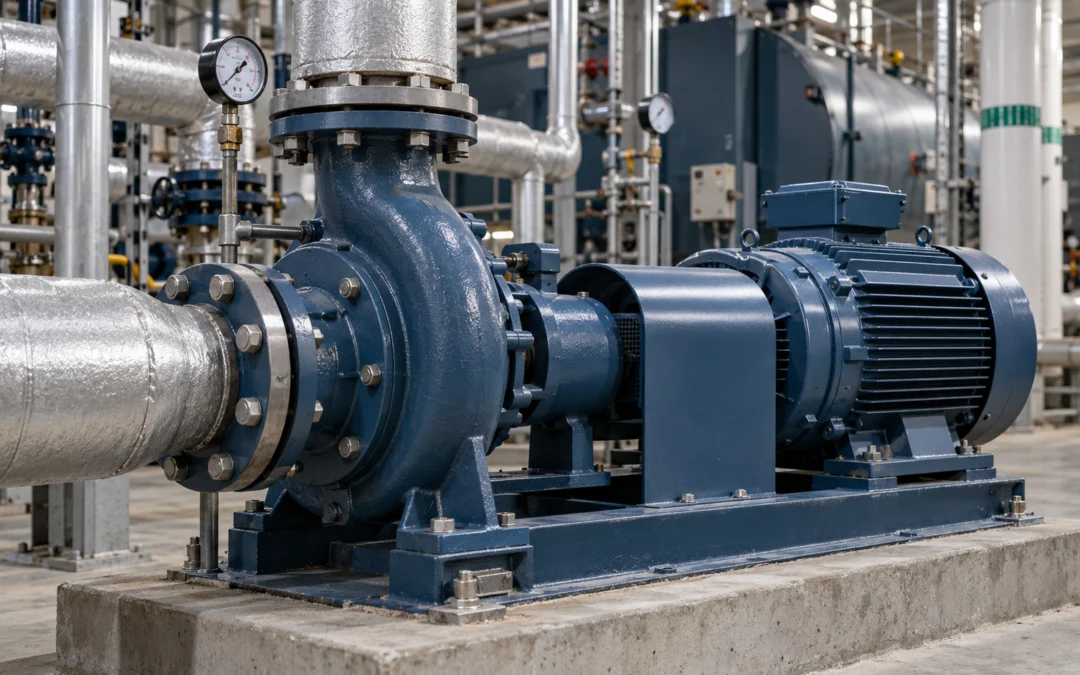
A hydronic pump rarely announces its remaining life with one unmistakable alarm. It may continue running while flow falls, vibration rises, a seal begins to weep, or the motor draws more current. Occupants notice cold zones, while the boiler plant sees unstable...
by Choice Mechanical Team | Oct 5, 2026 | Boiler Articles
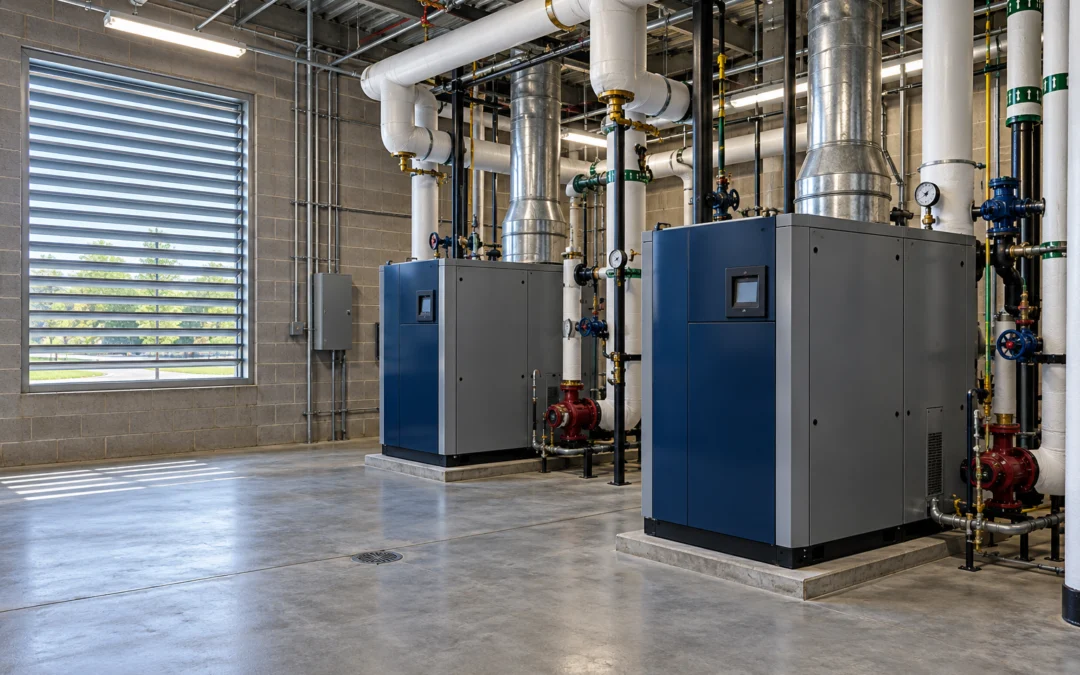
A boiler room needs air for more than one reason. Burners require combustion air. The room may need ventilation to remove heat. Draft and venting systems depend on stable pressure. Other fuel-burning appliances, exhaust fans, louvers, and building HVAC systems can...
by Choice Mechanical Team | Sep 4, 2026 | Boiler Articles, Piping & Plumbing Articlces
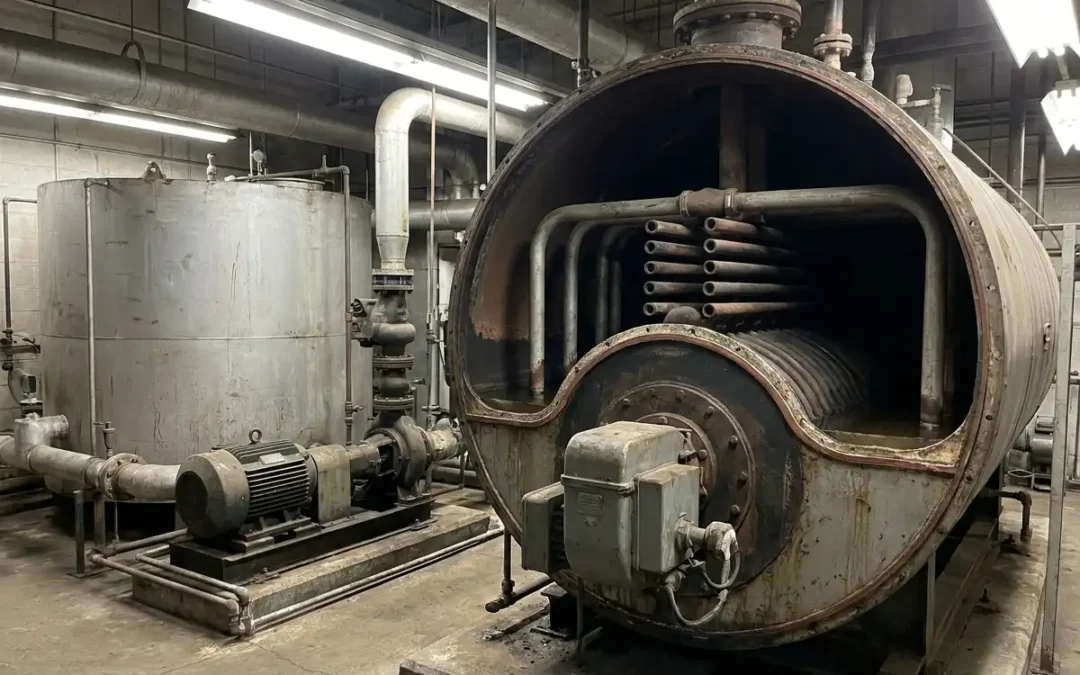
A commercial boiler low-water cutoff has one overriding purpose: stop heat input before an unsafe lack of water exposes heated surfaces. When it trips, the interruption may be inconvenient, but the control is doing the kind of work that protects pressure parts,...
by Choice Mechanical Team | Sep 4, 2026 | Boiler Articles, Piping & Plumbing Articlces
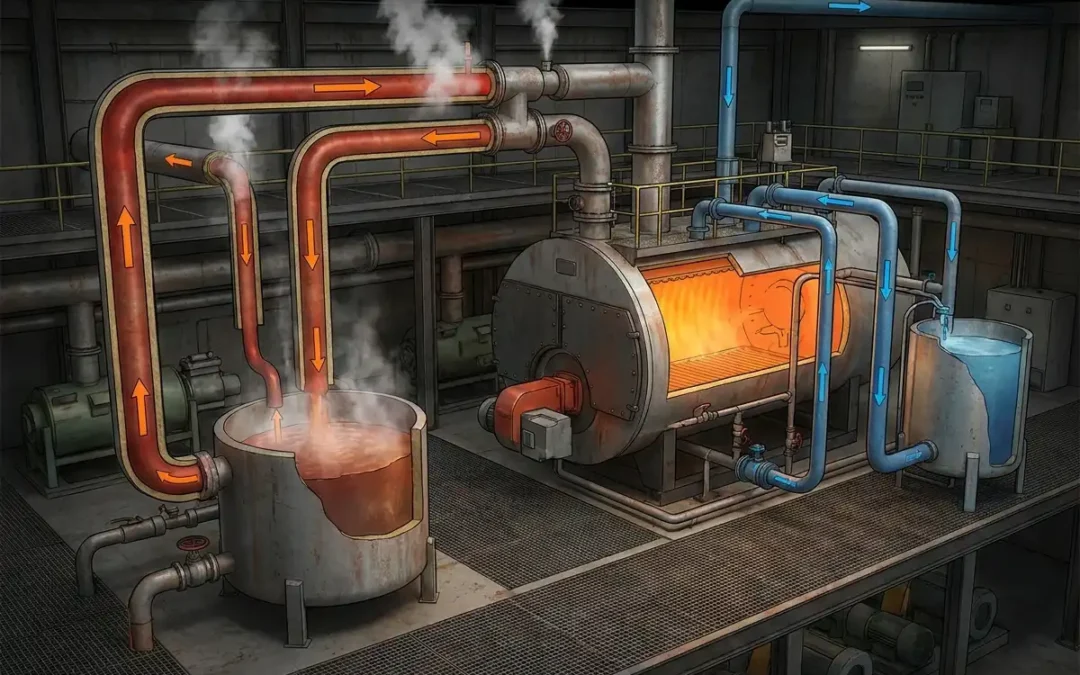
Every pound of clean condensate that returns to a boiler plant brings back two things the facility already paid for: treated water and heat. When that condensate leaks, flashes from an open vent, backs up behind failed traps, or never reaches the receiver, the boiler...