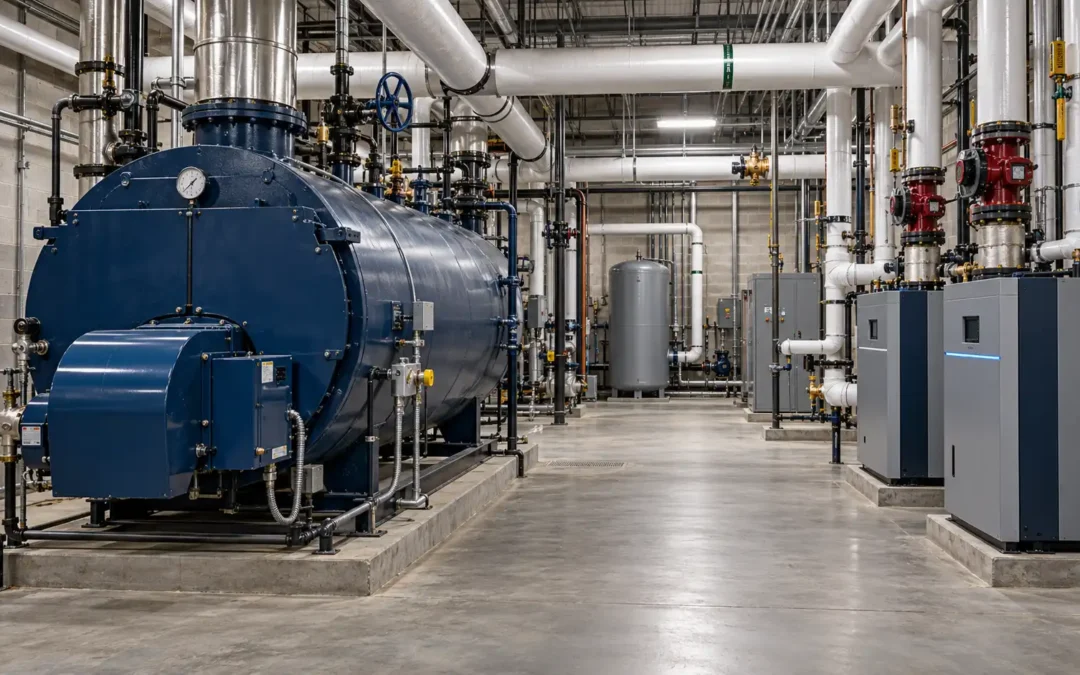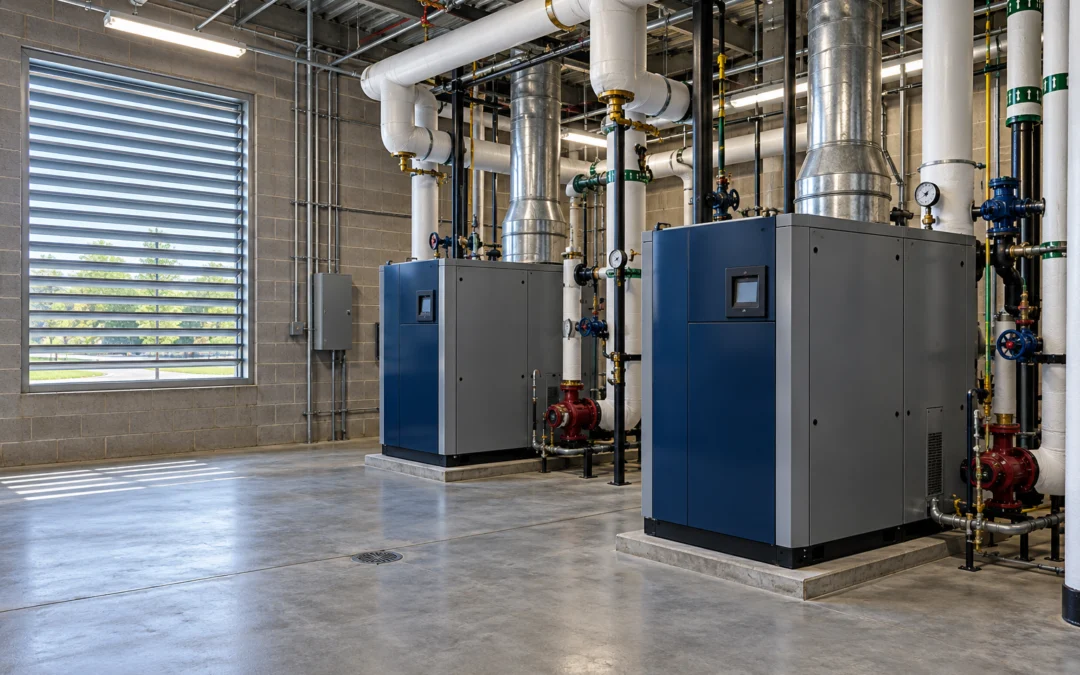
A commercial boiler can fire cleanly, circulate water, and show no local lockout while the building remains cold. The missing heat may be hidden in a sensor that reads five degrees high, an outdoor-reset curve that lowers water temperature too aggressively, a staging sequence that never enables the second boiler, or a valve command that does not match physical position.
Commercial boiler control problems are difficult because the equipment often appears functional. Finding them requires comparing four layers: what the building needs, what the controller believes, what it commands, and what the mechanical system actually does.
“A controls screen shows the controller’s version of the building. Troubleshooting begins when we compare that version with independent measurements and physical movement.” notes one of the commercial and industrial boiler technicians at Choice Mechanical Services in Indianapolis.
The Four-Layer Control Check
| Layer | Question | Example discrepancy |
|---|---|---|
| Load | What heating demand exists? | Cold perimeter zones require heat while the plant sees low demand |
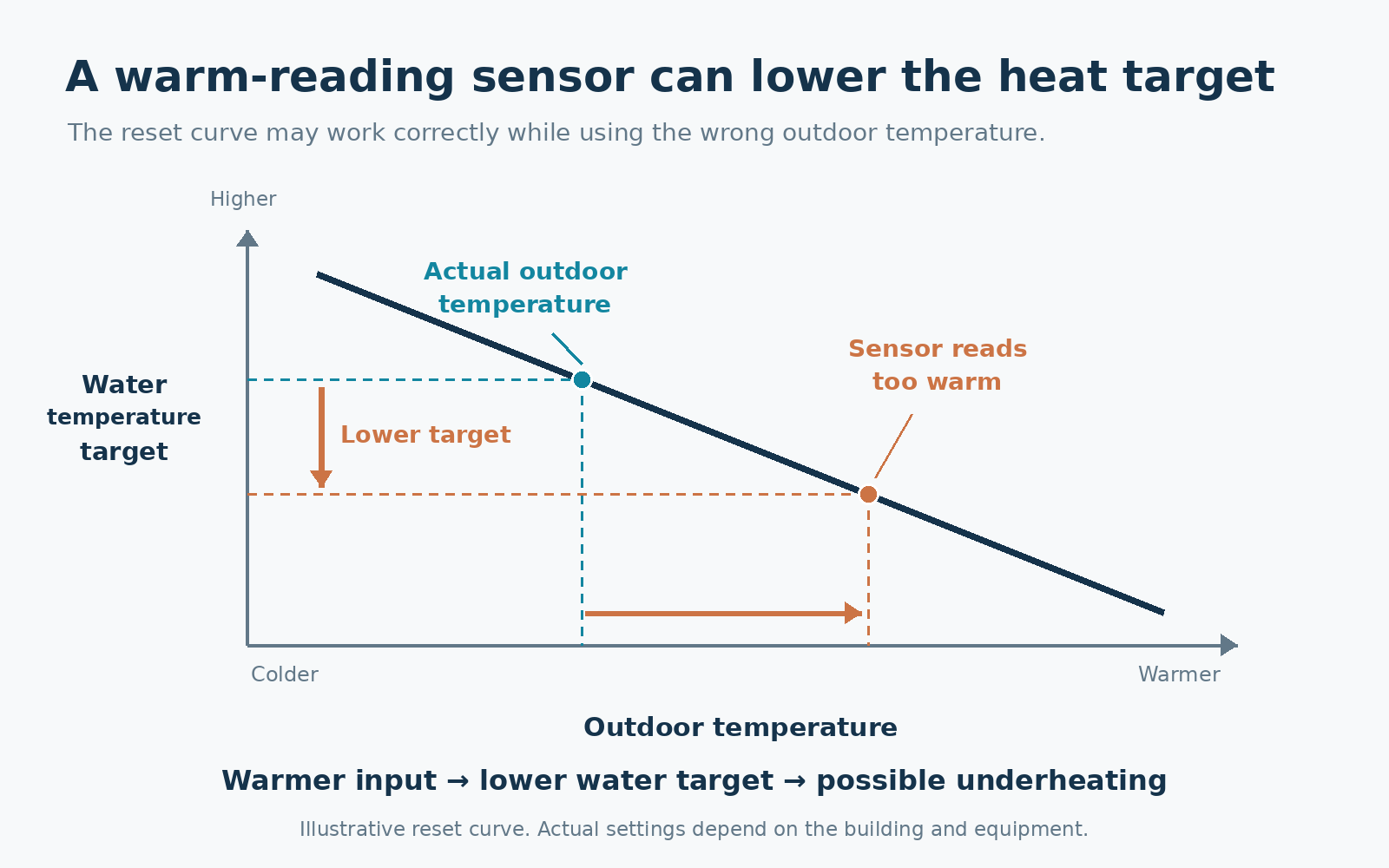
| Input | What do sensors and statuses tell the controller? | Outdoor sensor reads warmer than actual, lowering the target water temperature |
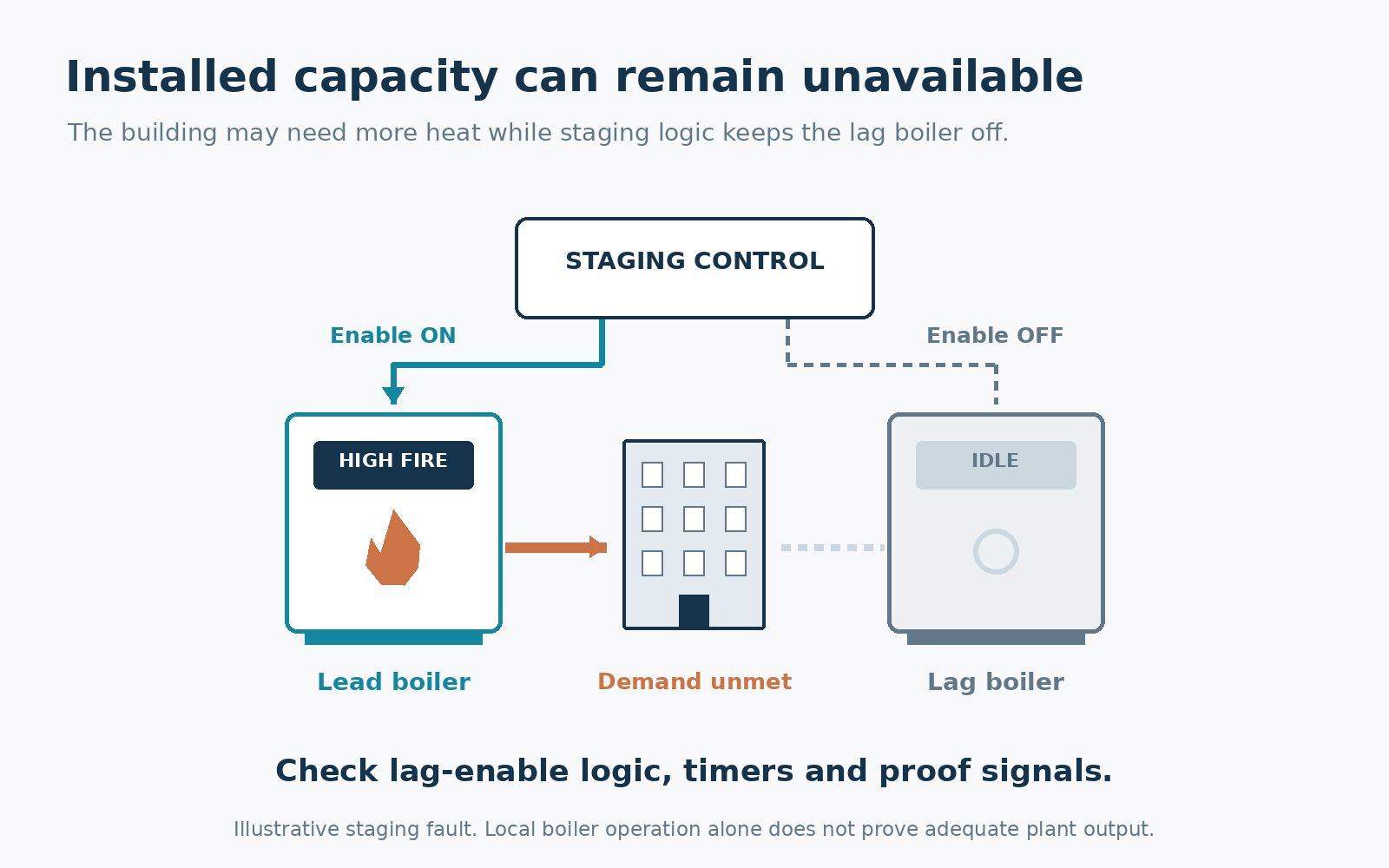
| Command | What output does the logic request? | Lead boiler is at limit but lag enable remains off |
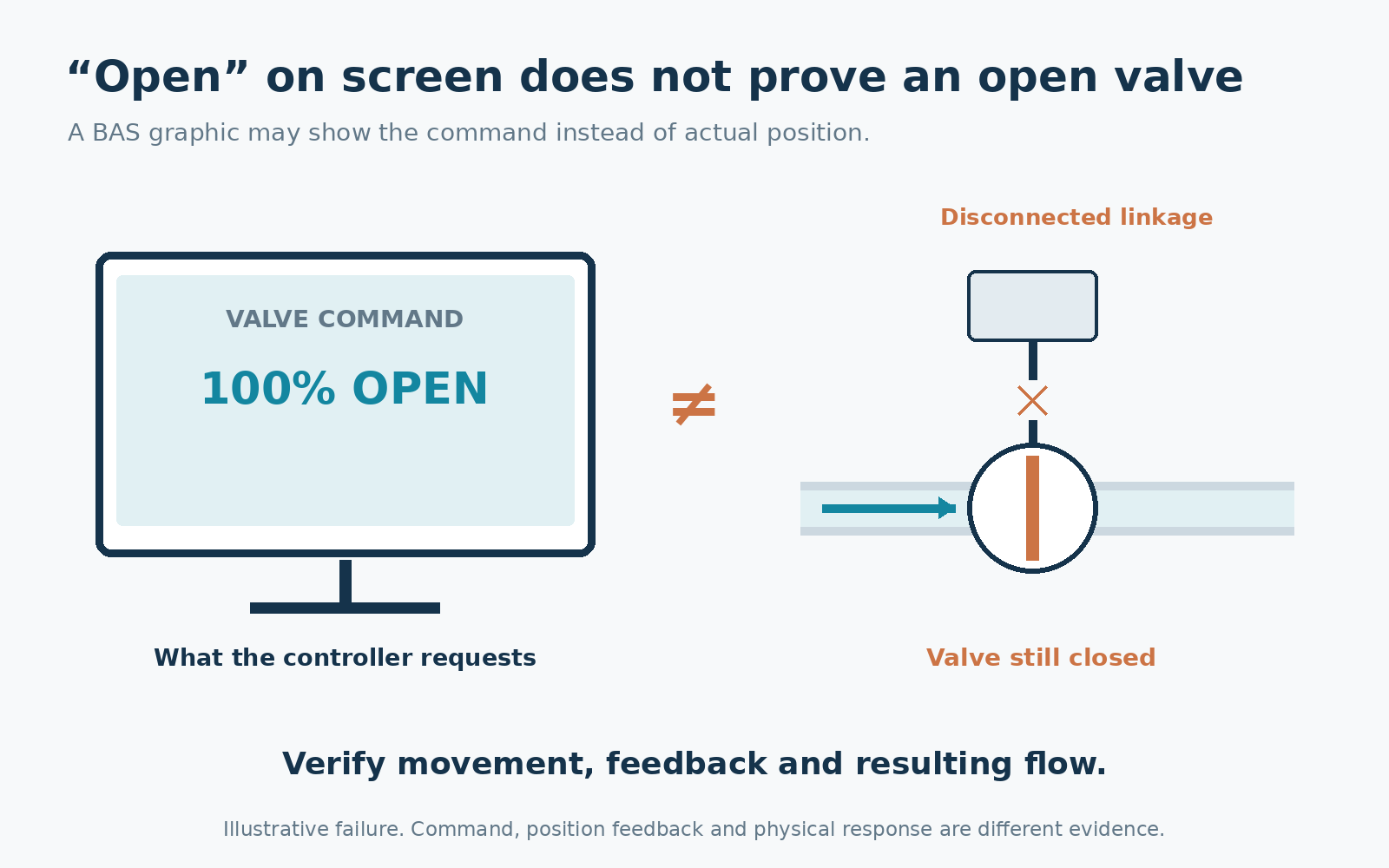
| Physical response | Did the equipment follow the command? | Valve shows 100% open on screen while the actuator linkage is disconnected |
Sensor Drift Can Hide in Plain Sight
A temperature sensor does not need to fail completely to disrupt heating. A small bias can change outdoor reset, plant enable, boiler staging, pump control, or zone demand. Because the value looks reasonable, it may never trigger a sensor alarm.
Compare critical sensors with calibrated independent measurements. Check location, wiring, scaling, grounding, immersion depth, thermal contact, insulation, and whether the BAS and local boiler controller display the same value. Two systems may use separate sensors labeled with similar names.
Outdoor Reset Can Save Energy or Starve the Building
Outdoor reset lowers heating-water temperature as outdoor conditions become milder. A well-commissioned curve can reduce losses and improve condensing-boiler performance. A poorly configured curve may provide water too cool for perimeter radiation, coils, or recovery from setback.
Review:
- Outdoor design and warm-weather shutdown points
- Maximum and minimum supply-water targets
- Sensor accuracy and solar or exhaust exposure
- Terminal equipment requirements
- Morning warm-up and setback recovery
- Whether zone demand can temporarily reset the curve
- Return-water and boiler operating limits
Staging Logic Can Leave Capacity Stranded
Multiple-boiler plants need logic for lead selection, lag enable, rotation, minimum runtime, anti-cycle delay, firing-rate sharing, pump operation, and failure recovery. A plant can have sufficient installed capacity while the sequence never makes all of it available.
Common examples include a lag timer that restarts whenever demand fluctuates, a header sensor located where mixing hides load, one boiler held at high fire while another remains disabled, or a failed proof point preventing the next stage.
Short Cycling May Be a Controls Relationship
A boiler may cycle because minimum firing rate exceeds load, but sensor placement and sequence can amplify the problem. A header sensor close to the boiler may satisfy before water reaches the building. A narrow differential may restart the burner immediately. Pumps or valves may change flow faster than the boiler can stabilize.
Trend supply and return temperatures, target, firing rate, enable, pump status, valve position, and zone demand. The event timeline shows which change happens first.
A Command Is Not Proof
Outputs can fail between software and equipment. Relays, transducers, actuators, VFDs, valves, dampers, and end switches can disagree with commands. Manual overrides may remain active after service.
Verify:
- Controller output value
- Signal at the field device
- Physical actuator or equipment response
- Feedback signal or proof
- Resulting temperature, pressure, or flow
This chain prevents a technician from changing logic to compensate for a broken linkage or failed relay.
Example: A Boiler Plant That “Runs Fine”
A Carmel office building reports cold perimeter zones during windy mornings. Both boilers show normal local operation, and the BAS indicates supply water at setpoint. Service calls focus on terminal units.
Trend review shows the plant target is lower than expected whenever wind and temperature produce the complaint. An outdoor sensor mounted near a warm exhaust reads several degrees above the representative outdoor condition. The reset sequence responds correctly to an incorrect input.
“A stable trend is not necessarily an accurate trend. A biased sensor can produce perfectly smooth data and the wrong decision every minute.” says one of the commercial and industrial boiler technicians at Choice Mechanical Services in Indianapolis.
Relocating and validating the sensor corrects the target. The team then verifies terminal performance and recovery rather than assuming every zone problem had the same cause. This representative example shows why “boilers operating” does not equal “plant delivering the required heat.”
Trend Relationships, Not Just Individual Points
A useful boiler-plant trend may include:
- Representative outdoor temperature
- Plant enable and operating mode
- Supply-water target and actual temperature
- Return-water temperature
- Header or differential pressure
- Lead and lag boiler enable, status, and firing rate
- Primary and distribution pump status and speed
- Bypass or mixing-valve command and feedback
- Representative zone demand and valve position
- Alarms, overrides, and schedule transitions
Use consistent timestamps and an interval that captures cycling. Mark service changes on the trend so before-and-after behavior can be compared.
Hidden Overrides and Priority Conflicts
BAS platforms often allow commands from schedules, operators, optimization routines, emergency modes, and local controllers. A high-priority override can hold a point while the normal sequence appears to command something else.
Review command priority, expiration, source, local/remote selection, and whether the field controller continues operating after network loss. Remove overrides only through an approved procedure and document the reason they were applied.
Boiler Control FAQs
Can a bad outdoor-air sensor make the building cold?
Yes. If it reads too warm, outdoor reset or plant enable may provide insufficient heat. If it reads too cold, the plant may overheat water and waste energy.
Why does the BAS show a valve open when it is closed?
The graphic may display command rather than position feedback, or the feedback may be mis-scaled, stuck, or disconnected. Physical verification is required.
Should boilers rotate lead position?
Often, but rotation should respect equipment type, runtime, maintenance state, efficiency, and reliability. The sequence should also respond correctly when the selected lead fails.
Can controls cause simultaneous heating and cooling?
Yes. Overlapping setpoints, failed sensors, leaking valves, minimum airflow, poor deadband, and conflicting sequences can create simultaneous operation.
Will replacing the sensor solve the problem?
Only if its error and role are confirmed. Location, wiring, scaling, control logic, and the physical system response must also be checked.
Make the Data Match the Boiler Room
Hidden heating problems become visible when load, sensor input, command, and physical response are placed on one timeline. The repair should correct the failed device or sequence and prove that the building receives the intended result.
Control architecture varies by manufacturer and plant configuration. Choice Mechanical works with commercial equipment including Patterson-Kelley boiler systems.
For boiler staging, outdoor reset, sensor disagreement, or recurring heating complaints, call Choice Mechanical at (317) 885-0200 or request commercial boiler service. Bring trend exports, sequence documentation, override lists, and examples of when the complaint occurs.