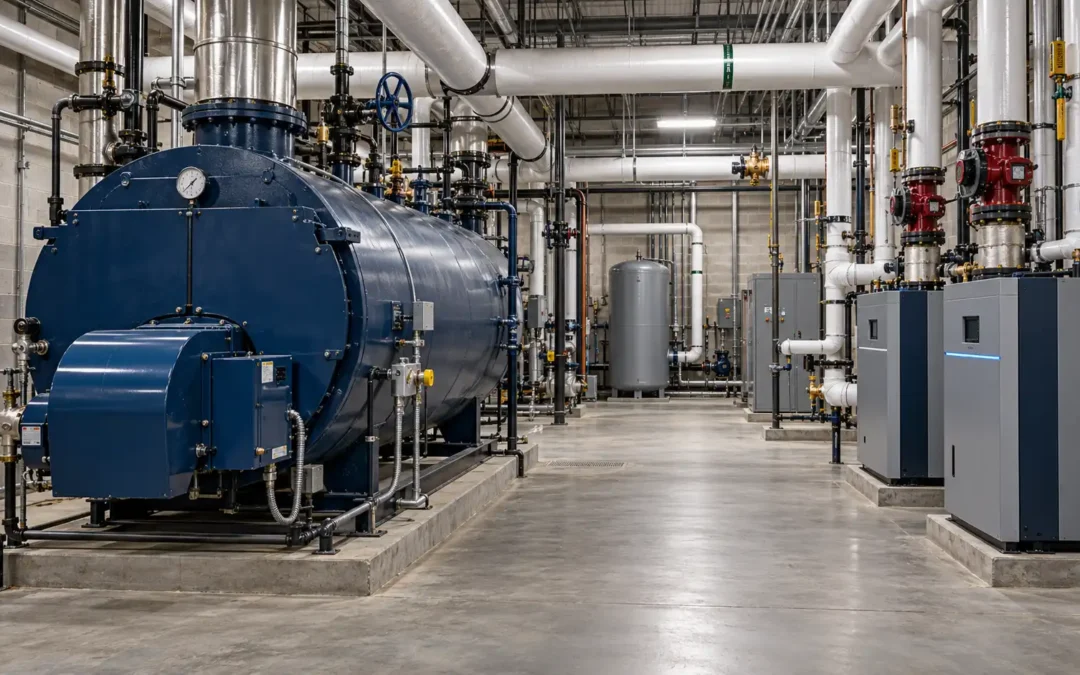
A boiler room needs air for more than one reason. Burners require combustion air. The room may need ventilation to remove heat. Draft and venting systems depend on stable pressure. Other fuel-burning appliances, exhaust fans, louvers, and building HVAC systems can change those conditions whenever they operate.
Commercial boiler room ventilation is therefore an engineered and code-regulated system, not simply an open window or a grille with a rule-of-thumb area. Equipment input, combustion system, room configuration, venting, mechanical air supply, local requirements, and manufacturer instructions all affect the design.
“We do not judge boiler-room air by whether the room feels drafty. We verify burner requirements, pressure, draft, temperatures, and the systems that move air in and out.” says one of the lead commercial boiler technicians at Choice Mechanical Services in Indianapolis. One opening or fan may contribute to more than one function, but each requirement still needs to be evaluated.
Three Air Functions Are Often Confused
| Air function | Purpose | What can go wrong |
|---|---|---|
| Combustion air | Provides oxygen and supports stable burner operation | Incomplete combustion, flame instability, elevated CO, nuisance lockout |
| Room ventilation | Limits accumulated heat and supports acceptable equipment environment | High room temperature, control failures, motor or electronic stress |
| Draft and pressure makeup | Replaces air affected by venting, exhaust, and building pressure | Backdrafting, unstable draft, doors pulling, vent interaction\ |
Why a Universal Louver Formula Is Risky
Rules often quote an opening area per unit of burner input. Those ratios can change based on whether air comes directly from outdoors or through communicating spaces, whether openings are vertical or horizontal, whether mechanical combustion air is provided, and which code and edition applies.
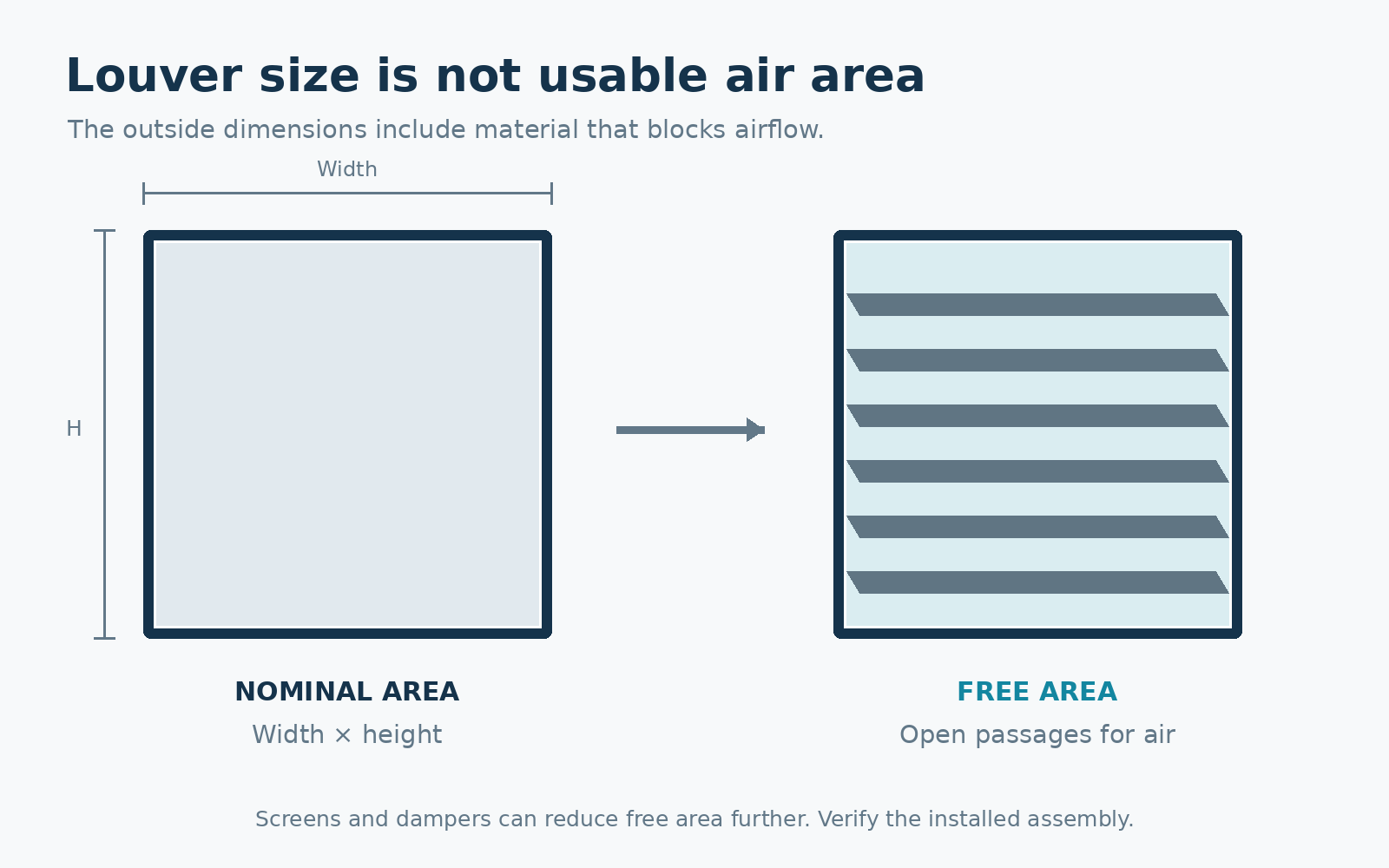
Free area also differs from nominal louver size. Blades, screens, insect guards, dampers, filters, snow, and dirt reduce the usable opening. A 24-inch-square louver does not necessarily provide four square feet of free area.
Final sizing and arrangement should be established by the qualified designer using applicable code, authority requirements, equipment instructions, total connected input, and actual air-path components.
Warning Signs the Boiler Room Is Air-Starved
Doors Pull Inward or Are Hard to Open
A noticeable pressure difference when burners or exhaust equipment starts is a useful clue. Door feel is not a calibrated measurement, but it indicates that room pressure deserves testing.
Flame or Draft Changes With the Door Open
If burner behavior, draft, or lockout frequency changes when a boiler-room door opens, available air or pressure interaction may be involved. Do not prop the door open as the permanent repair; it can affect fire separation, security, and designed airflow.
Combustion Readings Change When Exhaust Starts
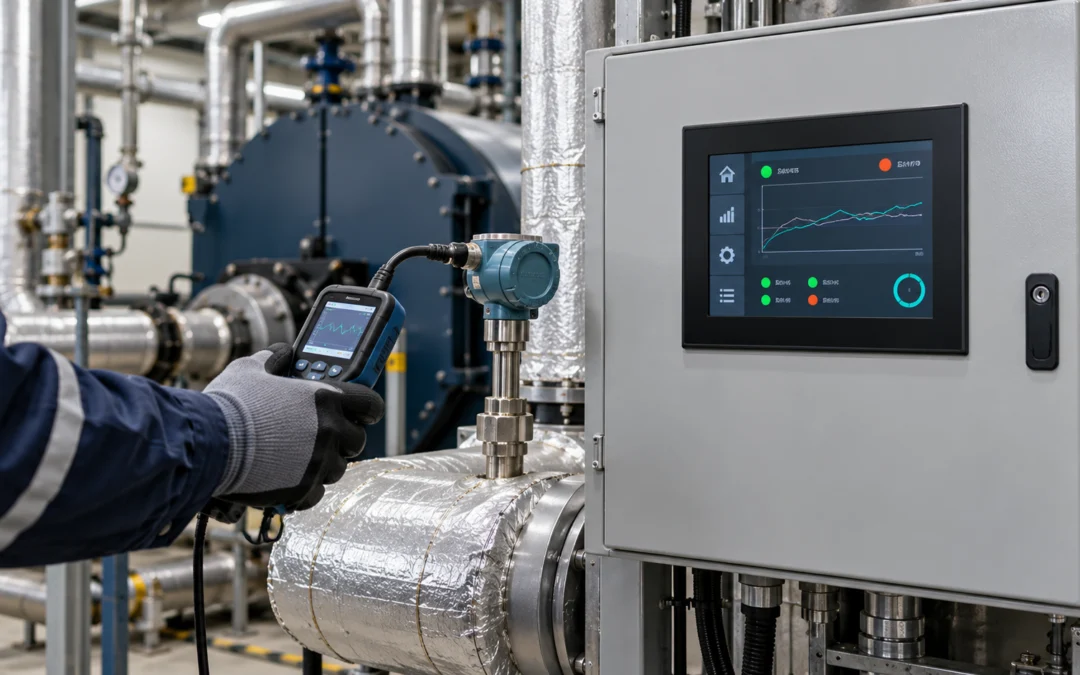
Kitchen hoods, process exhaust, restroom fans, dust collection, or building air handlers can shift pressure. Combustion testing should consider representative operating modes when safe and required. Choice Mechanical’s commercial boiler combustion analysis can document how oxygen, CO, draft, and stack temperature respond.
Louvers Are Blocked, Closed, or Dirty
Stored material, temporary winter coverings, paint, corrosion, failed actuators, bird screens, snow, leaves, or construction can reduce free area. Motorized dampers may receive an open command without reaching the proven position.
The Room Is Excessively Hot
High room temperature may reflect inadequate ventilation, uninsulated hot surfaces, failed exhaust, unusually high boiler cycling, steam leaks, or equipment heat. Electronics, VFDs, pumps, and controls can be affected even when burners have adequate combustion air.
Soot, Odor, CO Alarm, or Unstable Flame Appears
These conditions require immediate qualified response under the facility’s safety procedure. Insufficient air is one possible cause among burner, fuel, vent, heat-transfer, and mechanical problems. Occupants should never enter or remain in a suspected hazardous atmosphere.
Mechanical Combustion-Air Systems Need Proof
Some boiler rooms use a fan or powered system to deliver combustion air. The burner sequence may require airflow or damper proof before light-off. A running fan does not prove the required air volume, just as an actuator command does not prove a damper is open.
Inspection may include fan rotation, belts, filters, intake condition, damper position, airflow switch tubing, pressure setting, interlocks, and measured delivery. Safeties must not be jumped to force burner operation.
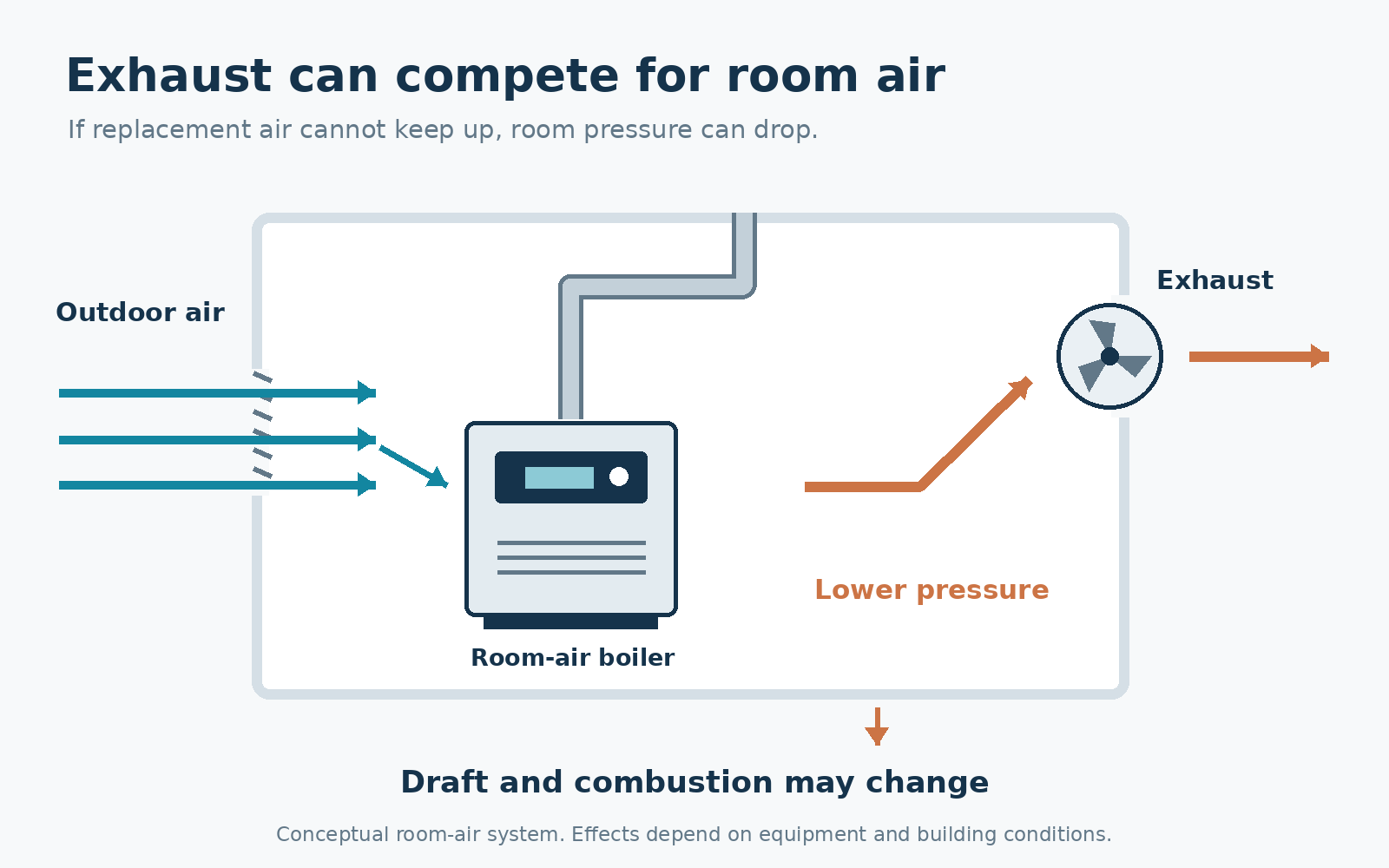
Venting and Combustion Air Must Be Evaluated Together
Atmospheric, induced-draft, forced-draft, sealed-combustion, condensing, and other systems interact with the room differently. Vent connector condition, chimney draft, barometric devices, fans, common venting, termination, condensate, and building pressure may all matter.
Replacing a boiler can change those relationships. A new unit may have a different input, combustion system, vent category, air connection, or room heat release. Existing openings should not be assumed adequate because they served the former equipment.
Example: Winter Covering Creates Intermittent Lockouts
A municipal building in Central Indiana experiences boiler lockouts only during the coldest weeks. Staff find the room uncomfortable and partially cover an outdoor-air louver to reduce freezing drafts. The boiler operates much of the time but develops unstable combustion when both boilers and a nearby exhaust fan run.
The corrective process removes the unapproved restriction, evaluates air-opening size and location, measures room pressure and draft under combined operation, and considers a properly designed method to temper or distribute incoming air without starving the burners.
“If cold air is causing a boiler-room problem, the answer is to redesign how required air enters, not to remove the air the burners depend on.” says one of the lead commercial boiler technicians at Choice Mechanical Services in Indianapolis.
This representative scenario shows how an understandable comfort response can create a combustion risk. You should also be sure to read our article on what a commercial boiler combustion analysis can reveal.
A Boiler-Room Air Assessment Checklist
- List every fuel-burning appliance and rated input.
- Identify combustion type and manufacturer air requirements.
- Document the source and path of outdoor or transfer air.
- Determine nominal opening and verified free area.
- Inspect louvers, screens, dampers, filters, fans, and interlocks.
- Identify all room and nearby exhaust systems.
- Measure room pressure and draft in representative modes.
- Record room temperature near sensitive equipment.
- Review venting, terminations, and common connections.
- Confirm that storage and renovations have not changed air paths.
Boiler Room Ventilation FAQs
Can the boiler-room door supply combustion air?
An open door should not be assumed to satisfy required combustion air. The permanent design must comply with applicable requirements and preserve fire and building functions.
Can outdoor-air louvers be closed during winter?
Required openings should not be obstructed. If freezing or comfort is a problem, obtain a qualified design solution that maintains required airflow.
Does a sealed-combustion boiler eliminate room ventilation?
It may draw combustion air directly from outdoors, but the room can still need heat removal, code-required ventilation, and suitable conditions for other equipment.
Why does the boiler lock out when a kitchen hood starts?
The exhaust may alter building or boiler-room pressure and draft. Controls, make-up air, venting, and combustion should be tested together.
How often should combustion-air openings be inspected?
Use an interval based on equipment, environment, code, manufacturer, and facility risk. Inspect after construction, seasonal covering, louver work, or changes to exhaust and boiler equipment.
Keep the Required Air Path Permanent and Proven
Boiler-room air should remain available under the exact combinations of burner, exhaust, weather, and building operation the facility experiences. Permanent openings, mechanical air systems, interlocks, and venting require inspection and measured verification.
Combustion-air and venting checks must be tied to the installed equipment’s documentation. Choice Mechanical services systems such as HydroTherm commercial boilers across Central Indiana.
If boilers show draft changes, unexplained combustion lockouts, high room temperature, or pressure problems, call Choice Mechanical at (317) 885-0200 or request commercial boiler service. Treat soot, combustion odor, CO alarms, or suspected flue-gas spillage as urgent safety concerns and follow the facility emergency plan.