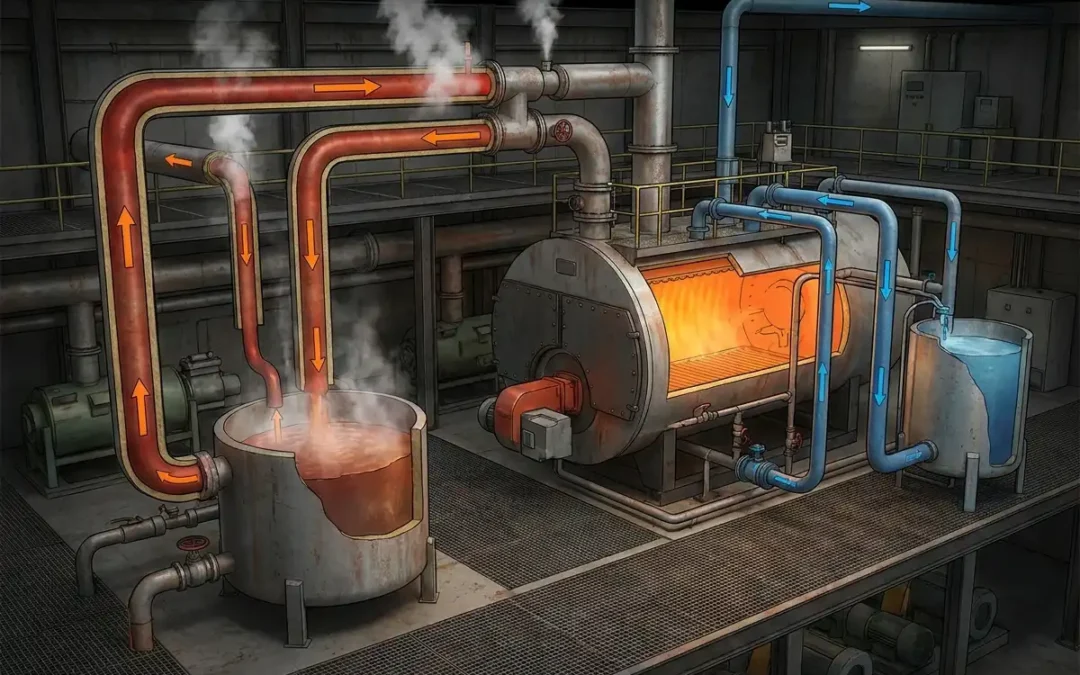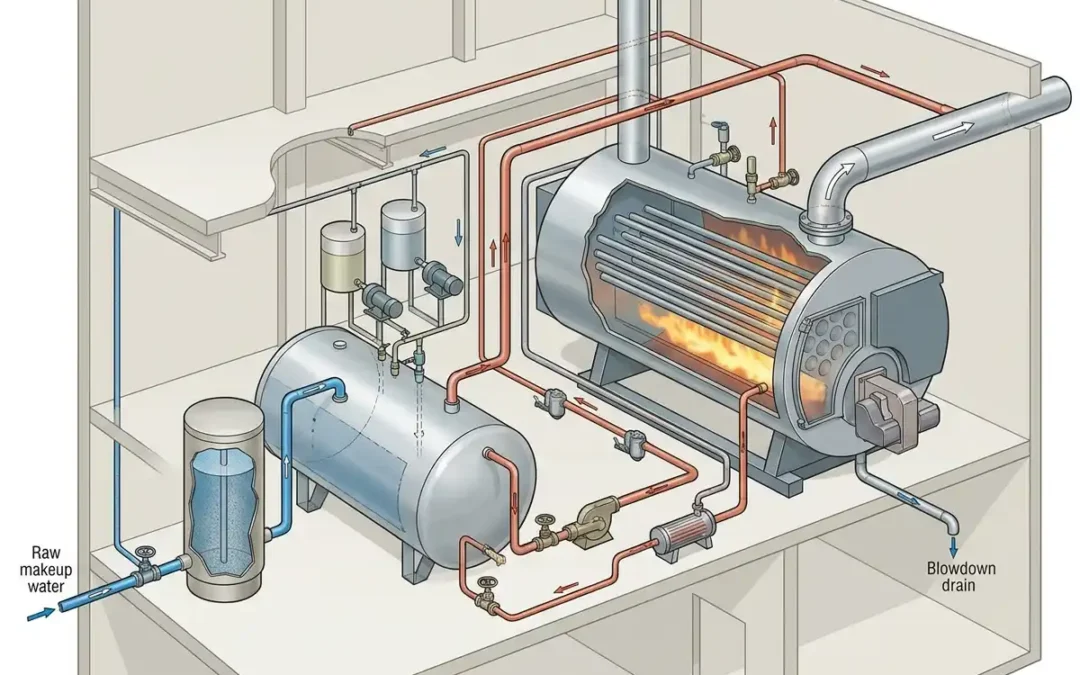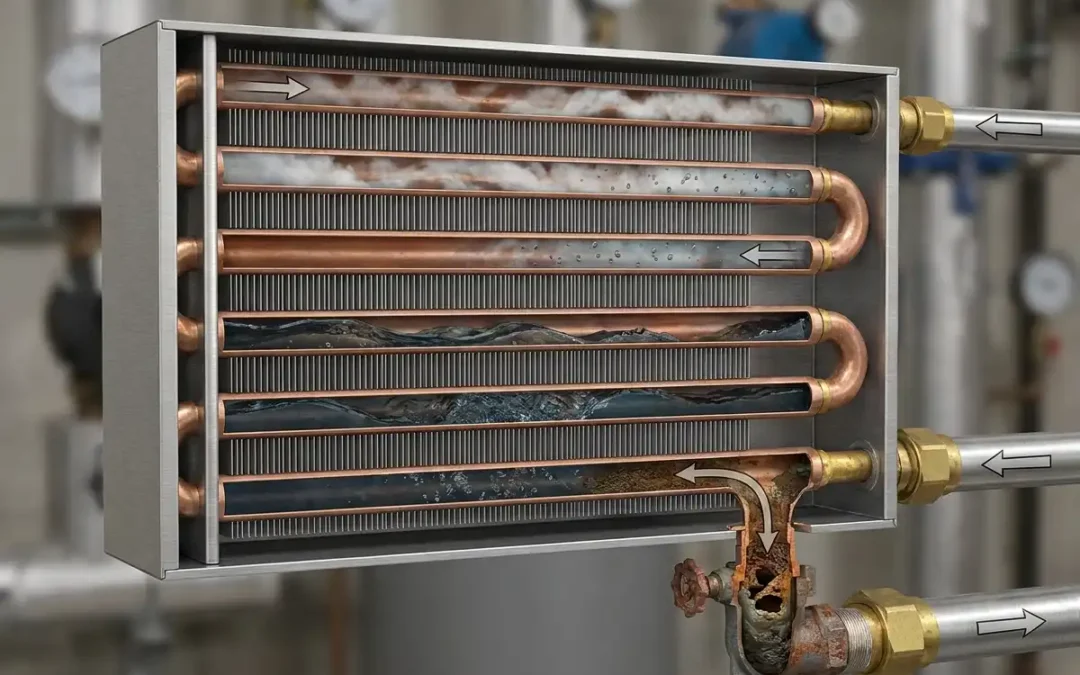
A commercial boiler low-water cutoff has one overriding purpose: stop heat input before an unsafe lack of water exposes heated surfaces. When it trips, the interruption may be inconvenient, but the control is doing the kind of work that protects pressure parts, equipment, and people.
Low-water cutoff problems fall into two dangerous categories. The device may trip when water level is actually adequate, causing nuisance shutdowns. Or it may fail to recognize a true low-water condition. Both require qualified investigation; neither justifies bypassing the control.
First Determine Whether the Water Was Truly Low
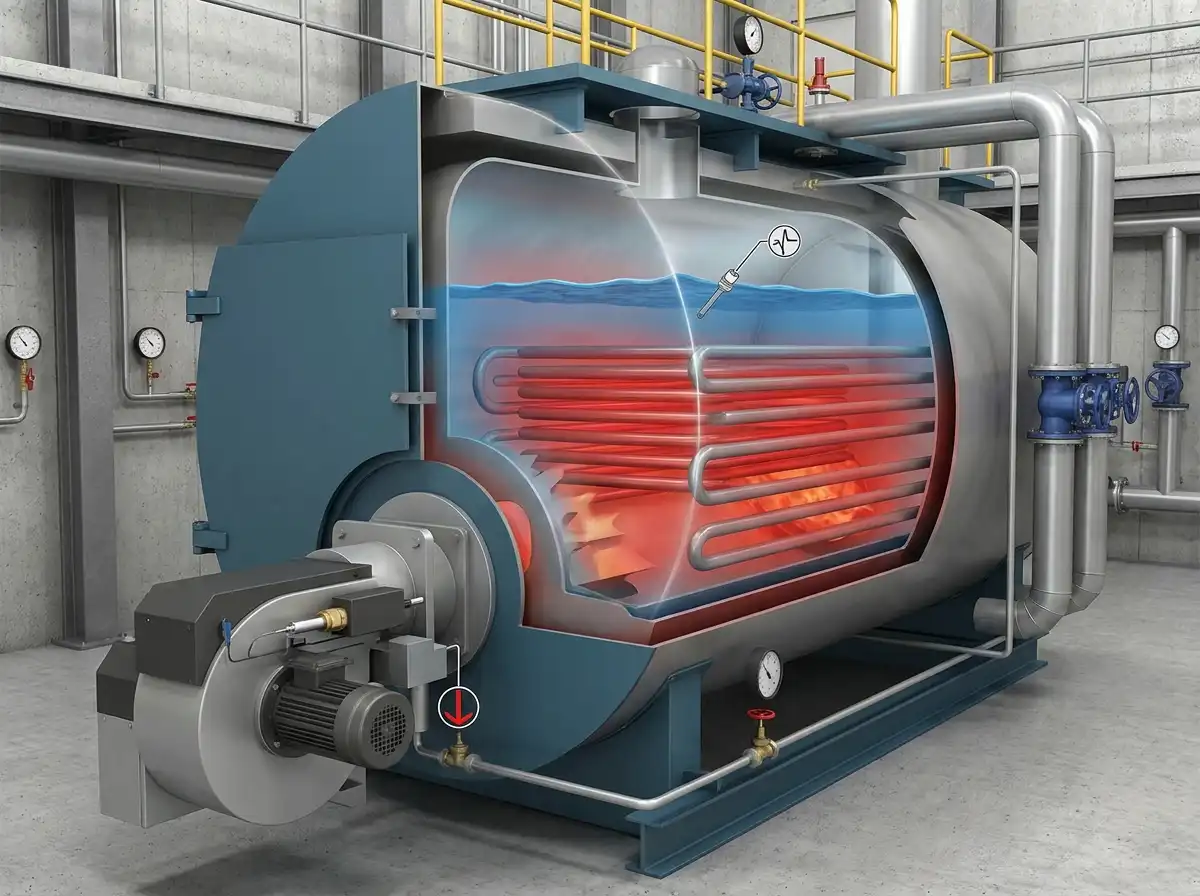
A lockout labeled “low water” does not prove the cutoff itself failed. The boiler may have experienced a real feedwater or return problem. Before resetting, preserve the alarm, observe available level indications under approved procedure, and document the operating condition. “A low-water trip is evidence. Resetting before recording the level, pump status, and alarm sequence can erase the information needed to prevent the next trip,” says a lead boiler service technician at Choice Mechanical in Indianapolis.
Possible system causes include:
- Feedwater pump failure or loss of power
- Closed valve, blocked strainer, or failed check valve
- Low feed or condensate tank level
- Failed level controller or feedwater valve
- Rapid steam-load change and unstable level
- Excessive blowdown, leakage, or loss of condensate return
- Foaming, carryover, or false level indication
- Incorrect piping or control sequence
Probe and Float Controls Fail Differently
| Control type | How it detects water | Common concerns |
|---|---|---|
| Conductivity probe | Uses water’s electrical conductivity to prove immersion | Scale or coating, wiring faults, grounding, water chemistry, electronics, probe position |
| Float-operated cutoff | Mechanical float moves with chamber water level | Sludge, restricted connections, sticking mechanism, worn switch, chamber leakage |
| External chamber system | Receives boiler level through connected piping | Blocked equalizing lines, incorrect valves, sediment, thermal effects |
| Integrated electronic level control | Combines sensing, logic, alarm, and sometimes feed control | Sensor input, programming, relay output, communication, power quality |
Boilers may use more than one independent low-water device, with different manual-reset, test, or operating requirements. Identify the actual arrangement before applying a service procedure.
Why Probe Cutoffs Nuisance Trip
A probe must make reliable electrical contact with boiler water. Mineral scale, oil, treatment residue, or other coating can insulate it. Loose wiring, poor grounding, moisture at terminals, failed electronics, or water conductivity outside expected conditions may also affect the circuit.
Cleaning must follow the control manufacturer’s method. Abrasive damage, altered probe surface, incorrect replacement length, or improper installation can create new problems. After service, the cutoff needs an approved functional test.
Why Float Chambers Become Unreliable
Sludge can accumulate in a float chamber and connecting piping. The float may move slowly or remain at a level that no longer represents the boiler. A worn linkage or switch can fail intermittently. Closed or restricted equalizing connections can isolate the chamber from actual boiler level.
Routine blowdown may help clear sediment in designs that require it, but the procedure, frequency, boiler condition, and operator safety requirements must be established for that equipment. Opening hot pressurized blowdown valves without training can cause severe injury.
Foaming Can Make the Level Look Better Than It Is
High dissolved solids, oil, chemical imbalance, rapid load change, or contamination can make boiler water foam. The sight glass, probe, float, and steam separation may then respond to an unstable mixture rather than a calm water surface.
Operators may see a level that rises and falls dramatically with firing or feedwater. Investigation should include water chemistry, blowdown, makeup, condensate contamination, control tuning, and steam demand, and not just the cutoff.
Sight Glass, Level Controller, and Cutoff Must Tell a Consistent Story
A sight glass is an important independent indication when properly installed, clean, and connected. Restricted glass connections, leaking valves, improper blowdown, or dirty glass can produce a misleading level.
Compare the cutoff event with sight-glass level, feed-pump command, feedwater flow, steam load, and the primary level controller. Disagreement between indications is itself a reason to stop and investigate.
Testing Is Device- and Jurisdiction-Specific
Low-water cutoffs may require blowdown tests, evaporation tests, probe tests, simulation, or other procedures at defined intervals. A test that proves the switch changes state may not prove the sensing chamber and piping respond to actual boiler level.
Follow manufacturer instructions, applicable code, jurisdictional rules, inspector or insurer requirements, and the facility’s written procedure. Record the date, device, method, result, operator, deficiencies, and corrective work. “A test should prove the complete safety function—from water level to burner shutdown—not merely that a light turns on,” says a lead boiler service technician at Choice Mechanical in Indianapolis.
Example: The Monday-Morning Lockout
An Indianapolis school boiler repeatedly locks out on low water during Monday warm-up. The control is replaced, but the event returns. During normal occupied operation, the boiler appears reliable.
Trend and field review show that the weekend setback creates a steep morning steam demand. Condensate has not yet returned, the feed tank level falls, and the pump cannot maintain boiler level under the sudden load. The cutoff is responding correctly.
The corrective plan may address warm-up sequence, tank and pump performance, condensate-return delay, steam leaks, and feed control. This representative scenario demonstrates why replacing the safety device can leave the system cause untouched. Choice Mechanical provides commercial boiler service for Indianapolis and Central Indiana facilities.
What to Record After a Low-Water Event
- Boiler identification, date, time, and exact alarm
- Firing rate and steam or heating load
- Sight-glass level and whether it was stable
- Feed-pump command, status, amperage, and verified flow if available
- Feed or condensate tank level and temperature
- Valve position, pressure, and relevant BAS trends
- Makeup-water and condensate-return conditions
- Water-treatment observations such as foaming or carryover
- Actions taken before and after reset
If a low-water condition or overheating is suspected, do not add water to a hot dry boiler or return it to service without following qualified emergency and inspection procedures.
Low-Water Cutoff FAQs
Can a low-water cutoff be bypassed temporarily?
No. Bypassing defeats a critical burner safety and can expose the boiler to catastrophic overheating.
Why does the cutoff trip when the sight glass shows water?
The probe or chamber may be fouled, connections may be restricted, wiring may be faulty, the glass may be misleading, or level may be unstable. All indications must be tested.
How often should a low-water cutoff be tested?
Use the frequency and method required by the manufacturer, boiler design, jurisdiction, insurer, and facility procedure. Different primary and secondary devices may have different requirements.
Can water chemistry affect an electronic cutoff?
Yes. Conductivity and probe coating can affect some designs. Coordinate mechanical service with the qualified water-treatment program.
Does replacing the cutoff fix a low-water trip?
Only if the device was proven faulty. Feedwater, return, load, chemistry, level control, and piping problems can produce legitimate trips.
Protect the Boiler by Respecting the Trip
A low-water cutoff should interrupt operation when the boiler cannot prove safe water level. The right response is to determine whether the water was low, verify the complete safety function, and repair the device or system condition supported by evidence.
Technicians should follow the exact manufacturer controls and service information for the installed boiler. Choice Mechanical provides commercial support for equipment including Lochinvar boilers and water heaters.
For recurring low-water alarms, feedwater problems, or boiler lockouts, call Choice Mechanical at (317) 885-0200 or request commercial boiler service. If the event involves suspected overheating, active leakage, or loss of critical heat or steam, use Choice Mechanical’s 24/7 emergency boiler service.