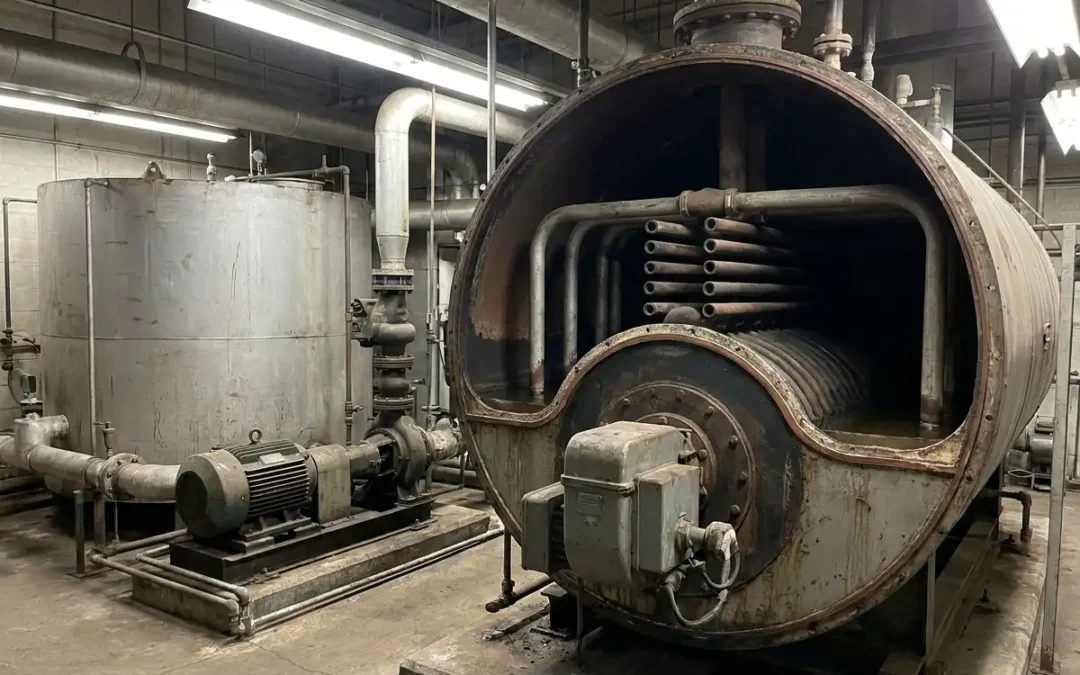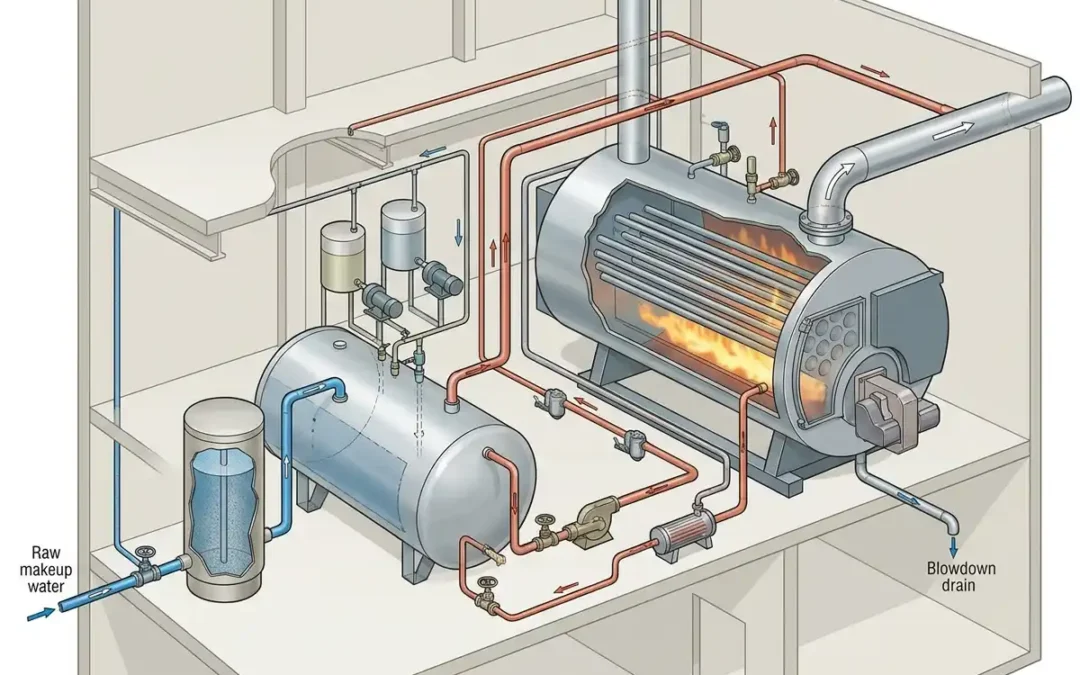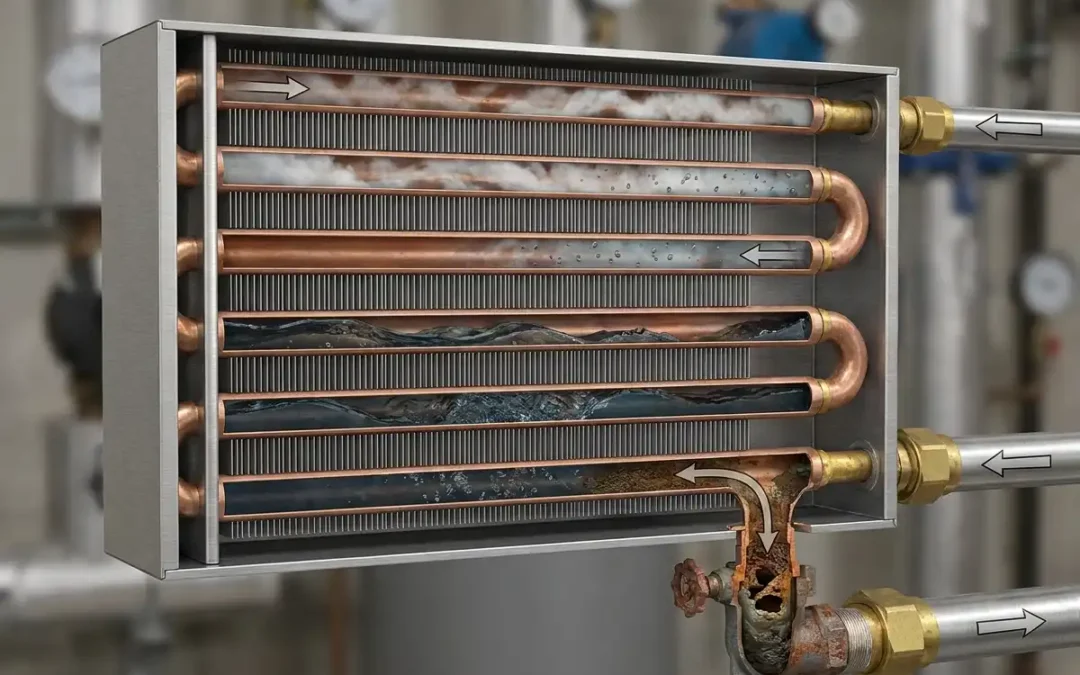
Every pound of clean condensate that returns to a boiler plant brings back two things the facility already paid for: treated water and heat. When that condensate leaks, flashes from an open vent, backs up behind failed traps, or never reaches the receiver, the boiler must replace it with colder makeup water.
Boiler condensate return problems therefore affect more than a pump or tank. They can increase fuel, water, softener regeneration, chemical use, blowdown, corrosion exposure, and the time required to produce steam.
Think in Terms of a Condensate Balance
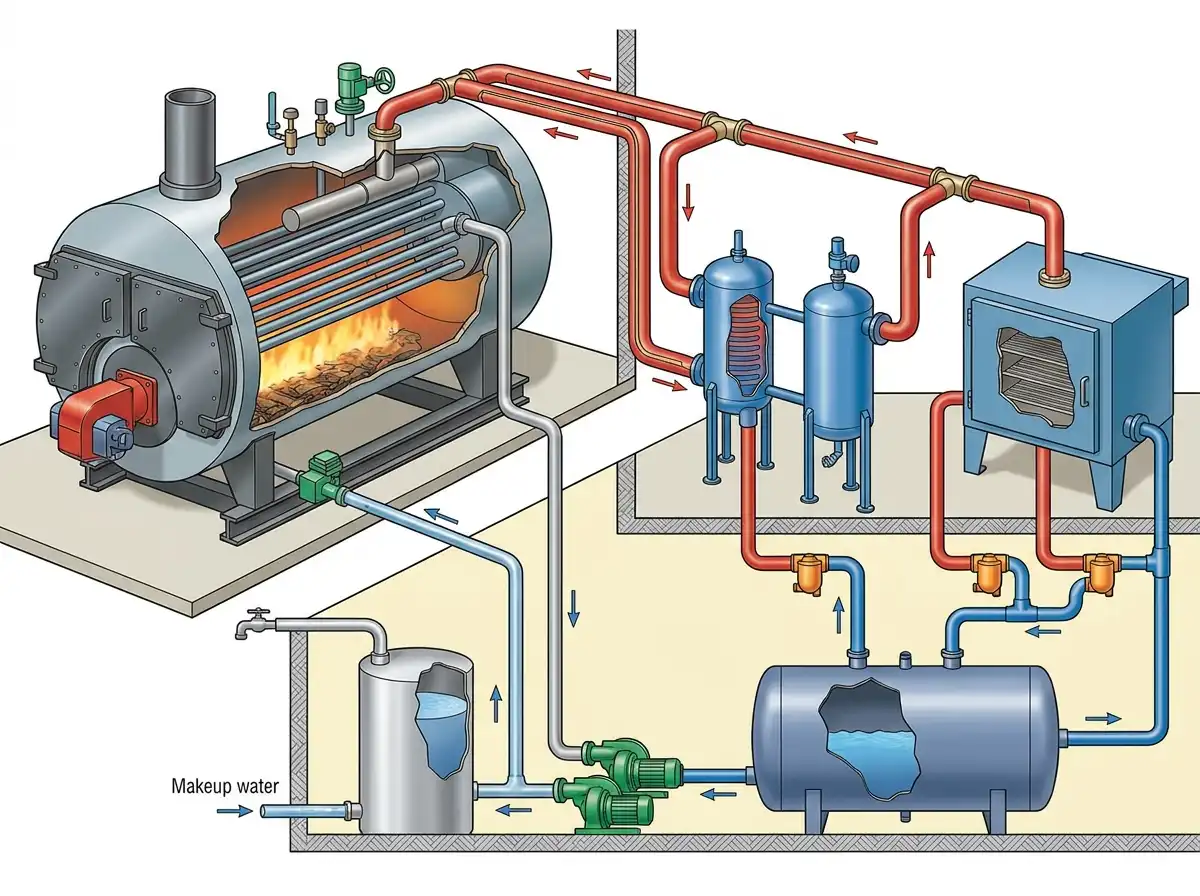
A steam system sends water away from the boiler as vapor. Some steam is consumed by a process, lost through leakage, or intentionally not returned. The rest should condense and flow or be pumped back through the return system.
A basic investigation compares steam production and process use with condensate return and makeup-water demand. Exact metering is not available in every plant, but trends in makeup volume, receiver level, pump operation, return temperature, and visible venting can reveal changes. “When makeup water rises, the boiler room is telling us that treated water is leaving the cycle somewhere. The next job is to find where and why,” says a lead boiler service technician at Choice Mechanical in Indianapolis.
Where Condensate Return Efficiency Is Lost
| Return problem | What the plant may observe | Broader consequence |
|---|---|---|
| Leaking return piping | Wet insulation, corrosion, water loss, low receiver level | More makeup, oxygen, treatment, and property damage |
| Failed-open steam traps | Very hot returns, flash steam, receiver venting, pressure interaction | Live-steam loss and unstable return operation |
| Failed-closed traps or blocked lines | Slow heating, flooded coils, hammer, little return flow | Reduced process heat transfer and freeze risk |
| Failed condensate pump | High receiver level, overflow, cycling fault, downstream boiler-feed problem | Lost condensate and possible interruption of steam production |
| Excessive flash loss | Continuous vapor at receiver vent or flash vessel | Heat and water loss; possible opportunity for controlled heat recovery |
| Contaminated return | Oil, chemicals, conductivity, odor, color, or process-specific alarm | Boiler-water upset, foaming, deposits, or corrosion |
Why Hot Return Water Reduces Fuel Demand
Makeup water entering at a lower temperature requires more energy to reach feedwater temperature and ultimately become steam. Hot condensate has already been heated and often needs less additional energy.
The actual savings from improved return depend on return temperature, boiler pressure, system efficiency, makeup temperature, operating hours, and the amount recovered. Calculations should use measured plant data rather than a generic percentage.
High Makeup Water Brings More Than a Heating Penalty
New water can carry hardness, dissolved oxygen, alkalinity, and dissolved solids. Pretreatment and chemicals must manage that additional load. More solids entering the boiler may require additional blowdown, which releases more hot treated water.
The cycle can compound:
- A return leak loses hot condensate.
- Cold makeup replaces it.
- The plant uses more fuel and treatment.
- Additional incoming solids increase blowdown demand.
- Blowdown removes more heat and water.
That is why makeup-water metering is a useful boiler-plant performance indicator.
Receiver and Pump Problems Can Be Intermittent
A condensate pump may work at low load and fail during peak return. A float mechanism can stick, a vent can be restricted, a check valve can leak backward, a strainer can plug, or a pump can cavitate when hot condensate approaches its available suction conditions.
Short pump cycles may indicate an undersized receiver, poor level differential, check-valve leakage, excessive inflow, or control trouble. Long cycles with rising level can indicate reduced pump capacity or downstream restriction. Motor amperage alone does not prove flow.
Choice Mechanical repairs commercial boiler feed and condensate tanks, including related pumps, level controls, and mechanical connections.
Flash Steam Is Expected. Uncontrolled Loss Is Not
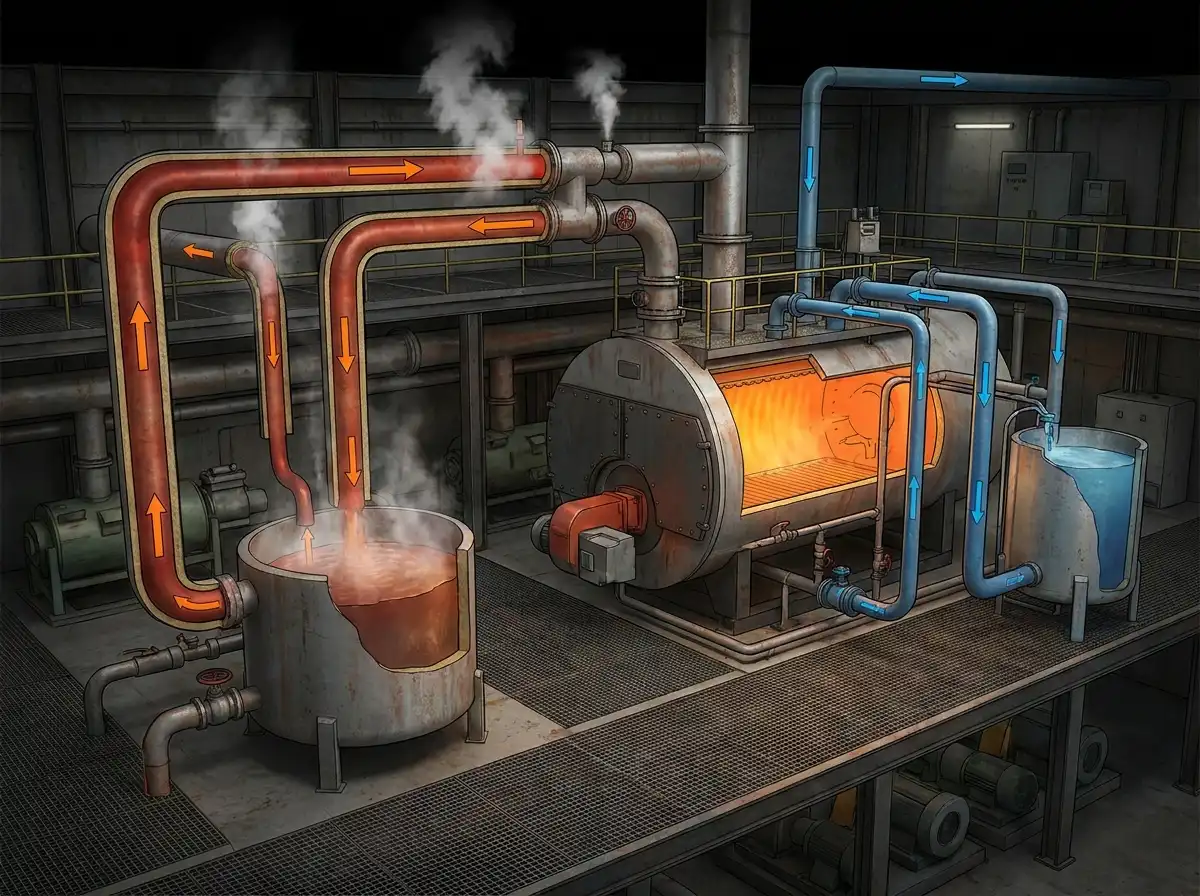
When high-pressure condensate enters a lower-pressure return or receiver, part of it can flash into steam. The amount depends on pressure and temperature. Visible vapor at a vent is not automatically a failed trap, but excessive or changing venting deserves investigation.
Potential causes include failed-open traps, excessive pressure drop, overheated condensate, receiver conditions, or an opportunity for flash-steam recovery. Any recovery project must account for pressure, load, contamination, controls, and safe venting.
Do Not Return Contaminated Condensate Blindly
Condensate from a leaking process heat exchanger can carry oil, food product, cleaning chemical, or another contaminant. Returning it may save heat while threatening the boiler and steam quality.
Facilities with contamination risk should define monitoring, alarm limits, diversion, sampling, and response. The value of recovered heat must be weighed against the consequence of introducing material into the boiler cycle. “The best condensate is hot, clean, and reliably returned. If cleanliness is uncertain, recovery becomes a risk decision—not an efficiency shortcut,” says a lead boiler service technician at Choice Mechanical in Indianapolis.
Example: The Receiver Vent That Never Stops
A food facility near Indianapolis notices continuous vapor from the condensate receiver and rising boiler makeup. The receiver is blamed for being too small.
A system review compares vent behavior with production shifts and surveys steam traps. Several process traps pass live steam during operation, raising return temperature and flash volume. Repair reduces venting, but the project also verifies return pressure, receiver capacity, pump cycles, and contamination monitoring.
This representative scenario shows why replacing the tank alone would not have corrected the incoming condition. Choice Mechanical supports foodservice and food-production mechanical systems across Central Indiana.
A Condensate Return Diagnostic Dataset
Collecting the following information over representative load periods can narrow the investigation:
- Boiler steaming rate or firing trend
- Makeup-water meter readings
- Receiver level and temperature
- Condensate-pump starts, runtime, amperage, and verified flow
- Steam, return, and discharge pressures
- Trap survey results
- Visible venting, overflow, and leak locations
- Water-treatment and contamination test results
- Production or occupancy schedule
Align timestamps. A makeup spike is far more useful when it can be compared with a process shift, receiver overflow, pump alarm, or trap event.
Condensate Return FAQs
What is a good condensate return percentage?
There is no universal target. It depends on how steam is used, contamination risk, direct injection, process losses, pressure, and the system design. Establish a site-specific recoverable balance.
Why is the condensate pump noisy?
Possible causes include cavitation, hot condensate, poor suction conditions, air, worn bearings, misalignment, debris, or operating away from the intended point.
Does visible steam at the receiver vent prove a trap failed open?
No. Some flash steam can be normal. Changing or excessive venting should be evaluated with pressure, temperature, load, and trap condition.
Can leaking returns damage the boiler?
Indirectly, yes. Lost condensate increases makeup water, oxygen, minerals, chemicals, and blowdown. Those changes can contribute to scale, corrosion, and operating instability.
Should every condensate source be returned?
No. Condensate with unacceptable contamination risk may need monitoring, treatment, diversion, or disposal under the facility’s approved process.
Find the Missing Water and Recover Its Heat
Condensate return efficiency is a plant-wide result. Traps, piping, receivers, pumps, treatment, process equipment, and boiler controls all influence how much clean hot water makes it back.
If makeup demand, receiver venting, pump cycling, water hammer, or return leaks are increasing, call Choice Mechanical at (317) 885-0200 or request commercial boiler and piping service. Bring makeup trends, trap records, receiver data, and process schedules so the investigation can begin with a water balance.