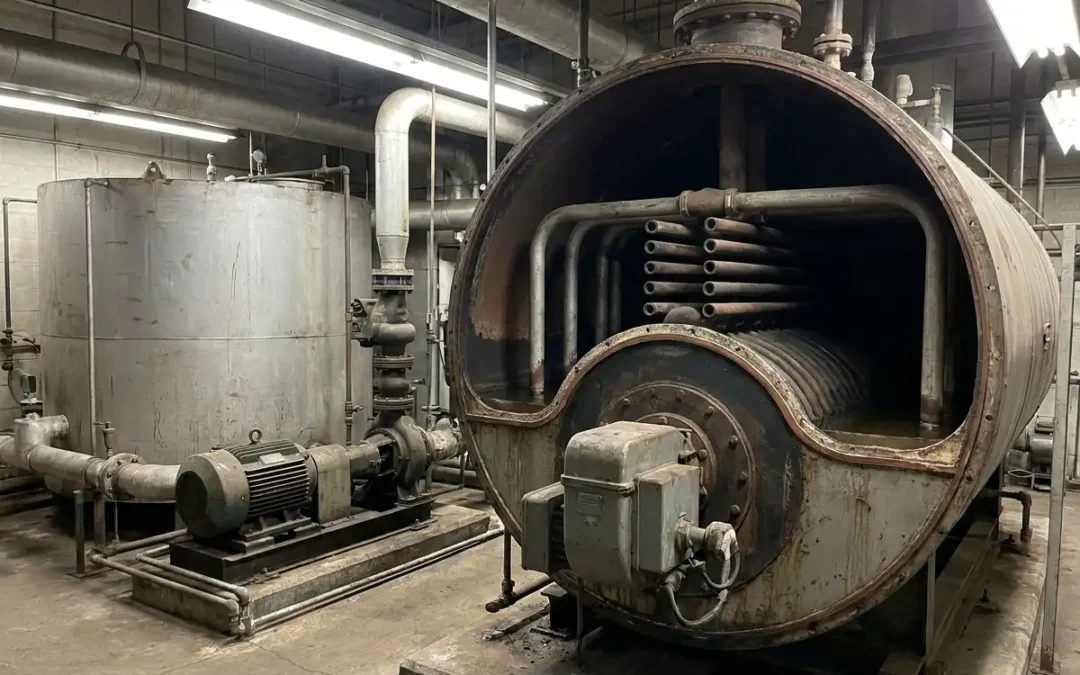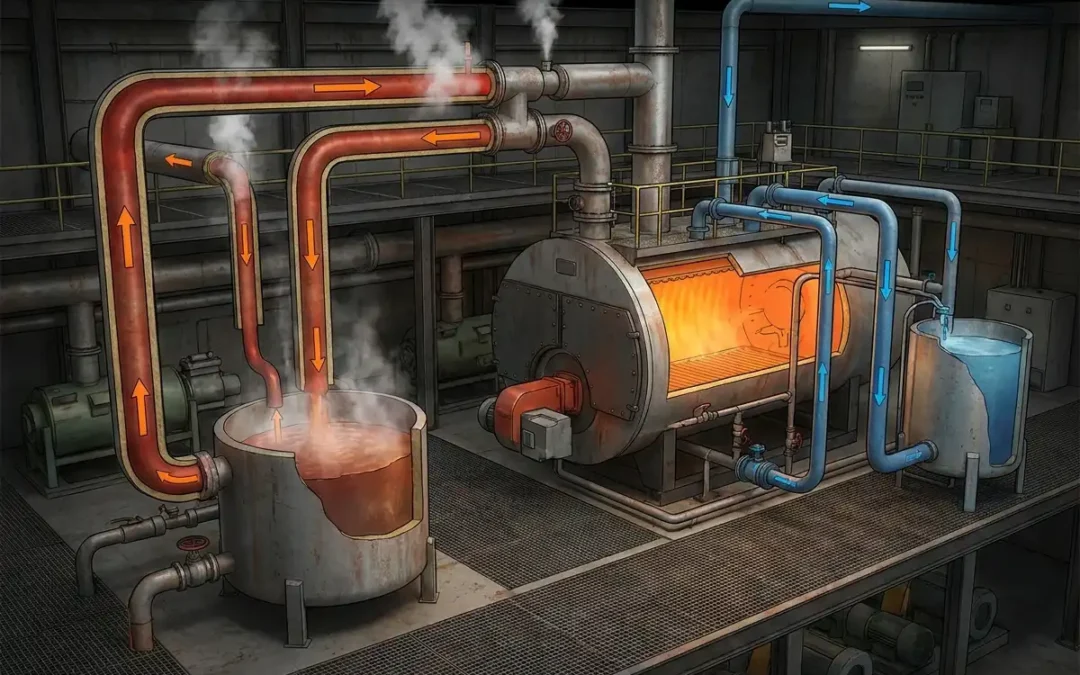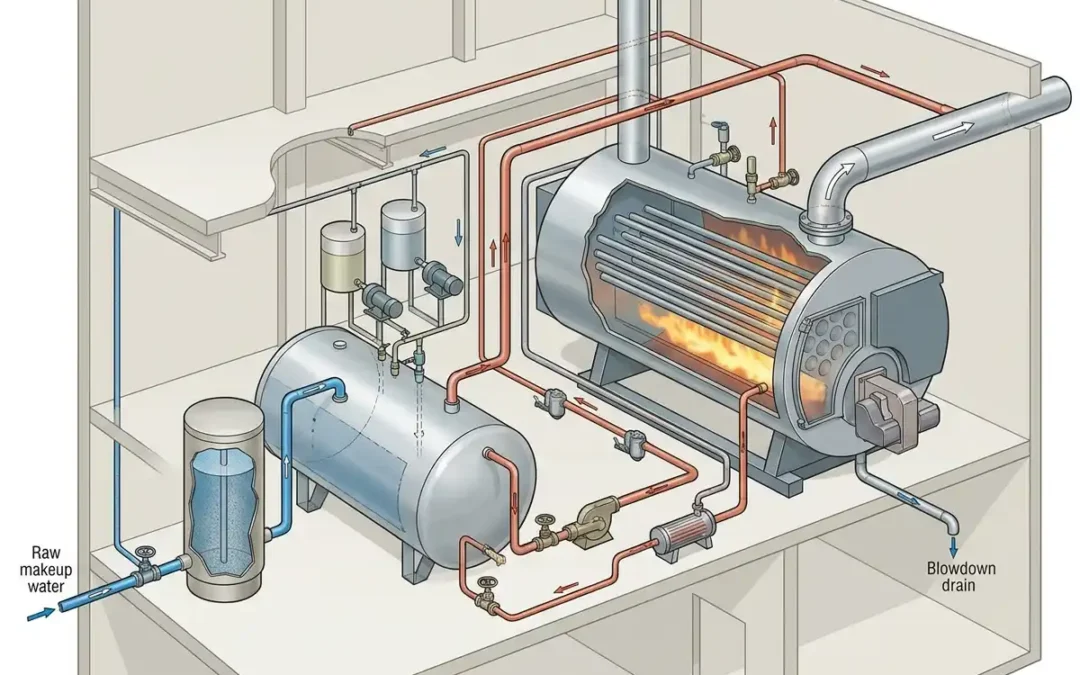
A steam trap is small compared with a boiler, but a failed trap can change conditions across an entire steam system. One failure may release live steam into a condensate return. Another may hold condensate inside a coil. Across a facility with dozens or hundreds of traps, the combined effect can include fuel waste, unstable pressure, water hammer, slow heating, high makeup-water demand, and premature return-system damage.
Commercial steam trap failure is not one condition. A trap can fail open, fail closed, leak intermittently, become plugged, lose prime, or be installed in the wrong application. A useful survey identifies the failure mode and the operating context before a repair is prioritized.
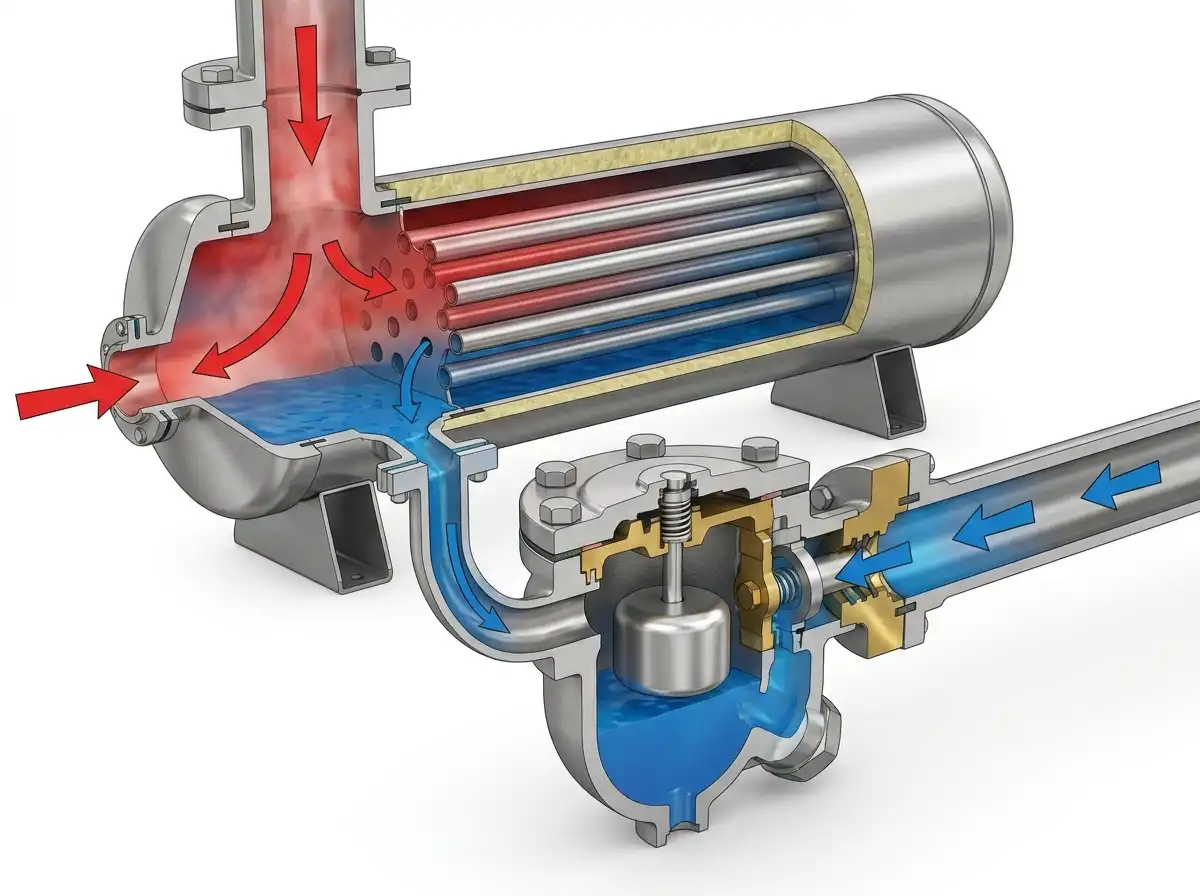
The Trap Has Two Jobs
A steam trap should discharge condensate and non-condensable gases while limiting the passage of live steam. To do that, it must suit the equipment, pressure, condensate load, backpressure, startup requirement, and installation.
Different trap designs use temperature, density, or phase behavior in different ways. Thermostatic, thermodynamic, float-and-thermostatic, inverted-bucket, and other designs do not all sound or cycle the same. Testing must account for the trap type. “A hot trap is not automatically a good trap, and a cold trap is not automatically failed. We need to know what load it serves and what the trap should be doing at that moment.” notes a lead boiler service technician at Choice Mechanical in Indianapolis.
Failed Open and Failed Closed Create Opposite Problems
| Failure mode | Immediate effect | Possible system consequence |
|---|---|---|
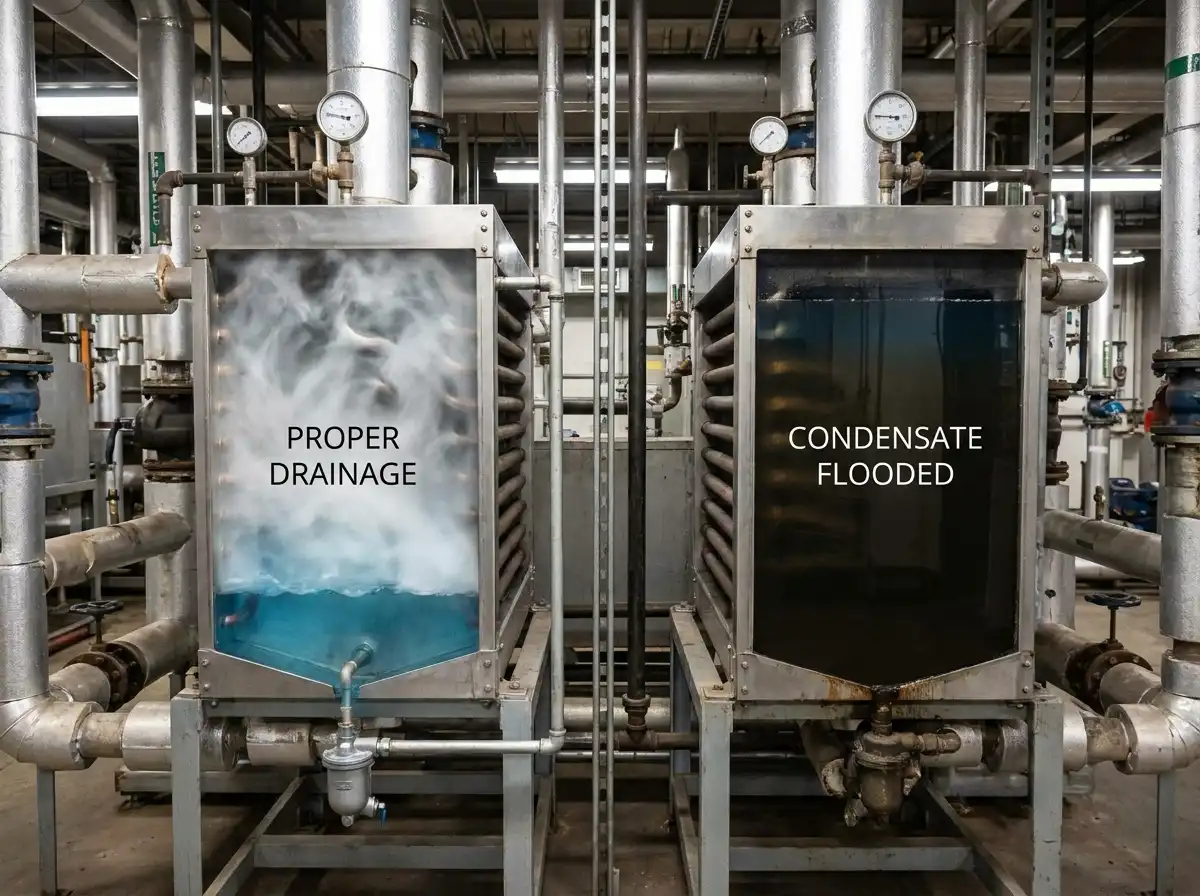
| Failed open or leaking | Live steam passes into return piping | Fuel and water loss, high return temperature, flash steam, return pressure, equipment interaction |
| Failed closed or plugged | Condensate cannot leave the equipment | Slow heating, flooded coil, water hammer, corrosion, freezing risk |
| Intermittent or cycling fault | Trap behavior changes with load or pressure | Complaints appear only at startup, high load, or low pressure |
| Wrong trap or undersized capacity | Condensate backs up despite an operable mechanism | Poor startup, reduced heat transfer, repeated maintenance |
| Excessive differential or return backpressure | Trap cannot discharge as expected | Stall, flooded equipment, unstable operation |
How Failed-Open Traps Waste Energy
Steam contains energy used to heat a process, coil, or space. When live steam crosses a failed-open trap, that energy enters the return system without completing useful work at the intended load. Some steam may flash at lower pressure, vent from a receiver, or raise condensate temperature and pressure.
The boiler must replace lost steam. That can increase fuel, treated makeup water, chemical use, blowdown, feedwater heating, and auxiliary equipment operation. The exact cost depends on steam pressure, orifice or leak rate, operating hours, fuel cost, and how much condensate is recovered.
Rules of thumb can overstate or understate loss. A defensible estimate identifies trap pressure, failure severity, schedule, and local utility inputs.
How Failed-Closed Traps Damage Performance
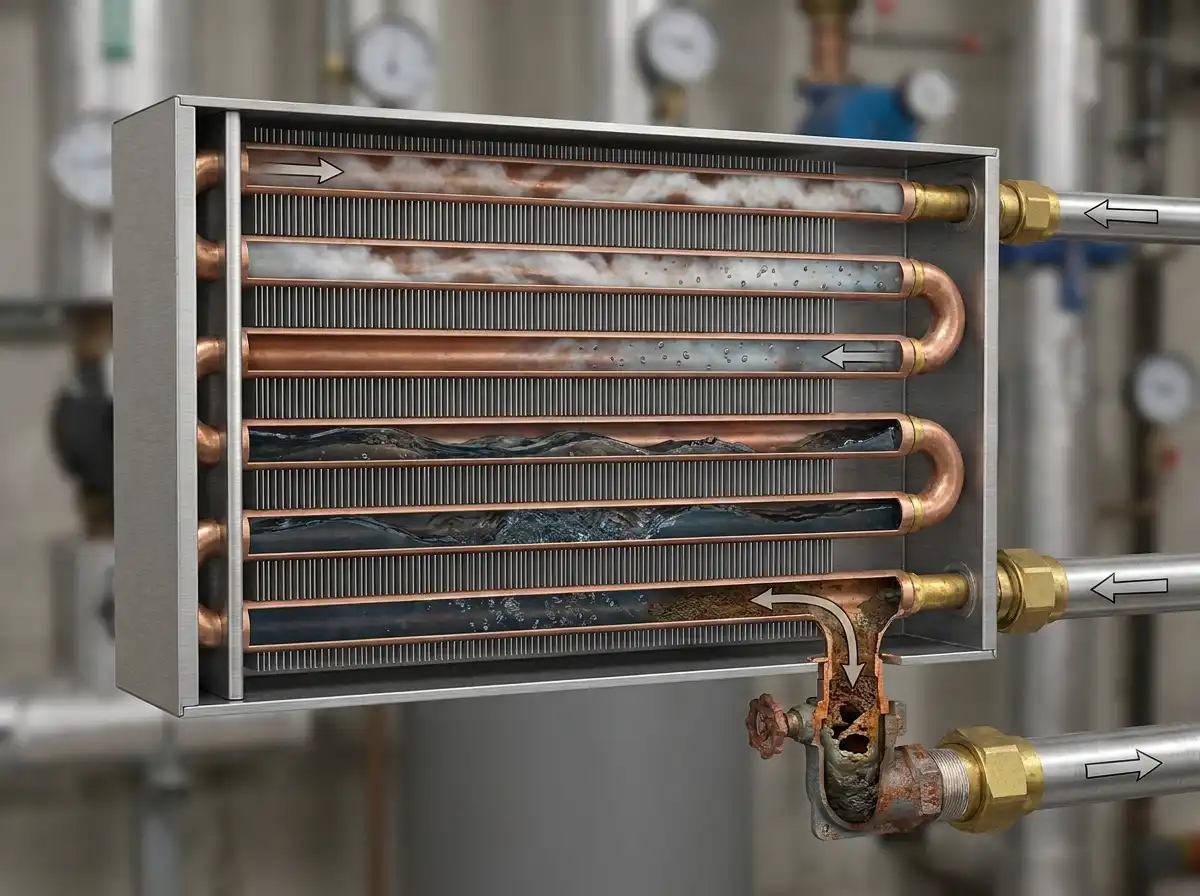
A closed or plugged trap holds condensate in the heat exchanger or line. Steam then contacts less effective heat-transfer area, and the load may warm slowly or unevenly. Condensate carried by high-velocity steam can create water hammer.
In cold locations, backed-up condensate can freeze. In process equipment, stall or flooding can disrupt temperature control. The boiler may appear short of capacity because terminal equipment cannot use the steam it receives.
Water Hammer Is a Warning, Not a Normal Steam Sound
Water hammer can occur when condensate collects and is accelerated by steam, when steam collapses against cooler condensate, or when piping, drainage, slope, trapping, or startup practices are incorrect. The resulting force can damage valves, fittings, supports, coils, and piping.
A failed trap may contribute, but replacing the nearest trap does not prove the cause. Investigate drip legs, slopes, strainers, check valves, lift, return pressure, warm-up, control valves, and the arrangement around the affected equipment.
Why Surface Temperature Alone Can Mislead
Comparing inlet and outlet temperature can reveal useful patterns, but the result depends on load, pressure, trap design, insulation, ambient conditions, and whether condensate is flowing. A trap discharging hot condensate can have a hot outlet without leaking live steam. A lightly loaded trap may cycle and appear cool between discharges. “The survey is strongest when temperature, sound, trap type, pressure, and the served equipment all tell the same story,” says a lead boiler service technician at Choice Mechanical..
Reliable surveys often combine methods:
- Visual inspection for piping, installation, leakage, bypass position, insulation, and identification
- Temperature measurement at consistent inlet and outlet locations
- Ultrasonic testing interpreted for trap type and operating condition
- Operating review of pressure, load, control-valve position, and return conditions
- Follow-up confirmation after repair to verify the expected behavior
Build a Trap Register Before Failures Become Anonymous
A trap program begins with an inventory. Assign a unique identifier and record location, service, manufacturer, model, type, connection size, pressure, installation notes, survey result, repair date, and parts used.
Without a register, teams may repeatedly test accessible traps while missing concealed or remote units. Repair history also disappears, making it difficult to identify traps that fail often because they are misapplied or exposed to abnormal conditions.
Example: High Makeup Water With No Obvious Leak
A Central Indiana facility notices rising boiler makeup water and visible vapor near a condensate receiver vent. No major steam leak is found in occupied areas. The boiler plant continues to meet load, so the problem is treated as a tank issue.
A steam-trap survey identifies several failed-open traps serving process coils. Live steam entering the return system flashes at the receiver and raises return temperature. Repairing the traps reduces the symptom, but the work also reviews return pressure, receiver venting, pump operation, and water balance.
This representative scenario shows why trap failures connect to the boiler room. Choice Mechanical services boiler feed and condensate return equipment as part of commercial steam-system support.
Prioritize Repairs by Consequence
Not every failed trap carries the same risk. Priorities can consider:
- Safety concerns, severe hammer, or risk of physical damage
- Critical process, freeze-protection, or production impact
- Large failed-open steam loss
- Failures affecting multiple downstream devices or return pressure
- Recurring failures that suggest misapplication
- Routine failures that can be grouped into a planned outage
After repair, confirm operation under representative load. A new trap installed into a blocked strainer, high backpressure, incorrect lift, or failed check valve may appear to fail again.
Steam Trap FAQs
How often should commercial steam traps be surveyed?
Frequency depends on trap population, pressure, operating hours, criticality, historical failure rate, and facility economics. High-use or high-consequence systems generally justify more frequent review.
Can a failed steam trap increase boiler fuel use?
Yes. A failed-open trap can waste live steam, forcing the boiler to produce replacement steam. Failed-closed traps can also reduce heat-transfer effectiveness and lengthen operation.
Does a hot outlet prove the trap is leaking?
No. Properly discharged condensate can be hot. Trap type, inlet and outlet conditions, sound, load, and cycling behavior must be considered.
Why do replacement traps fail repeatedly?
Possible reasons include wrong selection, debris, water hammer, excessive differential pressure, backpressure, poor installation, freezing, or an unresolved system problem.
Should a steam-trap bypass remain open?
Normally, an open bypass can pass live steam and defeat trapping. Valve position should follow the approved system procedure; unexplained open bypasses should be investigated.
Recover the Steam Before Adding Boiler Capacity
A trap survey can uncover energy loss and distribution failures that no boiler adjustment can correct. It also gives facility teams a repeatable asset record instead of a collection of unidentified devices.
For commercial steam-system troubleshooting in Indianapolis or Central Indiana, call Choice Mechanical at (317) 885-0200 or request boiler and piping service. Bring the trap inventory, steam and return pressures, makeup-water trend, and locations of water hammer or slow heating if available.