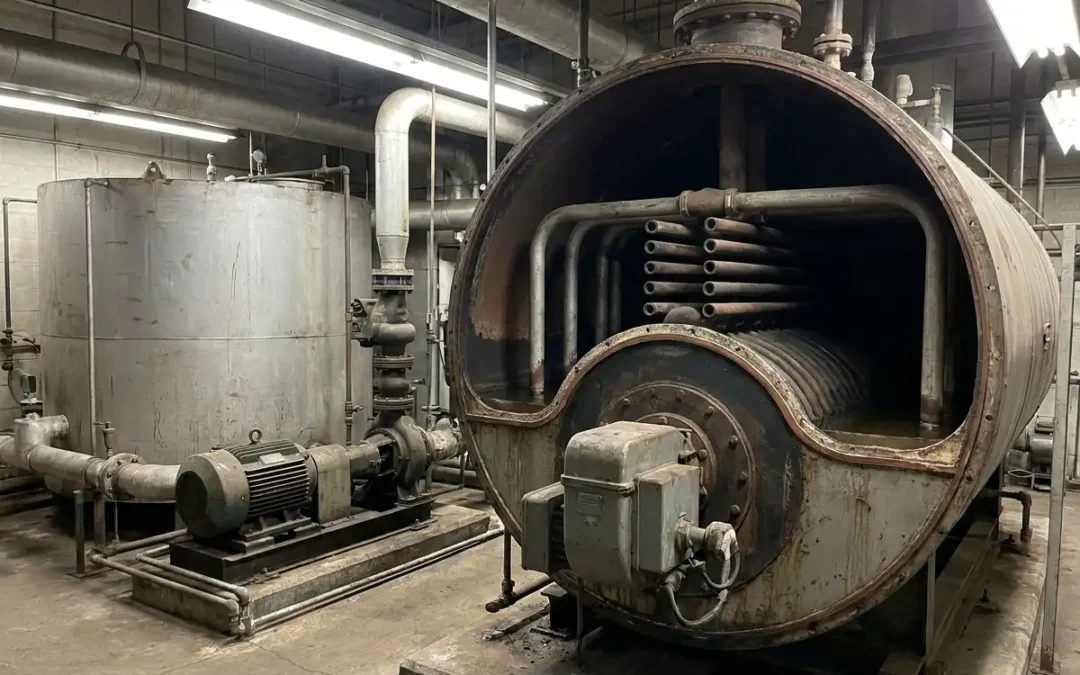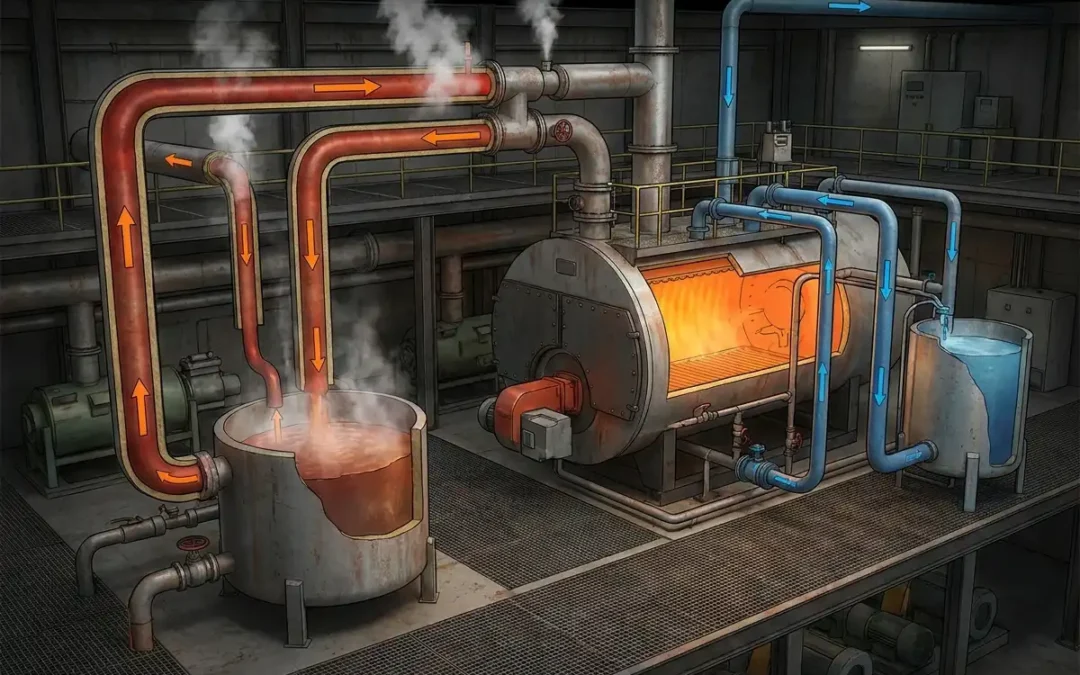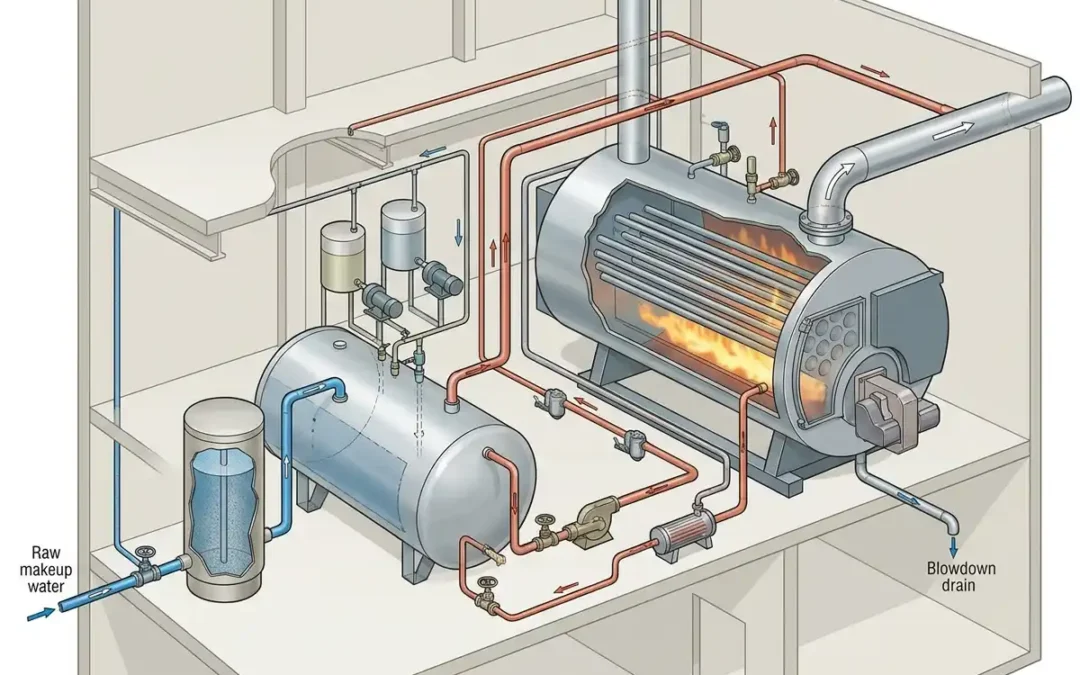
A burner can produce heat and still be operating poorly. The flame may look acceptable through the sight glass while excess air carries energy up the stack, carbon monoxide rises at one firing rate, draft changes as building exhaust starts, or a dirty heat exchanger pushes stack temperature higher.
A commercial boiler combustion analysis turns those hidden conditions into measured data. Using calibrated instruments and an appropriate test procedure, a technician evaluates flue-gas composition, temperature, draft, and burner behavior. The readings are interpreted together, and never as isolated numbers.
Combustion Analysis Is a Test, Not Automatically a Tune-Up
The first purpose of testing is to establish how the boiler is operating under documented conditions. Adjustment may follow, but only after the technician confirms equipment condition, fuel, draft, load, safeties, manufacturer requirements, and the reason for an abnormal reading.
Changing the air-to-fuel relationship to improve one value can worsen another. Reducing excess air may improve calculated efficiency but increase carbon monoxide or compromise flame stability. A responsible tune-up protects safe, reliable combustion across the required firing range rather than chasing the highest displayed efficiency.
“The analyzer does not tune the burner. It tells us how combustion responds while we inspect and adjust the complete burner, boiler, and venting system.” says one of the lead commercial boiler technicians at Choice Mechanical.
Core Combustion Readings and What They Suggest
| Reading | What it represents | What an unexpected value may prompt |
|---|---|---|
| Oxygen (O2) | Oxygen remaining in flue gas after combustion | Review excess air, leakage, burner setup, draft, and firing rate |
| Carbon monoxide (CO) | Product of incomplete combustion | Investigate air-fuel mixing, draft, burner condition, impingement, and safety |
| Carbon dioxide (CO2) | Combustion product related to fuel and excess air | Compare with oxygen and fuel-specific expectations |
| Stack temperature | Flue-gas temperature at the test location | Review heat transfer, firing rate, water temperature, fouling, and condensation risk |
| Draft or pressure | Pressure condition in combustion and venting path | Check chimney, fan, damper, vent, building pressure, and manufacturer criteria |
| Calculated efficiency or flue loss | Instrument calculation based on measured values and fuel assumptions | Use as a combustion indicator, not a full seasonal-efficiency measurement |
Acceptable values depend on boiler and burner design, fuel, firing rate, operating temperature, test method, manufacturer information, and applicable requirements. A generic target copied from another boiler is not a commissioning standard.
Oxygen Reveals More Than “Too Much Air”
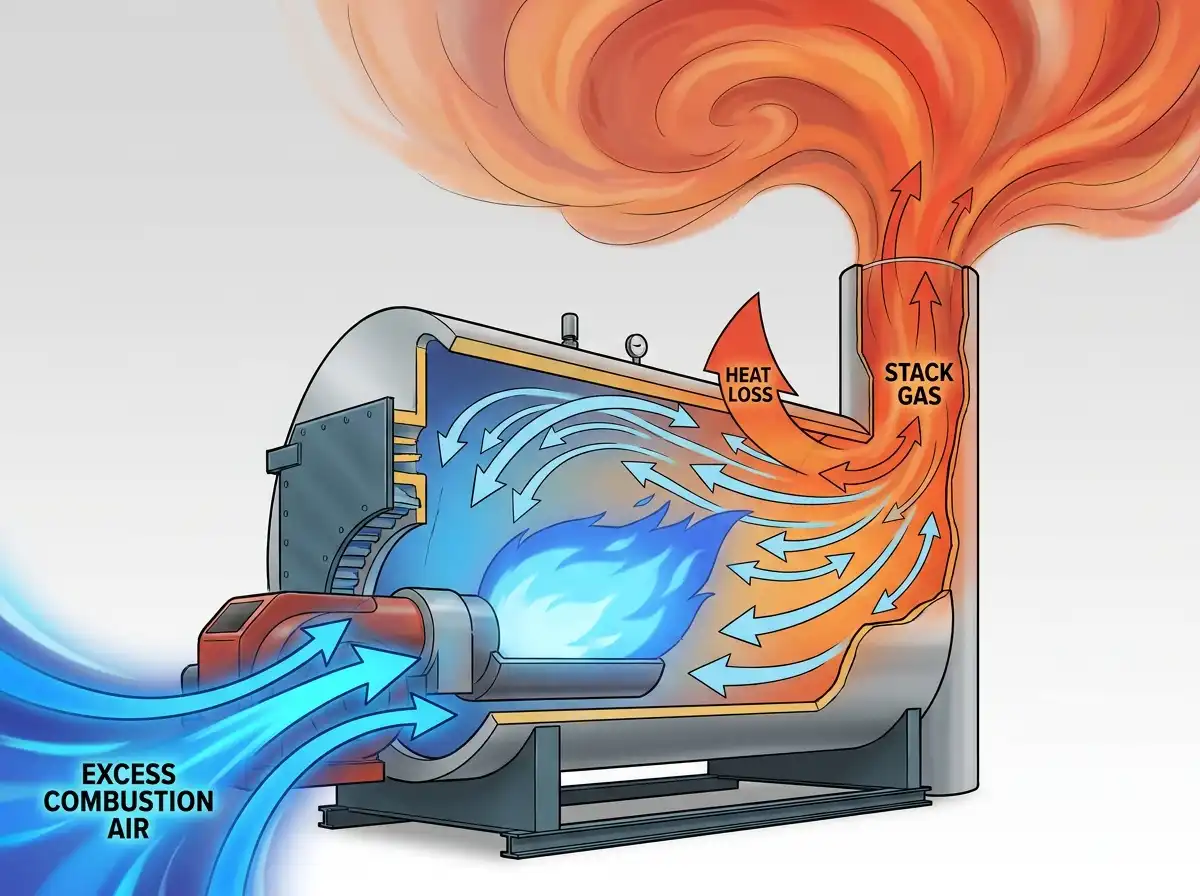
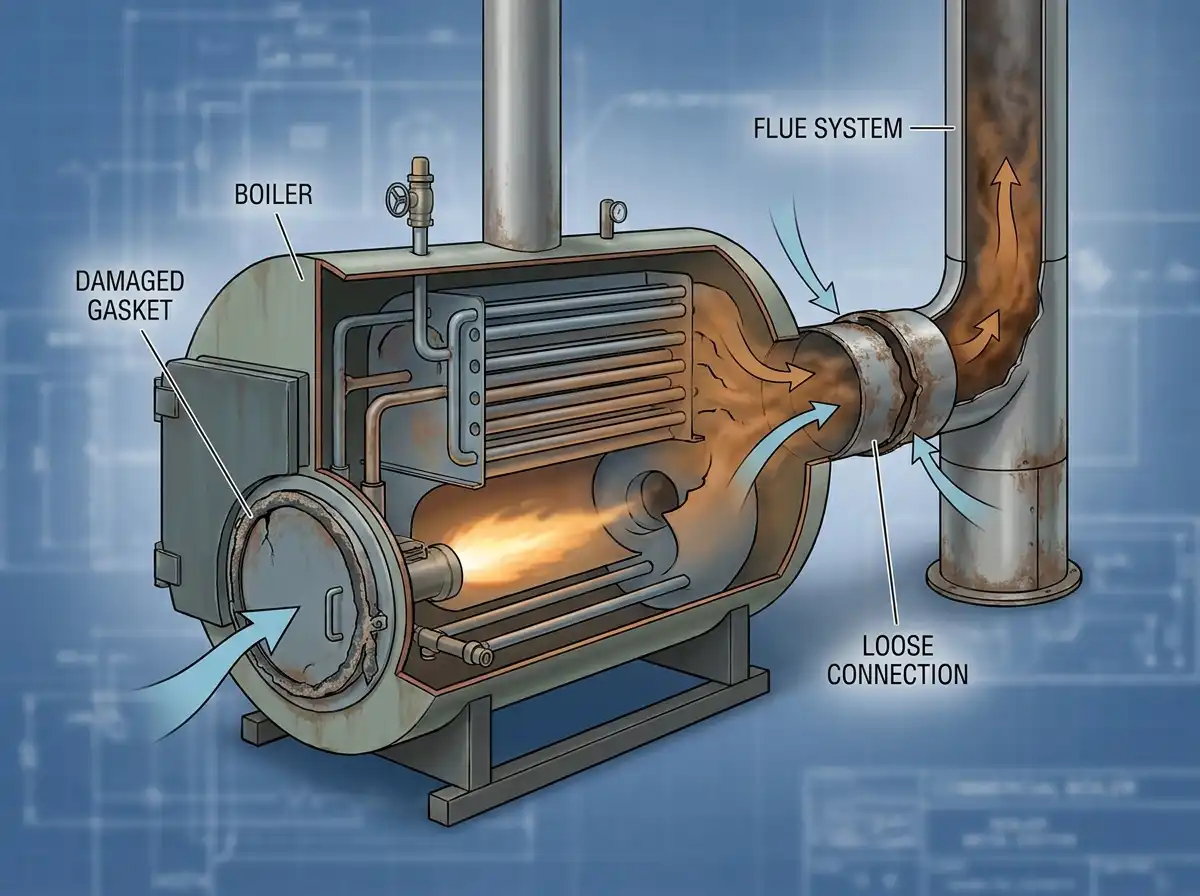
High oxygen may indicate excess combustion air, but it can also reflect air leaking into the boiler or venting system downstream of the flame. The technician should consider observation point, casing or door leakage, burner register, linkages, fan control, and draft.
Low oxygen is not automatically efficient. If air is reduced beyond stable mixing, carbon monoxide and soot can increase. Oxygen should be evaluated alongside CO, flame stability, draft, and the manufacturer’s expected operating range.
Carbon Monoxide Is a Critical Combustion Indicator
CO can rise when fuel and air do not mix completely, the flame impinges, the burner is dirty or damaged, draft is incorrect, combustion air is inadequate, or setup changes across modulation. A low reading at high fire does not prove acceptable operation at low or mid fire.
Unexpected CO requires qualified investigation. The response depends on severity, equipment, test conditions, and applicable safety procedure. It should never be “adjusted away” without understanding why it formed.
Stack Temperature Connects Combustion With Heat Transfer
Flue gas must leave hot enough for the venting system and boiler design, but excessive stack temperature can indicate heat leaving without transferring effectively into the water or steam. Fireside soot, waterside scale, excessive firing, low water flow, or operating temperature can influence the reading.
Very low stack temperature can also be a concern in equipment or venting not designed for condensing operation. Condensation chemistry, vent material, drainage, and manufacturer limits matter. “Lower is better” is not a universal rule.
Test More Than One Firing Rate
Modulating burners can behave differently at low, mid, and high fire. Linkages, cams, servos, valves, VFDs, and parallel-positioning controls must maintain an appropriate relationship across the range.
A test at only one point can miss:
- CO that rises during low-fire operation
- Excess air that increases sharply at one end of the range
- Draft instability as firing rate changes
- Flame-signal weakness during light-off or transition
- Linkage wear or hysteresis between increasing and decreasing fire
- Insufficient air or fuel at full input
The required test points and adjustment procedure should follow the equipment, burner, controls, and qualified service plan.
Building Pressure Can Change Burner Performance
A boiler room does not operate in isolation. Kitchen hoods, process exhaust, make-up air, air handlers, doors, and wind can change room and vent pressure. A boiler that tests acceptably with the building quiet may behave differently when major exhaust systems start.
Combustion-air openings, louvers, fans, and interlocks must remain functional and unobstructed. Testing may need to include representative building operating modes where safe and appropriate.
Example: Efficient at High Fire, Unstable at Low Fire
An Indianapolis office boiler receives a combustion check after occupants report occasional morning lockouts. At high fire, oxygen, CO, and draft appear stable. The boiler is declared efficient, yet lockouts continue.
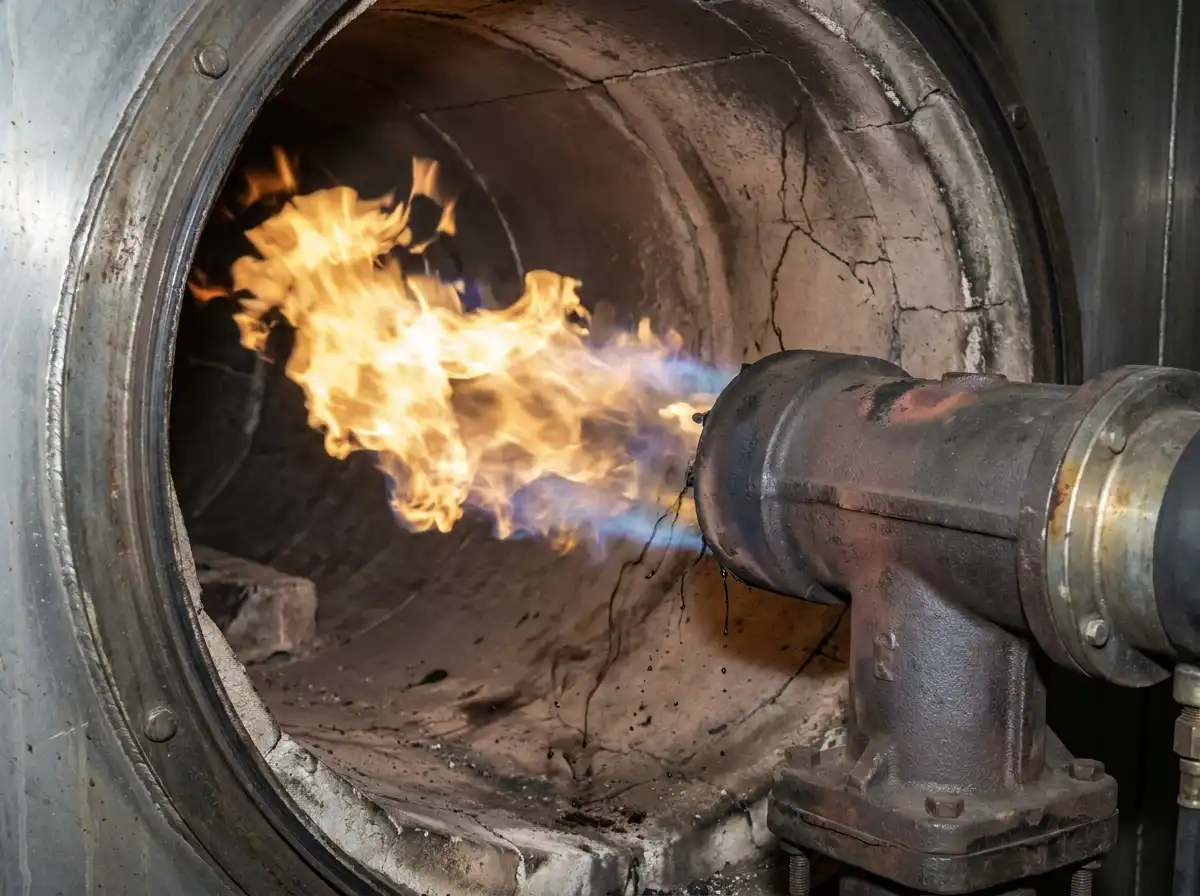
A broader test observes light-off, low fire, modulation, and morning building conditions. Low-fire CO rises and flame signal becomes unstable when the burner returns toward minimum input. Inspection finds wear in the linkage that does not appear at the high-fire position.
This representative scenario shows why the test must match the complaint. Choice Mechanical provides commercial boiler combustion analysis and services equipment from manufacturers including Cleaver-Brooks and Burnham.
What a Useful Combustion Report Should Include
A report is most valuable when another qualified person can understand the equipment, conditions, findings, and final state. “A final efficiency number without the firing rate, oxygen, CO, stack temperature, and draft is not enough to explain how the burner was operating.” says one of the lead commercial boiler technicians at Choice Mechanical. Depending on scope, record:
- Boiler and burner identification
- Fuel and relevant operating conditions
- Analyzer model, calibration or verification status, and test location
- Oxygen, CO, carbon dioxide as applicable, stack temperature, draft, and calculated values
- Firing rate or input at each test point
- Flame signal and relevant control observations
- Initial readings before adjustment
- Mechanical findings and adjustments performed
- Final readings after stable operation
- Unresolved deficiencies and recommended action
Combustion Analysis Does Not Replace Boiler Maintenance
Testing cannot correct dirty heat-transfer surfaces, failing controls, leaking gaskets, damaged refractory, poor water treatment, unstable fuel pressure, or obstructed combustion air. It helps reveal how those conditions affect operation and verifies performance after corrective work.
Trend reports over time can show drift before it becomes a shutdown or fuel penalty. A tailored commercial boiler maintenance agreement can coordinate inspection, cleaning, controls checks, combustion testing, and documented follow-up.
Commercial Boiler Combustion Analysis FAQs
How often should a commercial boiler receive combustion analysis?
The interval depends on equipment, fuel, operating hours, manufacturer guidance, code or insurer requirements, and observed drift. Testing is also appropriate after burner work, fuel changes, venting changes, or relevant control repairs.
Can combustion analysis reduce fuel use?
It can identify excess air, high stack temperature, poor modulation, and other conditions associated with fuel waste. Savings depend on the initial condition, load, controls, heat transfer, and corrective work.
Is the analyzer’s efficiency number the boiler’s actual annual efficiency?
No. It is generally a calculated combustion or flue-loss indicator at the test condition. Seasonal performance also includes cycling, standby loss, distribution, controls, load, and auxiliary energy.
Can a flame be tuned by appearance?
Visual inspection is useful but insufficient. Instrumented measurements, equipment requirements, draft, flame signal, and safe operating procedure are necessary.
Should testing be completed at high fire only?
Not for a modulating burner when reliable performance across the range matters. Appropriate low-, mid-, and high-fire testing can reveal problems hidden at one point.
Replace Assumptions With Measured Combustion Data
Combustion analysis can reveal wasted excess air, incomplete combustion, heat-transfer problems, draft instability, modulation faults, and changing burner condition. Its value comes from context, comparison, and qualified interpretation.
To schedule commercial boiler combustion analysis in Indianapolis or Central Indiana, call Choice Mechanical at (317) 885-0200 or request boiler service. Provide prior combustion reports, burner information, recent lockouts, fuel or control changes, and the operating conditions under which the concern appears.