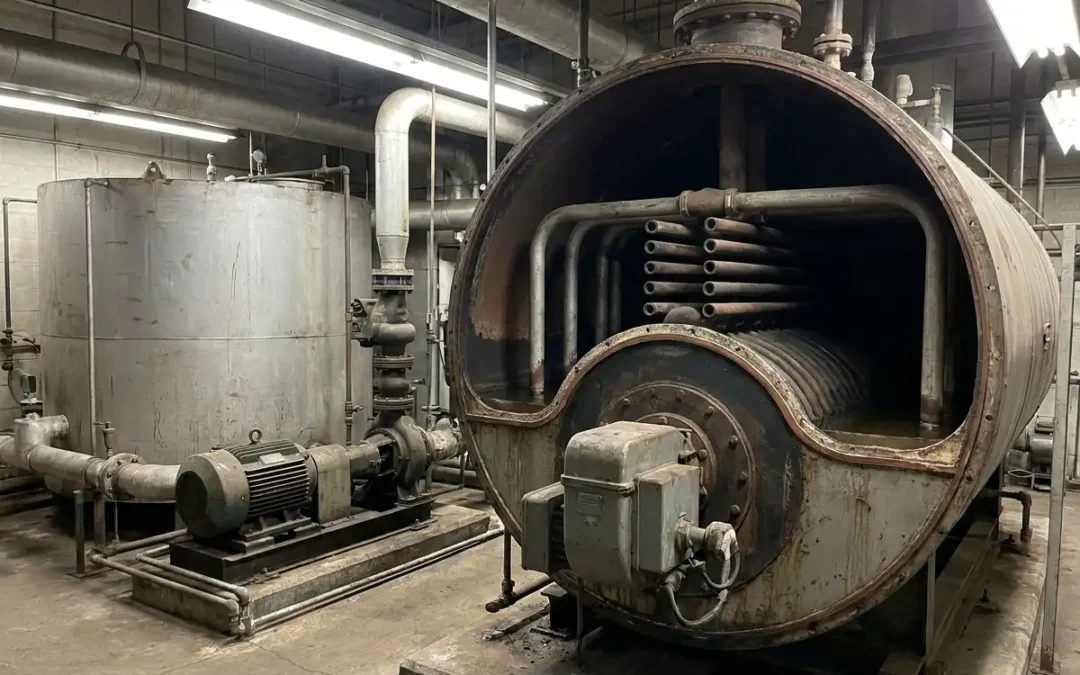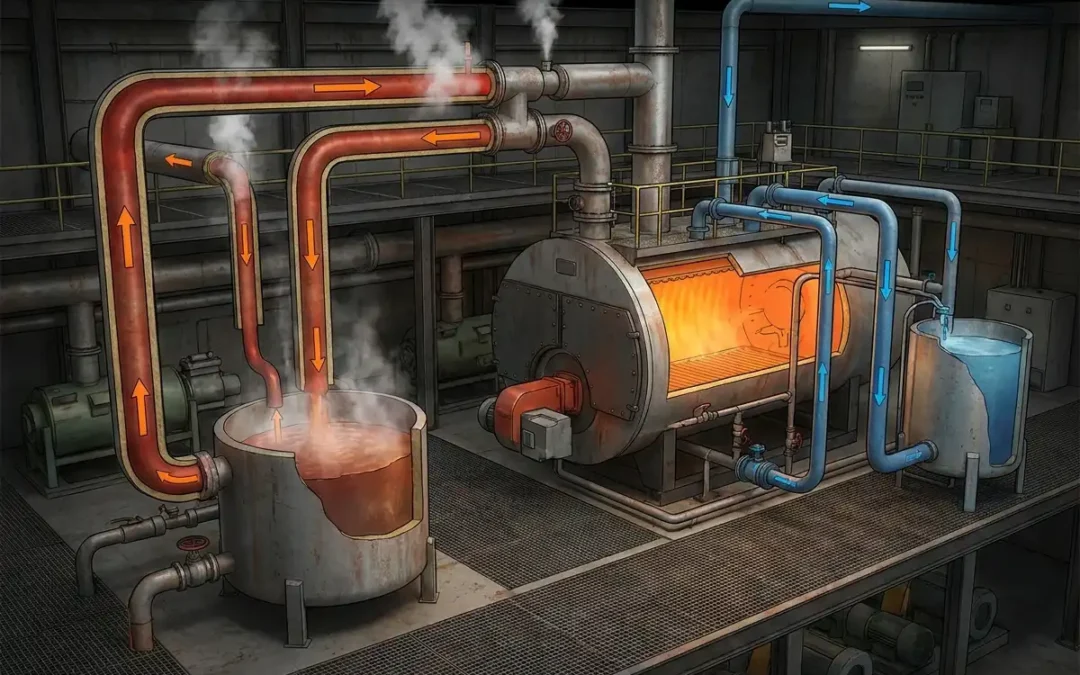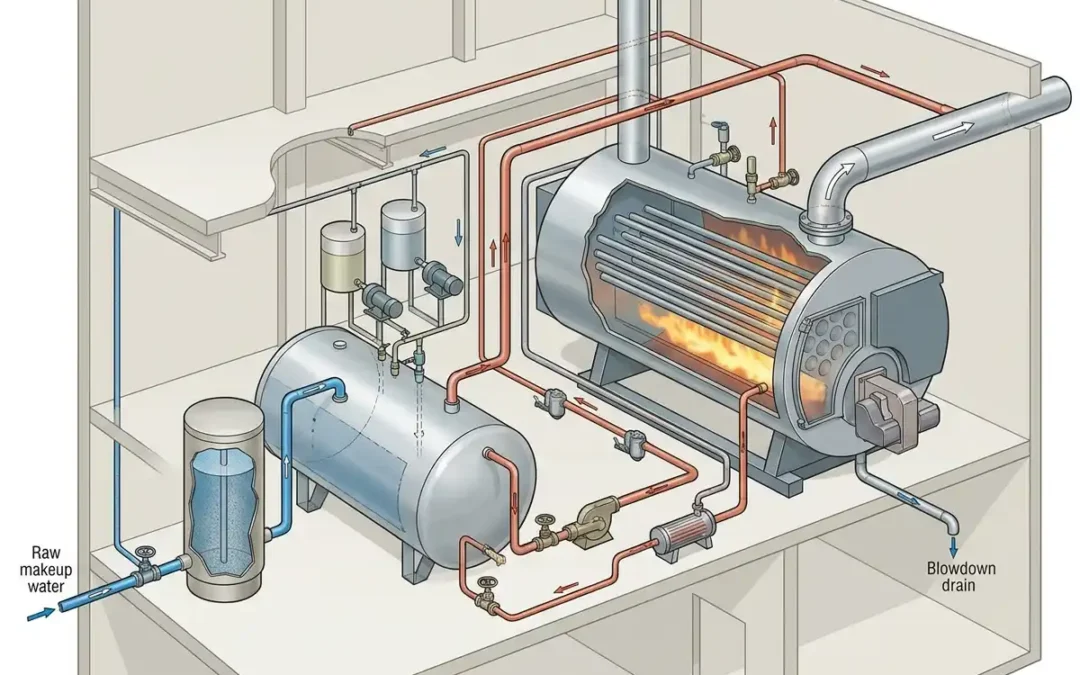
A leaking boiler tube is the end of a failure process, not the beginning. Plugging or replacing the damaged tube may return a boiler to service, but it does not explain whether scale, oxygen corrosion, poor combustion, low water, erosion, or thermal stress will damage the next tube.
Preventing repeat commercial boiler tube failure requires preserving evidence, identifying the failure mechanism, examining adjacent pressure parts, and correcting the operating condition that produced the damage. The appearance and location of the failed area often provide the first useful clues.
Treat the Failed Tube as Evidence
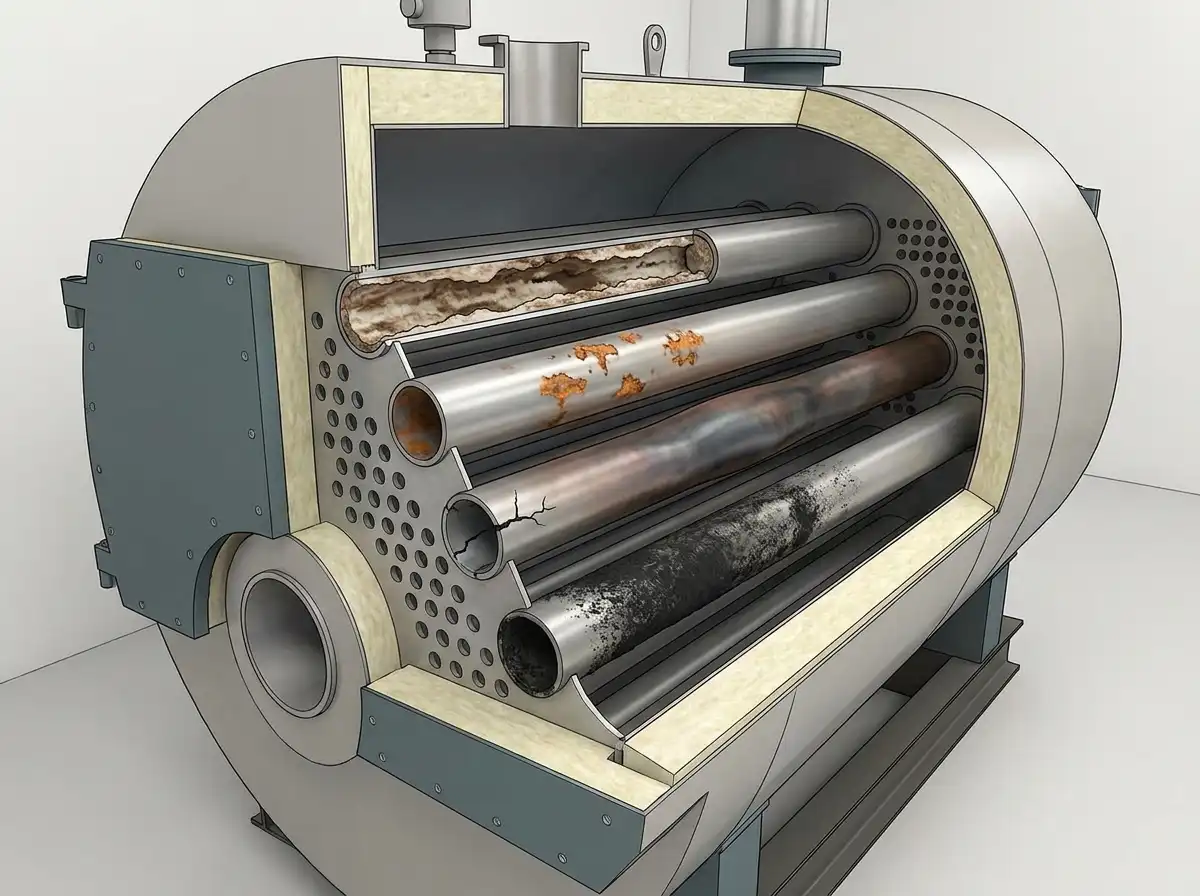
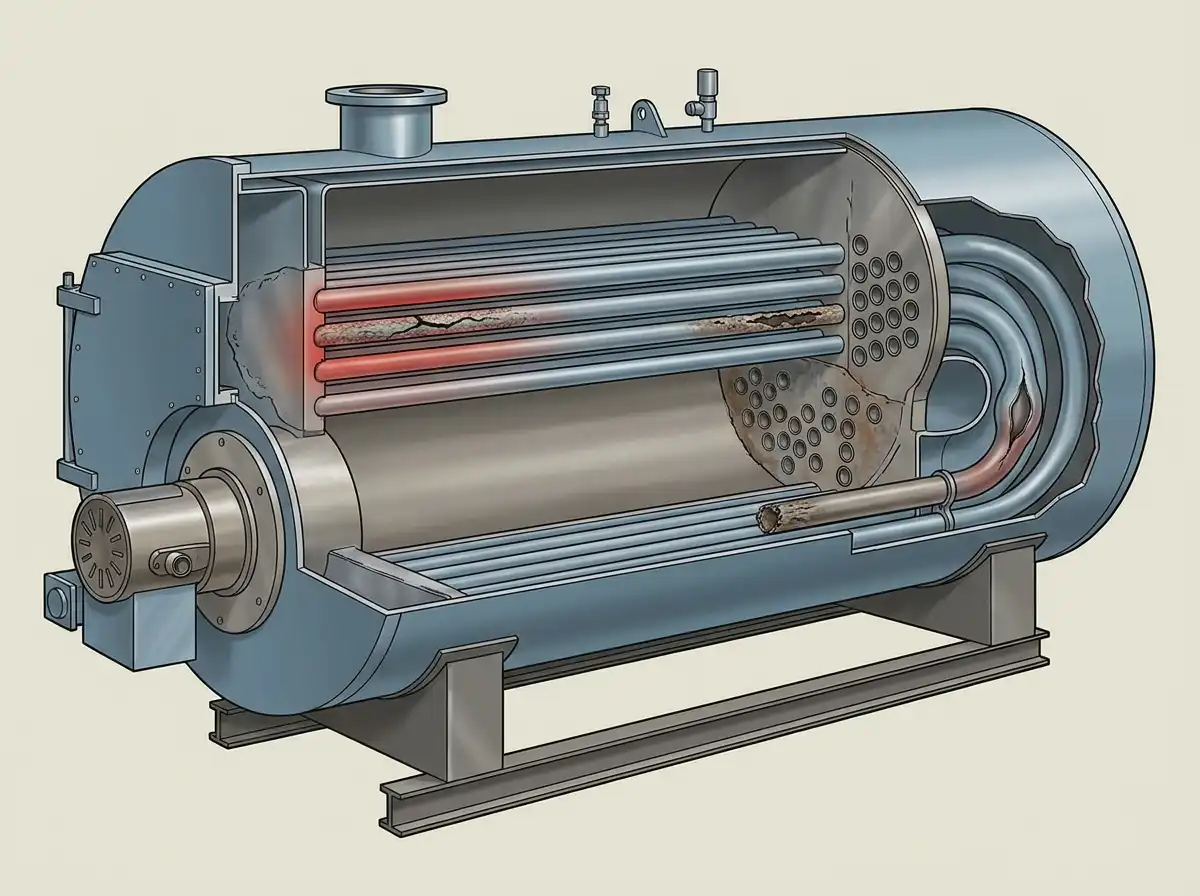
Before cleaning, cutting, or discarding a failed section, document its location and orientation. Note whether the damage faces the burner, lies near a tube sheet, follows a waterline, appears at a bend, or repeats in the same area as earlier failures.
Useful records may include photographs, tube position, operating hours, water-treatment data, makeup-water use, blowdown history, combustion readings, stack temperature, recent low-water events, prior repairs, and the load immediately before failure. A qualified investigation may also examine deposits, wall thickness, fracture surfaces, water-side pitting, and fireside corrosion. “If the failed tube goes into the scrap bin before anyone studies it, the boiler loses its best witness.” says a lead commercial HVAC technician at Choice Mechanical.
What the Damage Pattern May Suggest
| Observed condition | Possible mechanisms | Evidence to review |
|---|---|---|
| Heavy internal scale with overheated metal | Poor water treatment, high makeup, inadequate blowdown, deposit buildup | Water tests, deposit analysis, conductivity, makeup and blowdown records |
| Localized pitting | Oxygen attack, under-deposit corrosion, chemistry excursions | Deaeration, condensate return, idle layup, chemical-feed history |
| Thinning in a high-velocity area | Erosion, flow-accelerated corrosion, wet steam or poor circulation | Flow conditions, chemistry, geometry, operating pressure and load |
| Cracking near a tube end or attachment | Thermal cycling, vibration, expansion stress, poor fit or prior repair | Start-stop history, firing rate, rolling or welding details, supports |
| Fireside wastage or soot | Condensation, fuel contaminants, poor combustion, cold-end corrosion | Flue-gas data, fuel, draft, stack temperature, firing and standby operation |
| Bulging or rupture from overheating | Low water, blocked circulation, internal deposits, excessive heat input | Level controls, alarms, feedwater system, burner input, adjacent tubes |
The table is a starting point, not a remote diagnosis. Similar-looking failures can have different causes, and more than one mechanism may operate at the same time.
Scale Turns a Heat-Transfer Surface Into an Insulator
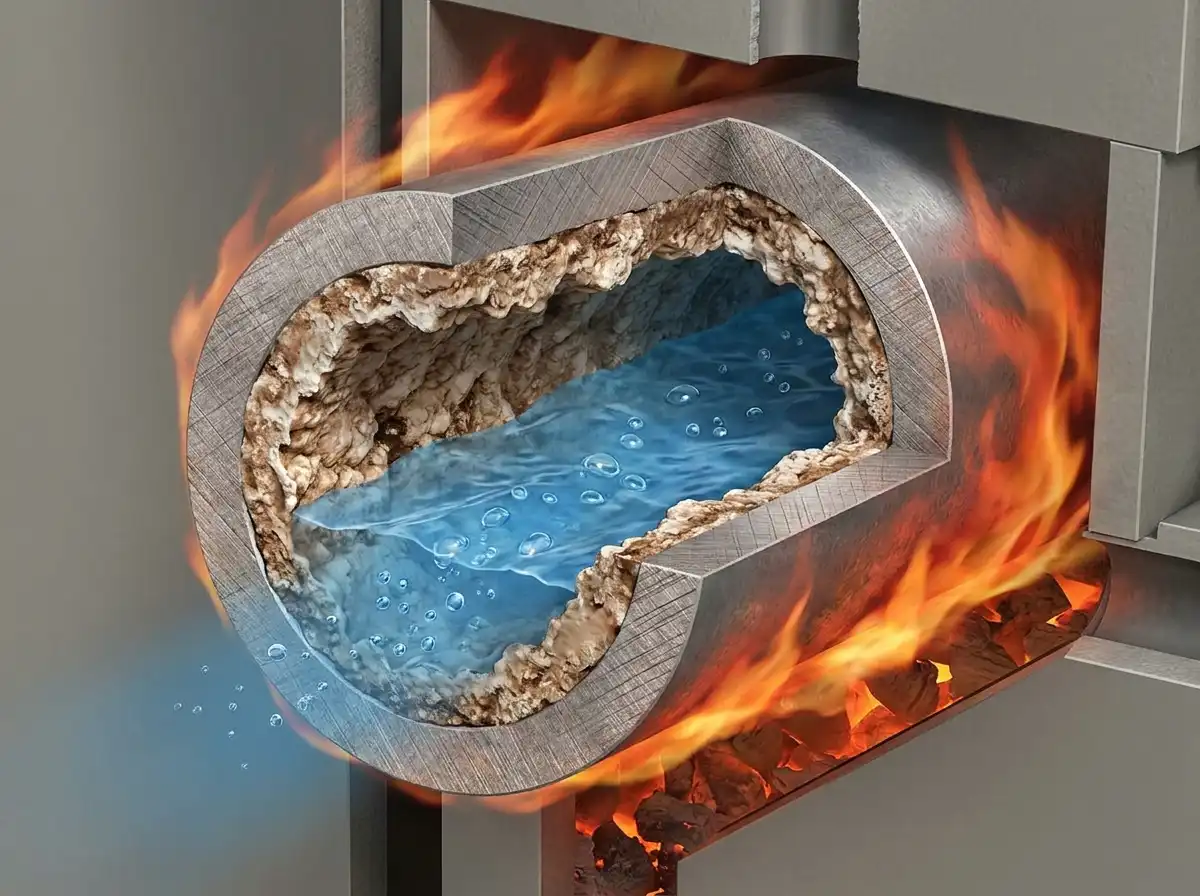
Boiler tubes must transfer heat from combustion gases into water. Mineral scale and other internal deposits resist that transfer. The metal must become hotter to move the same amount of heat through the deposit, which can reduce strength and accelerate damage.
Scale is often a system-history problem. Excess makeup water introduces new minerals and oxygen. Failed condensate return, leaking steam systems, poor softener performance, incorrect chemical feed, and blowdown problems can all contribute. Replacing tubes without addressing the water balance can restart the same process on clean metal.
Oxygen Can Attack While the Boiler Is Running or Idle
Dissolved oxygen promotes pitting. Poor deaeration, cold feedwater, leaking pump seals, open tanks, excessive makeup, and ineffective chemical treatment may allow oxygen into the system. Idle boilers are also vulnerable when layup allows air and moisture to remain against unprotected metal.
A strong prevention plan addresses operation and shutdown. Seasonal equipment needs a documented wet or dry layup procedure appropriate to the boiler and water-treatment program. Simply turning the boiler off and draining part of the water can create corrosive conditions.
Combustion Problems Damage the Water Side Indirectly
Uneven flame, incorrect burner setup, fouled fireside surfaces, poor draft, and excessive input can produce localized heat flux or deposits. The water treatment may be acceptable while one area of the tube receives abnormal thermal stress.
Combustion should be tested with calibrated instruments under appropriate firing conditions. Choice Mechanical provides commercial boiler combustion analysis to evaluate oxygen, carbon monoxide, stack temperature, draft, and related burner performance.
Low Water Is a Safety Event, Not a Maintenance Shortcut
Water removes heat from the tube. If the level falls below a heated surface or circulation is interrupted, metal temperature can rise rapidly. Low-water cutoffs and level controls are critical protections, but they do not eliminate the need to investigate feed-pump, tank, valve, sensor, steam-demand, and return-system problems.
Never bypass a low-water cutoff to keep a boiler online. After a suspected low-water or overheating event, follow the manufacturer, code, insurer, and qualified-service requirements before returning the boiler to operation.
Thermal Cycling and Expansion Leave a Location Pattern
Frequent cold starts, rapid firing changes, poor warm-up procedure, short cycling, and uneven expansion can concentrate stress at tube ends, attachments, bends, and rigid connections. A crack that returns near the same tube sheet or weld deserves examination of fit, support, sequence, and expansion—not another identical repair.
Example: Repeated Tubes in One Area
A Central Indiana production facility replaces two failed tubes near the burner end of a firetube boiler. Months later, another tube in the same area leaks. Water-treatment reports appear generally acceptable, so the failures are described as age-related.
A deeper review compares fireside condition, burner setup, tube-wall measurements, deposit pattern, and operating history. Suppose the investigation finds uneven combustion and heavy soot concentrated near the recurring location. Tube repair is necessary, but cleaning and burner correction are also part of preventing repeat thermal stress.
This representative example illustrates why location and repetition matter. Choice Mechanical performs commercial boiler tube replacement and repair for Indianapolis and Central Indiana facilities.
Repair, Plug, or Retube?
The appropriate scope depends on boiler design, code requirements, tube condition, number and location of failures, remaining wall thickness, access, outage constraints, and the qualified repair organization’s assessment.
- Localized repair may be appropriate for limited damage when permitted and performed under the required procedure.
- Tube plugging can isolate a failed tube in some boiler designs, but lost heating surface and manufacturer or jurisdictional limits must be considered.
- Individual tube replacement restores the affected pressure part but should include inspection of neighboring tubes.
- Partial or complete retubing may be justified when failures are widespread, remaining life is poor, or repeated outages exceed planned-outage cost.
- Boiler replacement may be preferable when pressure-vessel condition, efficiency, controls, parts, capacity, and lifecycle economics no longer support major repair.
Commercial boiler pressure-part work must follow applicable code, jurisdictional, inspection, welding, testing, and documentation requirements. “The number of tubes replaced is a repair decision. The reason they failed is a reliability decision. A facility needs both answers.” says a lead commercial HVAC technician at Choice Mechanical.
A Repeat-Failure Prevention Checklist
- Document the failed tube before destructive work.
- Inspect adjacent tubes and the corresponding fireside area.
- Review makeup-water, condensate-return, blowdown, and treatment history.
- Verify feedwater equipment and level-control operation.
- Evaluate combustion, draft, burner input, and soot pattern.
- Review cycling, warm-up, standby, and layup procedures.
- Complete required pressure or integrity testing after repair.
- Record baseline wall thickness or inspection findings for future comparison.
- Assign corrective actions, owners, and follow-up dates.
Commercial Boiler Tube Failure FAQs
Can one leaking tube be plugged?
Some boiler designs and conditions permit plugging, subject to manufacturer guidance, code, jurisdictional requirements, lost heating surface, and qualified assessment. It should not replace investigation of the failure cause.
Does a tube leak mean the whole boiler must be replaced?
No. Many tube failures are repairable. Overall pressure-vessel condition, extent of thinning, recurring failures, efficiency, parts, downtime, and lifecycle cost determine whether repair or replacement is more appropriate.
Can water treatment prevent every tube failure?
No. It can control important scale and corrosion mechanisms, but combustion, low water, circulation, erosion, vibration, thermal stress, and installation quality also matter.
What records help diagnose repeat failures?
Failure photos and location, water tests, makeup and blowdown data, condensate-return history, combustion reports, alarms, operating load, prior repairs, and inspection measurements are especially useful.
Is a hydrostatic test always required after tube repair?
Testing requirements depend on the boiler, repair scope, code, jurisdiction, inspector, and qualified repair procedure. The repair organization should establish and document the required examination and test.
Repair the Tube and the Condition That Damaged It
A new tube starts with clean metal and no memory of the old failure. The facility’s water, combustion, controls, operating practices, and loads determine whether it receives a longer life.
For a leaking or failed commercial boiler tube, call Choice Mechanical at (317) 885-0200. Planned tube work can be arranged through the commercial boiler service request; active leaks or loss of critical steam or heat can be directed to 24/7 emergency boiler service.