Not every summer HVAC problem comes from dirty coils or failing equipment. In many commercial buildings, the real issue is hidden in the controls. A schedule that was never updated, a bad sensor, a thermostat override, or a stuck damper can quietly waste energy for months before anyone notices.
For facility managers in Indianapolis and Central Indiana, these issues matter because they do not always trigger an obvious alarm. The building still cools, but it costs more than it should, comfort starts drifting, and equipment runs longer than necessary.
If your building feels expensive to cool for no clear reason, Choice Mechanical Services provides commercial HVAC-R service to help identify control issues that are driving up summer utility bills.

1. The Building Cools, But It Never Seems to Stop Running
One of the clearest signs of a hidden control problem is a system that technically works, but seems to run all day without ever catching a break. This often points to bad scheduling, poor staging, or a thermostat that is not seeing the space correctly.
- Rooftop units start early and run late even when occupancy is low
- Zones stay in cooling mode longer than expected
- Equipment runs hard during evenings, weekends, or holidays
- Utility bills rise even when outdoor conditions are not extreme
When this happens, the problem is often in the logic, not the mechanical equipment itself. A schedule may no longer match building use, or the system may be responding to a bad sensor input.
If your cooling runtimes seem out of line, compare your current settings to the guidance in our summer HVAC schedules and setpoints guide, then contact us if you want a professional control review.
2. Thermostat Overrides Have Become the Real Control Strategy
When occupants or staff constantly change thermostat settings, it usually means the original control setup is not working for the building anymore. In office and retail properties, this becomes a cycle. One area feels warm, someone lowers the setpoint, another area becomes too cold, and the building starts fighting itself.
- Thermostats are pushed lower and lower during hot afternoons
- Local overrides conflict with central schedules
- One suite is comfortable only when another suite is too cold
- Complaints drive manual changes instead of actual fixes
This is one of the most common hidden sources of cooling waste in commercial buildings. The system still operates, but not in a coordinated way.
If thermostat overrides are becoming routine, the issue may be setpoints, zoning, or controls rather than tenant behavior alone. Our article on smart commercial HVAC control strategy explains how better logic reduces these fights and lowers energy use at the same time.
3. Sensors Drift, and the Whole System Starts Making Bad Decisions
Controls can only make good decisions if the information they receive is accurate. A space sensor reading just a few degrees off can create a lot of waste over the course of a summer. The same goes for outdoor air sensors, discharge air sensors, and return air sensors.
- A thermostat reads warmer than the actual room and calls for extra cooling
- An outdoor air sensor misreads conditions and prevents economizer use
- A discharge air sensor drifts and causes poor staging decisions
- Humidity-related inputs no longer reflect actual building conditions
Sensor drift is easy to miss because it rarely looks dramatic. It just slowly pushes the system away from efficient operation.
If your building feels slightly off all summer, it may be time for calibration and recommissioning. Our HVAC-R services include control checks, sensor verification, and system tuning for commercial facilities.
4. Economizers May Be Installed, But Not Actually Saving You Money
Economizers are a perfect example of hidden control waste. Many commercial buildings have them, but plenty are disabled, stuck, or set up incorrectly. That means the system misses opportunities to use outside air when conditions are favorable.
- Dampers stay closed when they should open for free cooling
- Actuators fail and no one notices until energy use climbs
- Control logic does not stage properly between outdoor air and mechanical cooling
- Humidity or enthalpy settings are wrong for summer operation
In Indiana, those missed hours of free cooling add up. Buildings end up leaning on compressors when they could have reduced runtime and cost.
If your rooftop units have economizers, our article on how to use economizers to cut summer cooling costs is worth reviewing. It is one of the easiest areas to overlook and one of the easiest to improve.
5. Problem Zones Keep Triggering More Cooling Than the Building Really Needs
Sometimes one difficult area ends up dictating cooling for a much larger space. A conference room with high afternoon sun, a perimeter office, or a warm retail corner can cause the system to overcool nearby areas if the controls are not set up carefully.
- One hot zone drives the whole unit into longer runtime
- Spaces near the thermostat feel fine while distant areas struggle
- Airflow problems are treated like temperature problems
- Comfort complaints cluster in the same parts of the building
This is where controls, air balancing, and zoning all overlap. Lowering the thermostat may quiet one complaint, but it often wastes energy everywhere else.
If the same zones keep creating issues, read our guide on poor air balancing and hot and cold spots. It helps explain why some comfort problems are really airflow problems in disguise.
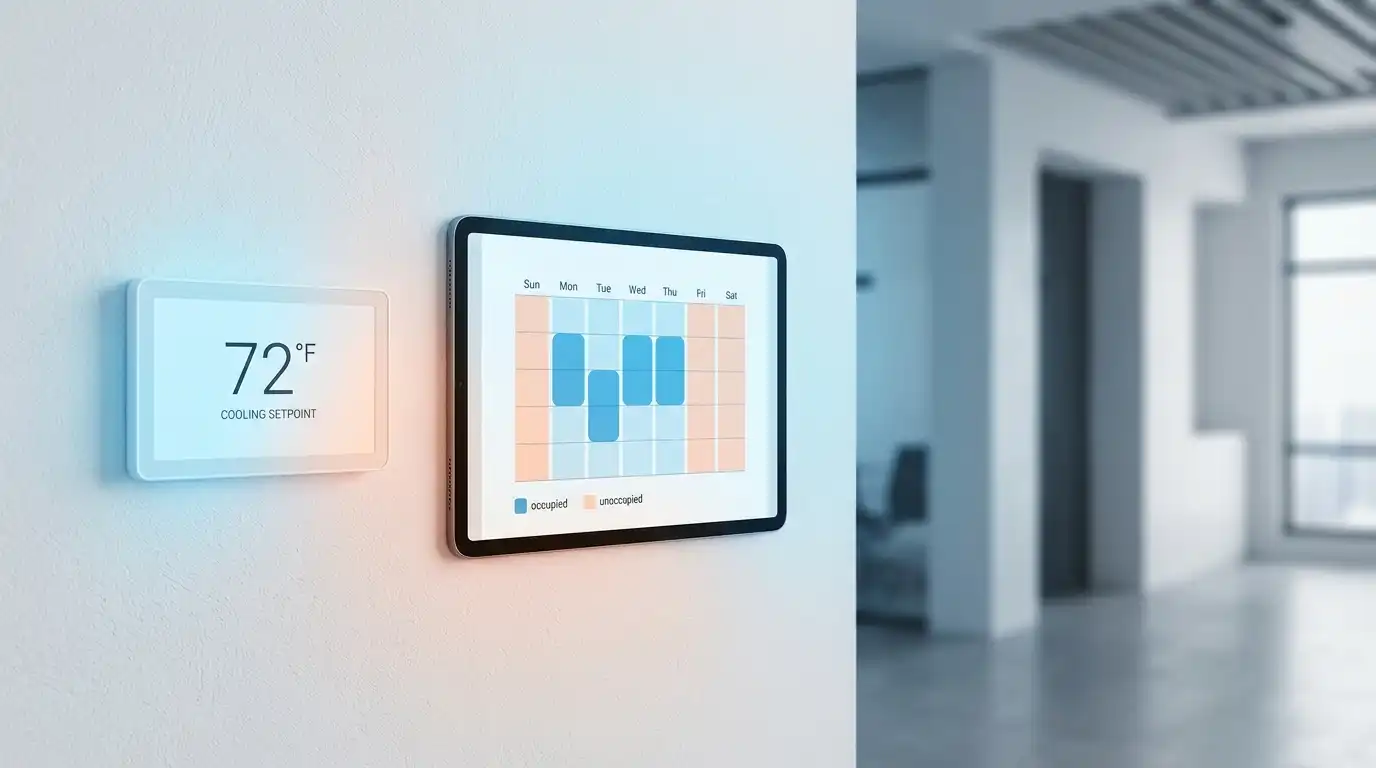
6. Your Summer Schedules May Be Outdated
Control problems are not always technical failures. Sometimes the settings are simply old. A building that changed tenants, operating hours, staffing patterns, or layout may still be running on a schedule built for a completely different occupancy pattern.
- Units start up too early for current tenant needs
- Cooling runs deep into the evening after people leave
- Weekend schedules were never reduced after staffing changes
- Special use areas still follow default office-hour programming
That kind of drift happens slowly, which is exactly why it gets missed. Nobody remembers the original sequence, and the building just keeps using more energy than it should.
If your schedules have not been reviewed recently, our article on summer energy saving strategies for commercial HVAC systems is a good next step. It shows how schedule cleanup often produces fast savings without major equipment changes.
7. A Maintenance Plan Helps Catch Control Problems Early
Control issues tend to hide because the building still feels functional most of the time. That is why they need to be checked on purpose during seasonal service, not left alone until someone notices the bill or starts getting complaints.
- Seasonal inspections can include setpoint and schedule review
- Sensor calibration can be checked before summer demand peaks
- Economizer operation can be tested during spring and early summer conditions
- Trend reviews can show whether units are running longer than they should
When control checks are folded into planned service, you catch the quiet problems before they turn into a full season of wasted energy.
If you want control issues reviewed as part of a larger service strategy, our commercial Maintenance Agreements help keep both equipment and controls moving in the right direction.
Frequently Asked Questions
What is the most common hidden HVAC control problem in summer?
Outdated schedules and thermostat overrides are among the most common. Buildings often keep cooling spaces longer than necessary because settings were never updated as occupancy changed.
Can a bad sensor really increase cooling costs that much?
Yes. A misreading sensor can cause a unit to cool longer or stage incorrectly throughout the day. That kind of error may not trigger an alarm, but it can still create significant waste over a full cooling season.
How do I know if the problem is controls or the equipment itself?
If the unit still runs but comfort, runtime, and energy performance seem off, controls are a strong possibility. A commercial HVAC review should look at both the mechanical side and the control sequence together.
Do control problems cause more wear on equipment?
Absolutely. When units run longer than necessary or cycle poorly, compressors, motors, and fans all see more strain. That can turn a control issue into a repair issue if it is left alone long enough.
Conclusion: Hidden Control Problems Can Cost More Than You Think
Some of the most expensive summer HVAC problems are not the dramatic ones. They are the quiet control issues that keep your building cooling when it should not, running longer than it needs to, or ignoring opportunities to operate more efficiently.
For commercial buildings in Indianapolis and Central Indiana, finding those hidden problems can lead to lower bills, fewer complaints, and a smoother cooling season overall.
Choice Mechanical Services helps facility managers track down control problems, tune system performance, and build practical summer strategies that actually hold up in the real world.
Contact us today to schedule a commercial HVAC review and find out where your controls may be wasting cooling energy.