How Poor Air Balancing Creates Hot and Cold Spots in Commercial Buildings
Hot conference rooms, cold offices, drafty corridors, and uneven warehouse temperatures are more than everyday comfort complaints. In commercial buildings, these problems are often signs that the HVAC system is not distributing air correctly. When airflow is out of balance, some zones receive too much conditioned air while others do not receive enough. The result is inconsistent comfort, higher utility costs, longer equipment run times, and recurring frustration for occupants and facility teams.
For facility managers in Indianapolis and across Central Indiana, solving hot and cold spots usually starts with proper commercial HVAC air balancing, system diagnostics, and ongoing maintenance. Adjusting the thermostat may temporarily mask the problem, but it rarely fixes the airflow issue behind it.
Seeing uneven temperatures in your building? Choice Mechanical Services provides commercial HVAC-R service and system evaluations to help identify airflow issues, restore consistent comfort, and improve system performance across your facility.
What Is Air Balancing in a Commercial HVAC System?
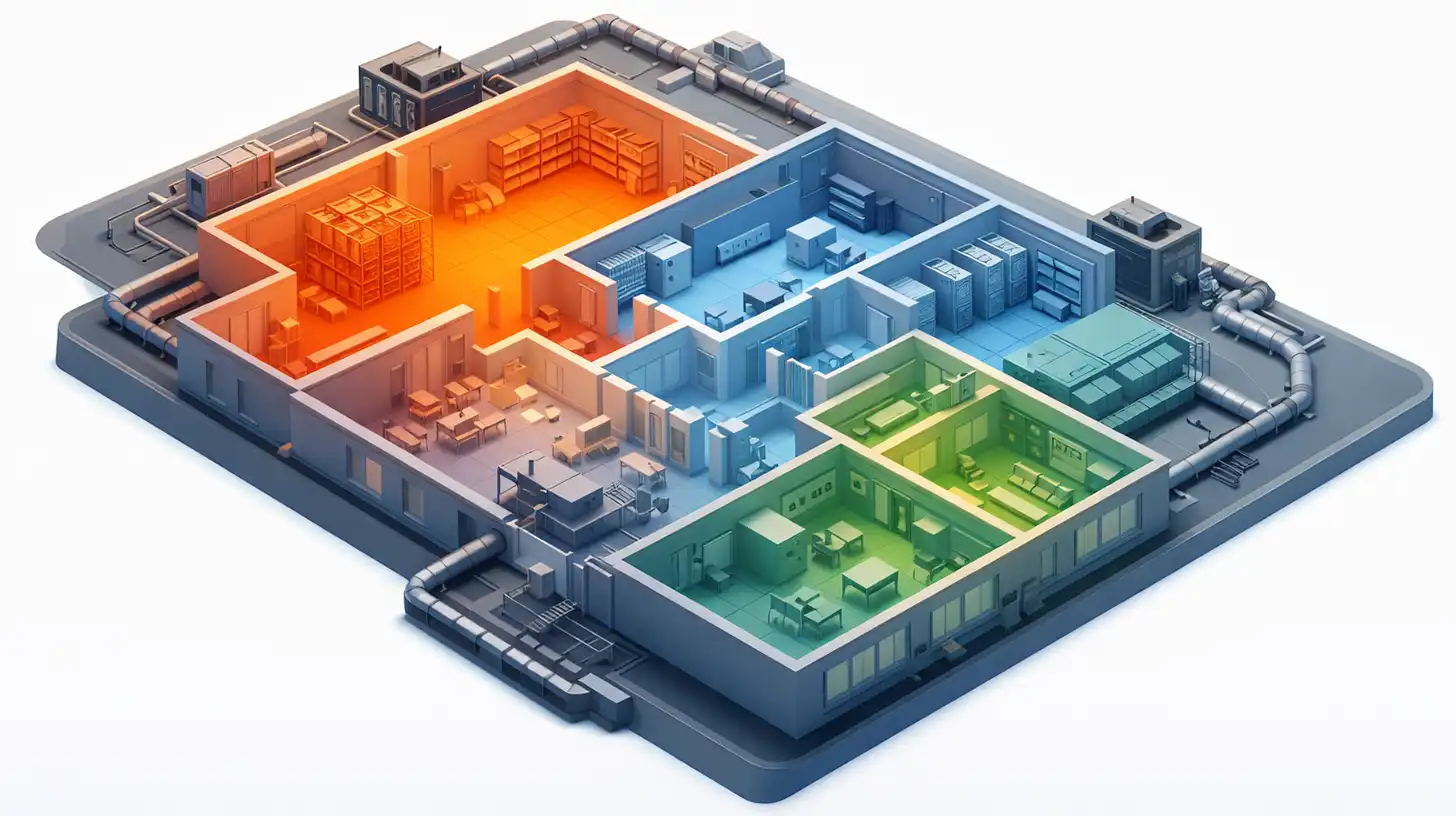
Air balancing is the process of measuring, adjusting, and verifying airflow throughout a commercial HVAC system so each zone receives the amount of conditioned air it needs. A balanced system moves supply air, return air, and exhaust air in a controlled way. When those relationships are off, comfort problems begin to appear throughout the building.
In a properly balanced commercial HVAC system:
- Supply diffusers deliver the correct volume of conditioned air to each zone
- Return air paths allow air to move back to the equipment without restriction
- Dampers, VAV boxes, diffusers, and controls are adjusted to match building needs
- Pressure relationships between rooms, corridors, and exterior areas remain stable
- Thermostats and sensors accurately reflect real conditions in the occupied space
A balanced system feels steady. Rooms do not swing between hot and cold. Occupants are not constantly changing thermostats. Facility managers are not chasing the same complaints every week.
Need a fresh look at how your system is performing? Contact Choice Mechanical Services to schedule a commercial HVAC assessment and discuss air balancing options for your building.
Common Signs Your Building Has Air Balancing Problems
Air balancing issues often show up as comfort complaints before they show up as equipment failures. That is why hot and cold spots should not be ignored. They can indicate that the system is working harder than necessary, that airflow paths have changed, or that controls are no longer supporting the way the building is actually being used.
- Hot and cold spots in offices, meeting rooms, corridors, or open work areas
- Comfort complaints from the same rooms or departments over and over
- Drafts near certain diffusers while other areas feel stagnant
- Thermostats set far above or below normal ranges to compensate
- Rooms that become uncomfortable at the same time each day
- Conference rooms that heat up quickly when occupied
- Closed offices that feel different from nearby open spaces
- Warehouse areas with noticeable temperature differences from one zone to another
| Problem Observed | Potential Air Balancing Cause |
|---|---|
| Conference room is always hot | Low supply airflow, poor return path, or occupancy load exceeding the original design |
| Office is always cold | VAV box stuck open, excessive airflow, diffuser issue, or control sequence problem |
| Drafts near vents | Diffuser throw issue, excessive static pressure, or poor room air mixing |
| Complaints started after a remodel | New walls, doors, or tenant layouts changed original airflow paths |
| Utility bills keep climbing | Fan system or HVAC equipment is working harder to overcome imbalance |
| Temperature swings throughout the day | Building pressure, economizer operation, or control sequence issue |
Already fielding repeat comfort complaints? Our article on HVAC upgrades with fast ROI for Indiana businesses explains how zoning, controls, and targeted system improvements can support better comfort and lower operating costs.
How Poor Air Balancing Creates Hot and Cold Spots
Commercial HVAC systems depend on pressure, airflow, and controls working together. The fan creates pressure. Ductwork, filters, coils, dampers, and terminal units all affect how that pressure turns into airflow. Each room can only stay comfortable if the right amount of conditioned air reaches the space and the return path allows air to leave the space properly.
When part of that system changes, comfort changes with it. A closed office door, blocked return grille, dirty filter, stuck damper, miscalibrated sensor, or poor VAV setting can shift airflow enough to create noticeable temperature differences.
| Cause | What Happens | Typical Comfort Pattern |
|---|---|---|
| Duct leakage | Conditioned air is lost before it reaches the intended zone | Farther rooms run warm in cooling season or cool in heating season |
| Improper damper settings | Some branches receive too much air while others are restricted | One area feels drafty while another stays uncomfortable |
| Dirty filters or coils | Airflow drops or equipment works harder to maintain output | Weak heating or cooling, often worse in remote zones |
| VAV box minimums set too high | Interior zones receive too much cold air during low-load periods | Cold offices, overcooled interiors, and unnecessary reheat |
| VAV box stuck low or out of calibration | The zone never receives enough air when demand increases | Persistent warm room while nearby areas remain comfortable |
| Poor diffuser placement | Air does not mix properly before reaching occupants | Drafts, cold spots, stagnant pockets, or short-cycling airflow |
| Blocked or undersized return path | Rooms pressurize or depressurize instead of breathing correctly | Closed offices drift hot or cold, especially after doors are shut |
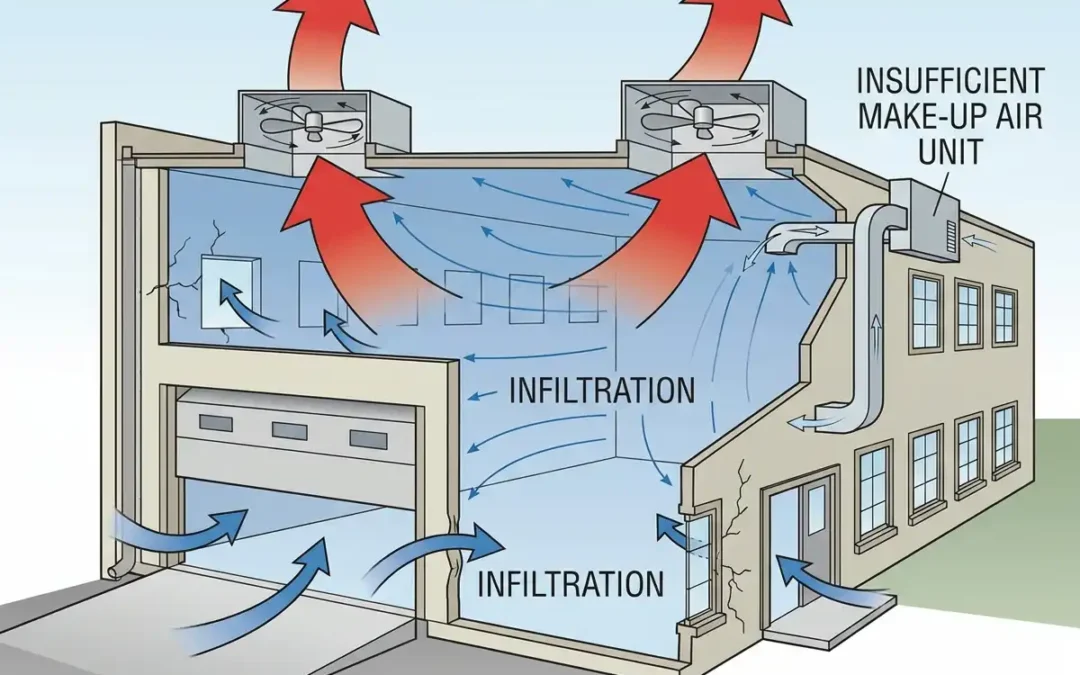
| Building pressure issues | Outdoor air enters or conditioned air escapes through leaks and openings | Weather-driven drafts, perimeter hot spots, or floor-to-floor differences |
That is why the same building can have one office that is too cold, one conference room that is too warm, and one corridor that feels drafty at the same time. The problem is not always one piece of equipment. It is often the way air is moving through the entire system.
Concerned that your building is wasting energy because of airflow issues? Read our guide on reducing utility costs with a smart commercial HVAC control strategy to see how controls, scheduling, zoning, and maintenance work together.
Air Balancing By the Numbers
Air balancing is not just about comfort. In many commercial buildings, correcting airflow problems can reduce energy waste, lower equipment strain, and improve occupant satisfaction. Industry research on commercial HVAC commissioning, VAV controls, return air corrections, and system retuning shows that airflow-related improvements can produce measurable results.
| Metric | Potential Result |
|---|---|
| Reduction in comfort complaints | Up to about 50% in some measured VAV control studies |
| Cooling energy reduction | Documented examples show savings ranging from roughly 10% to more than 25% |
| Typical existing-building commissioning payback | Often measured in months to a few years, depending on building conditions |
| Localized temperature improvement | Return-path and airflow corrections can improve problem areas by 2°F or more |
| Best initial fixes | Controls, VAV settings, static pressure reset, return paths, damper adjustments, and maintenance |
The key takeaway is simple. Before committing to major equipment replacement, commercial facilities should verify whether airflow, controls, and maintenance conditions are causing the comfort problem. In many cases, the existing system can perform better once it is measured, corrected, and maintained properly.
How Poor Air Balancing Wastes Energy
Uneven airflow forces HVAC systems to work harder. When one zone cannot reach setpoint, building operators may extend schedules, lower cooling setpoints, raise heating setpoints, or increase fan output to satisfy that one problem area. Meanwhile, other spaces may already be comfortable or even overconditioned.
This creates several avoidable costs:
- Units run longer to satisfy one difficult zone
- Fans use more energy to overcome restrictions or poor static pressure settings
- Some areas are overcooled or overheated while others remain uncomfortable
- Compressors, motors, belts, and controls experience more wear
- Facility teams spend more time responding to comfort complaints
Airflow problems also make it harder to identify the true cause of rising utility bills. A building may appear to have a capacity problem when the real issue is dirty filters, fouled coils, poor return airflow, or a control sequence that is forcing the system to operate inefficiently.
Airflow problems often get worse when maintenance is delayed. Our article on the cost of skipping commercial HVAC maintenance explains how minor issues can turn into higher utility bills, comfort complaints, and expensive repairs.
Why Tenant Build-Outs Often Create New Hot and Cold Spots
Many commercial buildings change long after the original HVAC system was designed. Open offices become private offices. Storage rooms become occupied work areas. Conference rooms are added. Walls move. Doors are installed. Warehouse racking changes. Tenant spaces are divided or combined. Each change can affect airflow.
The problem is that the HVAC system may still be operating based on the original layout. A diffuser that once served an open area may now serve a closed office. A return path that once worked properly may now be blocked by a new wall or door. A thermostat may be reading one room while controlling several spaces with very different loads.
Common tenant improvement issues include:
- Private offices added without new return air paths
- Conference rooms created without accounting for higher occupancy loads
- Interior walls blocking original air movement
- Thermostats placed in areas that no longer represent the entire zone
- Warehouse layouts that change airflow patterns around racking and storage areas
- Tenant suites that inherit ductwork from a previous use without rebalancing
When comfort complaints appear after a renovation or tenant build-out, air balancing should be one of the first items reviewed. A targeted evaluation can determine whether the existing system needs damper adjustments, diffuser changes, return path improvements, control updates, or a more complete HVAC redesign.
Planning changes to your building layout? Our guide on questions facility managers should ask their HVAC contractor can help you evaluate whether your HVAC system is ready for the way the space will actually be used.
Why Large Offices, Warehouses, and Mixed-Use Buildings Struggle Most
Air balancing problems are especially common in large commercial facilities because different parts of the building often have very different heating, cooling, ventilation, and occupancy needs. A warehouse, office suite, loading area, breakroom, and conference room may all be served by connected equipment, but each space behaves differently.
In Central Indiana, commercial buildings may also face seasonal swings that make imbalance more noticeable. Summer heat can expose weak cooling airflow. Winter conditions can reveal drafts, pressure problems, and poor perimeter heating. Shoulder seasons can make economizer and control sequence issues more obvious.
Large facilities often struggle with:
- Long duct runs that make far zones harder to serve
- Open warehouse areas where air stratifies near high ceilings
- Office areas connected to warehouse or production spaces
- Rooftop units serving multiple rooms with different occupancy patterns
- Conference rooms that were not designed for current usage
- Mixed-use buildings where one HVAC strategy is trying to serve several different space types
These problems rarely fix themselves. In most cases, they get worse as the building ages, occupancy changes, filters load, coils foul, and controls drift away from their original settings.
Operate a warehouse or distribution center? See our article on how to control temperature fluctuations in large warehouses for strategies that combine airflow management, maintenance, and better system control.
For a more maintenance-focused resource, review our warehouse HVAC maintenance checklist to help prevent airflow and comfort issues before they disrupt operations.
How Professional Air Balancing Works
True air balancing is not guesswork. It is a measured process that uses field readings, system knowledge, and control review to understand how air is actually moving through the building. Closing a few diffusers or changing a thermostat setting may provide temporary relief, but it can also make another zone worse.
A professional air balancing process may include:
- Mapping comfort complaints by zone, time of day, season, and occupancy pattern
- Reviewing thermostat readings, BAS trends, setpoints, and control outputs
- Measuring supply and return airflow at diffusers, grilles, and equipment
- Checking duct static pressure, filter pressure drop, and fan performance
- Inspecting dampers, VAV boxes, actuators, sensors, and diffusers
- Evaluating return air paths, building pressure, and door-related pressure issues
- Making targeted adjustments and verifying results with follow-up measurements
In some cases, balancing also uncovers deeper mechanical issues. A zone may be starved for air because of a duct restriction. A rooftop unit may not be delivering the required volume. A control sequence may be causing simultaneous heating and cooling. A chiller, boiler, or air handling unit may need service to support the corrected airflow strategy.
Ready to bring your system back in line? Our HVAC-R service team can combine air balancing review with system diagnostics so you get both comfort improvements and a clearer picture of equipment health.
Air Balancing and Controls Should Work Together
Air balancing and controls are closely connected. If airflow is adjusted but controls are not reviewed, the system may still operate inefficiently. If controls are upgraded but airflow paths are restricted, the building may still experience hot and cold spots.
Common control-related airflow issues include:
- VAV minimum airflow settings that are too high or too low
- Static pressure setpoints that force the fan to work harder than needed
- Discharge air temperature settings that do not match building load
- Thermostats or sensors that are out of calibration
- Economizer sequences that bring in too much or too little outdoor air
- Schedules that run equipment longer than necessary to compensate for one problem zone
When balancing and controls are corrected together, the building has a better chance of maintaining steady temperatures without wasting energy. This is especially important for facilities that have building automation systems, VAV boxes, multiple rooftop units, or large mixed-use floor plans.
Looking at controls as part of your energy strategy? Read How to Reduce Utility Costs with a Smart Commercial HVAC Control Strategy for more detail on zoning, scheduling, and smarter HVAC operation.
The Role of Maintenance in Preventing Future Imbalances
Even a properly balanced system can drift over time. Commercial buildings are active environments. Filters get dirty. Coils foul. Belts loosen. Motors wear. Dampers stick. Sensors drift. Tenants change. Occupancy patterns shift. Each of these changes can affect airflow and comfort.
Regular HVAC maintenance helps protect the results of air balancing by keeping the system closer to its intended operating condition.
Maintenance can help prevent imbalance by addressing:
- Clogged filters that restrict airflow
- Dirty coils that reduce heating and cooling performance
- Loose belts or fan issues that reduce air delivery
- Blocked returns or supply diffusers
- Damper and actuator problems
- Sensor calibration issues
- Control settings that have been changed without documentation
For commercial buildings, maintenance should not be treated as a basic filter-change visit. It should be part of a larger performance strategy that protects comfort, efficiency, and equipment life.
Want a structured plan instead of one-off visits? Explore our commercial Maintenance Agreements to see how consistent service supports air balance, equipment reliability, energy savings, and long-term system performance.
For more on the operational risks of inconsistent service, read The Hidden Costs of Inconsistent HVAC Maintenance in Large Facilities.
When Hot and Cold Spots Become an Emergency Risk
Most air balancing problems start as comfort complaints. Over time, however, the added strain can contribute to larger equipment issues. If a rooftop unit, fan motor, compressor, control component, or air handling system is forced to compensate for poor airflow, the risk of failure increases.
In commercial facilities, that can create serious problems. A restaurant may struggle to keep dining and kitchen areas comfortable. A warehouse may experience temperature swings that affect products or workers. A medical, office, or manufacturing facility may face disruptions that interfere with daily operations.
Air balancing is one part of preventing those problems before they become urgent.
Want to understand what is at stake when commercial HVAC systems fail? Read 5 Commercial HVAC Emergencies That Can Shut Down Your Business and Why Every Facility Needs a 24/7 Commercial HVAC Emergency Partner.
Air Balancing Checklist for Facility Managers
If your building has recurring hot and cold spots, use this checklist to decide whether it is time for a professional airflow evaluation.
| Question | Why It Matters |
|---|---|
| Are the same rooms always too hot or too cold? | Repeated complaints from the same areas often point to airflow or control issues. |
| Did complaints start after a renovation or tenant build-out? | New walls, doors, and room layouts can disrupt original air distribution. |
| Do closed doors change room comfort? | This may indicate a return air path or pressure problem. |
| Are thermostats being adjusted constantly? | Frequent setpoint changes often mean the system is compensating for imbalance. |
| Are utility bills rising without a clear reason? | Poor airflow can make fans and equipment run longer than necessary. |
| Do some spaces feel drafty while others feel stagnant? | This may indicate diffuser, damper, static pressure, or room air mixing issues. |
| Has the system been professionally balanced since the last major layout change? | If not, the HVAC system may no longer match the current building use. |
If several of these apply, a commercial HVAC assessment can help determine whether your building needs balancing, control adjustments, maintenance, or targeted system repairs.
Commercial Air Balancing Services in Indianapolis and Central Indiana
Air balancing problems are common in office buildings, warehouses, manufacturing facilities, healthcare facilities, schools, retail properties, and mixed-use commercial buildings throughout Indianapolis and Central Indiana. Facilities in Carmel, Fishers, Greenwood, Plainfield, Brownsburg, Noblesville, Lawrence, Avon, and surrounding communities often deal with airflow issues after tenant changes, equipment aging, renovations, or seasonal load shifts.
Choice Mechanical Services helps commercial facility managers identify the cause of hot and cold spots, evaluate HVAC system performance, and determine the best path forward. That may include commercial HVAC-R service, air balancing support, control review, preventive maintenance, equipment repair, or a long-term maintenance agreement.
Our team works with commercial clients only, which means we understand the importance of keeping buildings comfortable, efficient, and operational without unnecessary disruption.
Need help with airflow issues in your facility? Choice Mechanical Services serves commercial buildings across Indianapolis and Central Indiana with HVAC-R service, maintenance agreements, boiler service, chiller service, piping and plumbing, and emergency support.
Frequently Asked Questions About Commercial Air Balancing
How do I know if my building needs air balancing?
If your building has recurring hot and cold spots, frequent thermostat adjustments, draft complaints, or comfort issues in the same areas, it may need an air balancing review. Rising energy bills can also be a warning sign, especially when usage has not changed significantly.
Is air balancing a one-time project?
Air balancing is often handled as a project, but the results need to be supported by ongoing maintenance. Filters, coils, fans, dampers, sensors, and controls all change over time. Regular maintenance helps the system stay closer to its balanced condition.
Will air balancing require major ductwork changes?
Not always. Many problems can be corrected with damper adjustments, diffuser changes, VAV box calibration, control updates, or return path improvements. In other cases, limited duct modifications may be needed if the existing layout is clearly restricting airflow.
Can air balancing lower energy costs?
Yes, air balancing can support lower energy costs when airflow problems are causing longer run times, overcooling, overheating, poor static pressure control, or unnecessary fan energy use. The exact savings depend on the building, system type, and severity of the imbalance.
Does air balancing help with indoor air quality?
Air balancing can support better indoor air quality by helping supply, return, exhaust, and outdoor air work together correctly. It does not replace ventilation design or filtration, but it can help ensure that air is moving through the building as intended.
Can poor air balancing affect OSHA or workplace comfort concerns?
Balanced airflow supports more consistent temperatures and better working conditions. In facilities where comfort, ventilation, and employee safety are closely watched, unresolved HVAC problems can become a larger operational concern. For more on this topic, read How HVAC Failure Can Jeopardize OSHA Compliance in Commercial Facilities.
Get Ahead of Hot and Cold Complaints in Your Facility
Hot and cold spots are not just part of managing a large building. They are signals that the HVAC system needs attention. Poor air balancing can waste energy, strain equipment, frustrate occupants, and make facility teams spend too much time responding to the same issues.
With the right diagnostic process, many airflow problems can be corrected before they turn into larger equipment failures or expensive comfort problems. Air balancing, control review, return path improvements, and consistent maintenance can help restore stability across your building.
Choice Mechanical Services works with commercial facilities across Indianapolis and Central Indiana to diagnose airflow problems, improve HVAC performance, and support equipment through long-term service plans.
Reach out today or call (317) 885-0200 to schedule a commercial HVAC walkthrough and find out what it will take to eliminate hot and cold spots in your building.