How to Reduce Utility Costs with a Smart Commercial HVAC Control Strategy
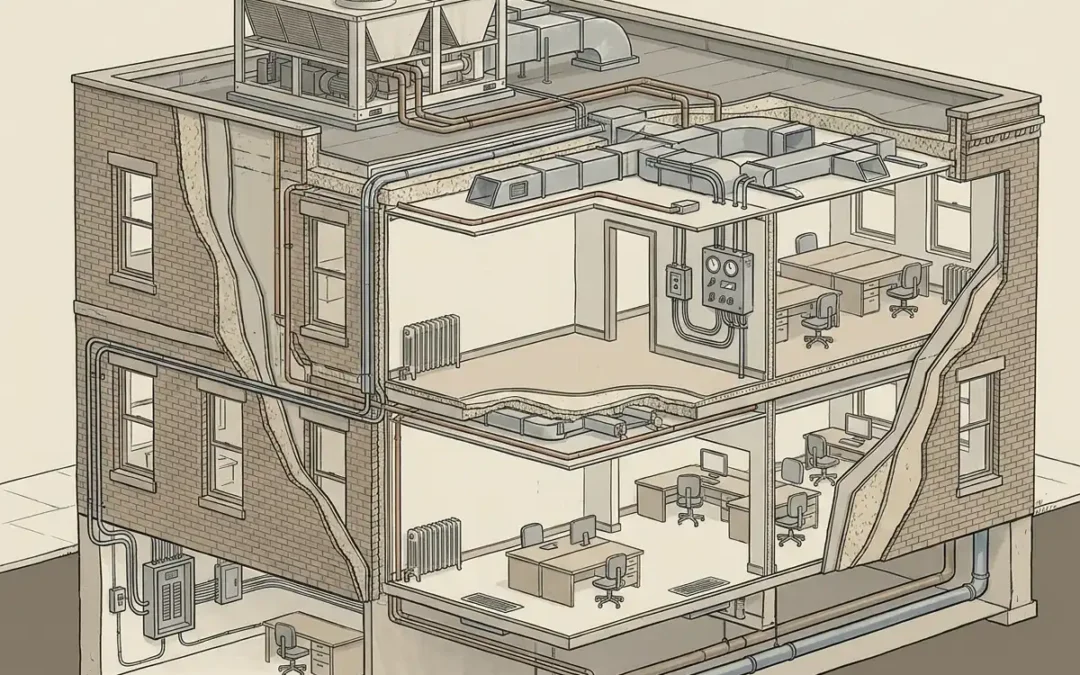
Commercial buildings are some of the biggest energy users in Indiana, and HVAC systems account for a large share of that total. The good news is that many facilities are not dealing with an equipment problem as much as a control problem. Systems run too long, bring in too much outside air, condition empty spaces, and cycle harder than they need to. That is why a smart commercial HVAC control strategy can be one of the most effective ways to reduce utility costs without sacrificing comfort or operational stability.
The key is to stop thinking about controls as simple on-and-off switches. A strong control strategy helps your building deliver the right amount of heating, cooling, and ventilation only where it is needed, only when it is needed, and only at the level required to support the space.
Need expert support implementing energy-saving HVAC solutions? Choice Mechanical’s Commercial HVAC-R Services help Indianapolis and Central Indiana businesses modernize and optimize their systems.

1. Build Your Strategy Around Scheduling First
The highest-return control upgrade is often the simplest one. Too many commercial buildings run HVAC systems as if the entire facility is fully occupied all day, every day. In reality, occupancy changes by hour, by zone, and by season. If your system is conditioning empty or lightly used space at full strength, utility waste is already built into the schedule.
- Create separate occupied, unoccupied, and transition schedules for each major zone
- Use wider setbacks during nights, weekends, and holidays where building use allows
- Match startup and shutdown times to actual operational needs instead of leaving the system on long before or after occupancy
- Use optimal start and stop programming when your controls support it
Smart scheduling is especially effective in warehouses, office buildings, mixed-use facilities, and buildings with staggered staffing. A tighter schedule often produces energy savings quickly because it reduces unnecessary runtime without changing equipment.
2. Widen Deadbands and Use More Realistic Setpoints
Many facilities waste energy because the control system keeps bouncing between heating and cooling too aggressively. Tight setpoints force the system to react to every small change in temperature, which increases cycling and drives up utility use.
- Widen temperature deadbands so the system is not constantly switching modes
- Use realistic occupied setpoints instead of trying to hold the same exact number all day long
- Allow wider unoccupied ranges where the building use and stored materials permit it
- Use supply air temperature reset where appropriate to reduce unnecessary compressor work
Even small changes in deadband and setpoint logic can lower cooling and heating energy use noticeably over the course of a season. This is one of the easiest ways to make the building work smarter instead of harder.
If scheduling and setpoints are an area your team struggles with, you should also read Facility Manager’s Guide to Summer HVAC Schedules and Setpoints.
3. Use Zoning to Match Building Conditions to Real Use
Not every part of a commercial building needs the same temperature, airflow, or runtime. That is where zoning becomes so valuable. A good zoning strategy separates spaces by use, load, occupancy, and schedule so the HVAC system is not treating the entire facility like one giant room.
- Reduce conditioning in storage, low-traffic, or lightly occupied spaces
- Give office, production, customer-facing, and back-of-house areas independent control
- Reduce hot and cold complaints with more targeted temperature management
- Improve operational flexibility as tenant or occupancy patterns change
Zoning is especially useful in warehouses, offices with mixed-use spaces, multi-tenant buildings, and facilities with different operating schedules across departments. It also makes it easier to control costs without creating comfort issues in the spaces that matter most.
In high-bay or warehouse environments, this also ties directly into temperature stability. You may also want to read Is Your Warehouse HVAC System Wasting Energy? and How to Control Temperature Fluctuations in Large Warehouses.
Talk to our team about zoning strategies that fit your layout, occupancy, and energy goals.

4. Upgrade to a Building Management System or BAS Where It Makes Sense
A modern building management system gives your facility a much stronger control backbone. Instead of managing individual thermostats and disconnected settings, a BAS lets you monitor, adjust, and trend performance from one interface.
- View and control multiple HVAC zones from one dashboard
- Receive alerts when equipment performance drifts or a fault appears
- Track historical trends to identify waste, runtime issues, or comfort patterns
- Adjust schedules, setpoints, and operating modes remotely when needed
You do not always need a massive controls overhaul to benefit from BAS-level visibility. Many buildings can start with scalable upgrades that bring the most important zones and pieces of equipment into one platform.
Talk to our HVAC-R team to see whether your building is a good candidate for BAS integration or a controls upgrade.
5. Add Demand-Control Ventilation Where Occupancy Fluctuates
One of the most overlooked control opportunities is outdoor air. Many commercial buildings bring in more outside air than needed simply because the system is set to a fixed minimum position. That wastes heating and cooling energy, especially in facilities where occupancy changes throughout the day.
- Use CO2 sensors in occupied zones to match ventilation to real occupancy
- Increase exhaust or fresh air only when the space actually needs it
- Reduce unnecessary outdoor air conditioning during low-use periods
- Improve ventilation efficiency in offices, warehouses, training rooms, and high-occupancy areas
Demand-control ventilation can be especially valuable in warehouses, meeting spaces, and buildings where staffing levels vary by shift or time of day. Instead of conditioning outdoor air for a crowd that is not there, the building responds to actual demand.
6. Install Variable Frequency Drives on the Right Equipment
Fans and pumps that run at full speed all the time are often major energy drains. Variable frequency drives, or VFDs, let motors slow down when the building load is lower. That gives the system a much more efficient way to respond to real conditions instead of cycling hard between full output and off.
- Reduce fan energy by matching airflow to real system demand
- Improve supply and return fan control on RTUs and make-up air units
- Cut pump energy in hydronic systems where flow can vary with load
- Reduce startup stress on motors and belts while extending equipment life
VFDs make the biggest difference when paired with a smart control sequence. Slowing a fan as zones satisfy is usually far more efficient than keeping it at full speed and trying to regulate performance through constant cycling.
Ask us which fans, pumps, or air handlers in your building are the best candidates for VFD upgrades.
7. Make Sure Your Economizers Are Actually Working
Many commercial rooftop units already have economizers, but plenty of them are stuck, disabled, or improperly set. That means buildings miss out on one of the simplest energy-saving features already built into the equipment.
- Use outdoor air for cooling when conditions are favorable
- Reduce unnecessary compressor runtime during mild weather
- Verify dampers close fully when economizer mode is not beneficial
- Use better outdoor air logic instead of leaving dampers in a fixed position
When economizers are operating correctly, they can deliver major savings during spring, fall, and cool summer mornings. When they are not, they often create hidden waste that the building team does not notice until utility costs spike.
For a deeper look at this topic, read How to Use Economizers to Cut Summer Cooling Costs in Commercial Buildings.
8. Control Destratification and Air Movement in Large Spaces
In warehouses and other high-bay buildings, temperature stratification is one of the biggest energy thieves in the building. Warm air rises and collects at the ceiling while the occupied zone stays colder than it should. If the controls ignore that, the system keeps running longer just to satisfy a thermostat that is not seeing the whole picture.
- Use destratification or HVLS fans to push usable air back into the occupied zone
- Adjust fan direction and speed based on season and building conditions
- Integrate fan control with heating or cooling system operation
- Reduce wasted heat accumulation near the roof in winter
In warehouses, a smart control strategy is not complete without thinking about air movement. Temperature control and airflow control have to work together.
9. Tie Dock and Door Conditions Into the Control Logic
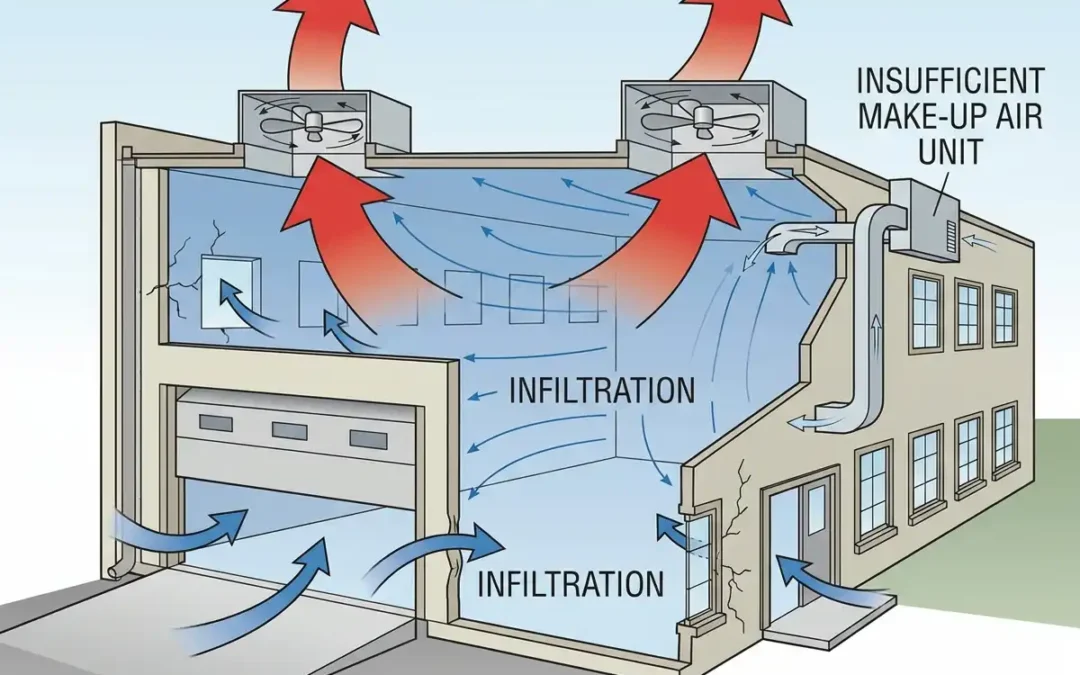
In loading dock environments, one open door can undo a lot of good HVAC work. If the control system keeps conditioning a zone at full strength while dock doors stay open, the building ends up fighting a losing battle and your utility bill reflects it.
- Use door interlocks so nearby zones do not over-condition when doors are open
- Activate air curtains only when doors are in use
- Adjust local deadbands around active dock areas during loading periods
- Use alerts or timers when dock doors stay open too long
This is one of the most practical control upgrades for warehouse and logistics facilities because it addresses one of the biggest real-world sources of wasted energy.
10. Use Analytics and Fault Detection to Catch Waste Early
A smart strategy should also watch itself. Once controls, sensors, schedules, and devices are in place, the next step is using the data to catch problems before they become expensive. That is where analytics and fault detection start paying for themselves.
- Flag short cycling, simultaneous heating and cooling, or stuck dampers
- Track filter pressure and equipment runtime more accurately
- Benchmark usage trends and spot abnormal spikes faster
- Identify performance drift before it turns into a comfort or energy problem
This is how facilities move from reactive control management to continuous improvement. Instead of waiting for the bill to tell you something is wrong, the system gives you better visibility into where waste is creeping in.
Schedule a performance review if you want to find out whether your existing controls are creating hidden waste.
11. Keep the Control Strategy Supported With Maintenance
Even the smartest control system needs maintenance. Dampers stick, sensors drift, schedules get changed, thermostats get overridden, and filters load up. Over time, those small issues can erase the savings the strategy was supposed to deliver.
- Include control review and calibration in your maintenance plan
- Check sensors, thermostats, and dampers seasonally
- Verify economizer and ventilation logic before peak heating and cooling seasons
- Keep airflow components clean so control decisions are based on a healthy system
A good control strategy is not set once and forgotten. It needs seasonal review, real-world tuning, and consistent upkeep to keep saving money.
Our custom maintenance agreements help keep control systems optimized season after season so your savings actually last.
Frequently Asked Questions
What is the most cost-effective way to reduce HVAC energy use?
Scheduling, wider deadbands, zoning, and thermostat programming are some of the fastest-return improvements because they reduce unnecessary runtime without requiring a full system replacement.
Does Choice Mechanical install building automation systems?
Yes. We work with facilities of different sizes to upgrade HVAC controls, install BAS platforms, and integrate existing systems into smarter, more efficient operating strategies.
Can smart HVAC controls work with older equipment?
In many cases, yes. Thermostat upgrades, zoning improvements, scheduling changes, VFDs, and selected controls upgrades can often be added to older systems depending on equipment condition and compatibility.
How do I know if my HVAC controls are wasting energy?
Uneven temperatures, high utility bills, short cycling, excessive runtime, stale air, and equipment wear are all common warning signs that the building is not being controlled efficiently.
Smart Controls Turn HVAC From a Cost Burden Into a Better Asset
Creating a smart commercial HVAC control strategy is not just for new construction. It is one of the most practical ways to lower operating costs in existing commercial buildings. With better scheduling, zoning, thermostats, ventilation logic, automation, and analytics in place, your building can improve comfort, reduce energy waste, and extend the life of its HVAC equipment at the same time.
Choice Mechanical’s HVAC-R experts can help you modernize your system, and our custom maintenance agreements help keep those controls performing the way they should.
Contact us today to build your smart HVAC control plan and start reducing utility costs.