How to Control Temperature Fluctuations in Large Warehouses
Maintaining consistent temperatures in a large warehouse is not easy. High ceilings, open dock doors, wide floor plates, and uneven airflow create ideal conditions for hot and cold spots. One area feels fine while another feels five to ten degrees off. In winter, heat collects near the roof while the floor stays cold. In summer, dock activity and outside air infiltration can make one end of the building feel completely different from the other.
If you are struggling with uneven airflow or seasonal temperature swings, it is time to take a closer look at your warehouse temperature control strategy. In most warehouses, solving the problem requires more than turning the thermostat up or down. It takes better air movement, stronger zoning, tighter building control, and more visibility into what the system is actually doing.
Need emergency help due to system failure? Choice Mechanical offers 24/7 commercial HVAC emergency services for warehouses across Indianapolis and Central Indiana.
1. Address Temperature Stratification First
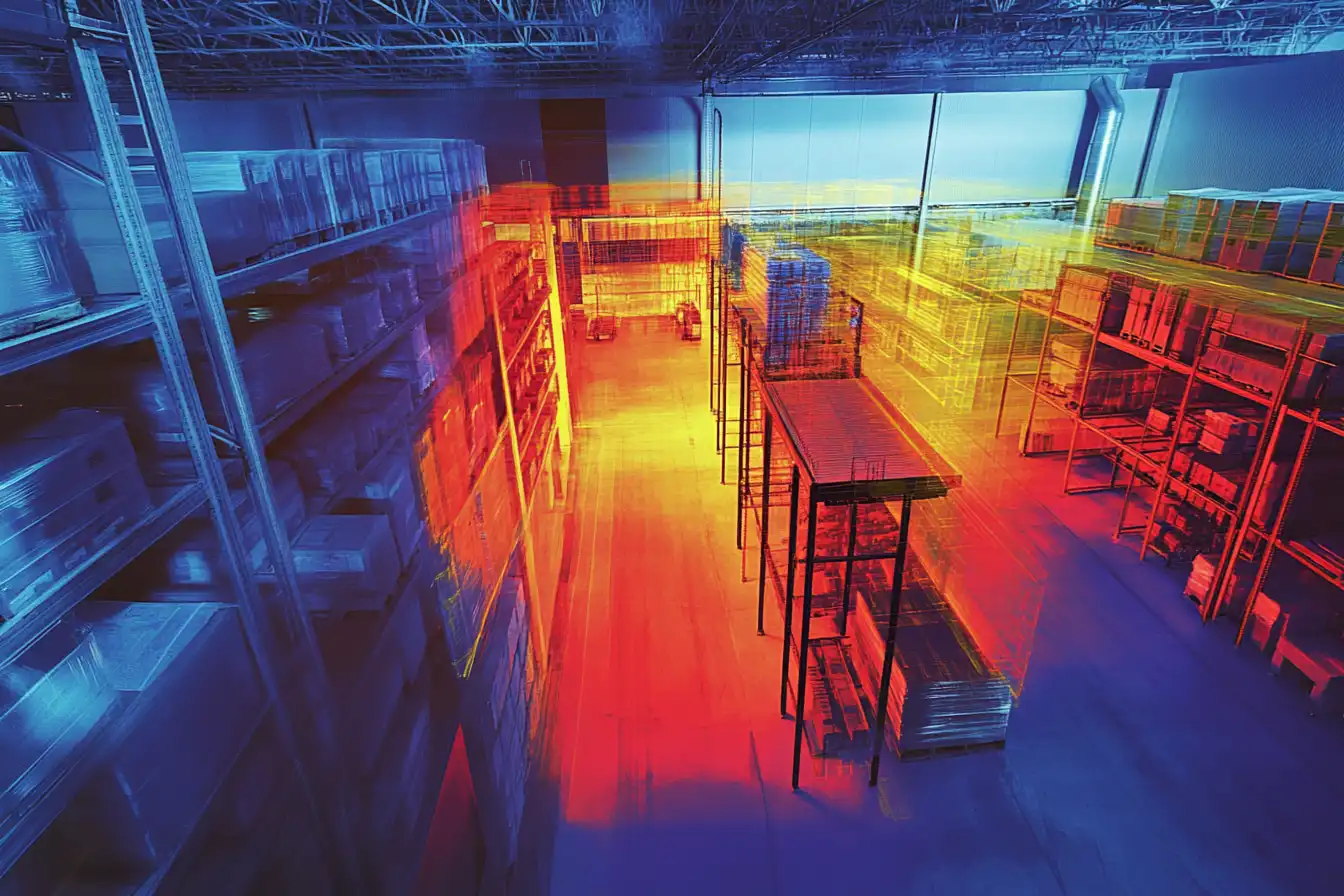
In large warehouses, one of the biggest causes of temperature fluctuation is stratification. Warm air rises and collects at the ceiling while cooler air stays in the occupied zone. That creates a building that looks heated on paper but still feels cold where people are actually working. In summer, the opposite problem can show up in different forms, with trapped heat and poor air mixing making certain areas feel much hotter than others.
- High-bay spaces naturally separate into warmer and cooler air layers
- Thermostats may read acceptable conditions while floor-level staff still feel uncomfortable
- Heating systems often run longer because the usable heat is stuck overhead
- Uneven air layers make temperature control across the building much harder
Destratification fans and HVLS fans are often one of the most practical solutions because they pull useful air back down into the occupied zone instead of letting it sit unused near the roof structure.
Ask us about airflow balancing and destratification strategies for your warehouse.
2. Use Destratification Fans the Right Way
Fans help, but only when they are used with the right strategy. In winter, the goal is not to blast workers with a draft. It is to gently mix the warm ceiling layer back down to floor level. In summer, fans can support better air movement and improve comfort in areas where stagnant air contributes to temperature swings.
- HVLS fans can reduce floor-to-ceiling temperature differences in high-bay warehouses
- Seasonal fan direction matters for both heating and cooling performance
- Fan speed should be tied to real building conditions, not just left on one setting all year
- Destratification works best when it supports the HVAC system instead of fighting it
In many warehouses, better air mixing is one of the fastest ways to improve comfort without making a major equipment change. It also helps reduce wasted heating energy that would otherwise stay trapped above the racking.
3. Implement Smart Zoning Instead of Treating the Warehouse Like One Room
Large warehouses rarely behave like a single space, so they should not be controlled like one. Shipping zones, storage areas, offices, pick modules, and dock-adjacent sections all have different loads, traffic, and exposure to outside air. When one thermostat or one broad control strategy tries to manage the entire building, temperature fluctuations are almost guaranteed.
- Separate office, storage, dock, and work zones whenever possible
- Use programmable thermostats or building controls for different schedules and uses
- Match airflow and conditioning to how each part of the building is actually used
- Reduce over-conditioning in low-use areas while protecting higher-priority zones
In some facilities, that may mean multiple rooftop units serving separate areas. In others, it may mean better zone logic, rebalancing, or VAV-style control where the building design supports it. The goal is the same either way: stop forcing one strategy onto spaces that behave differently.
If you are still running a single-zone approach across a large warehouse, it may be time to ask better questions about how your HVAC system is really being controlled.
4. Tighten Up the Building Envelope and Loading Dock Areas
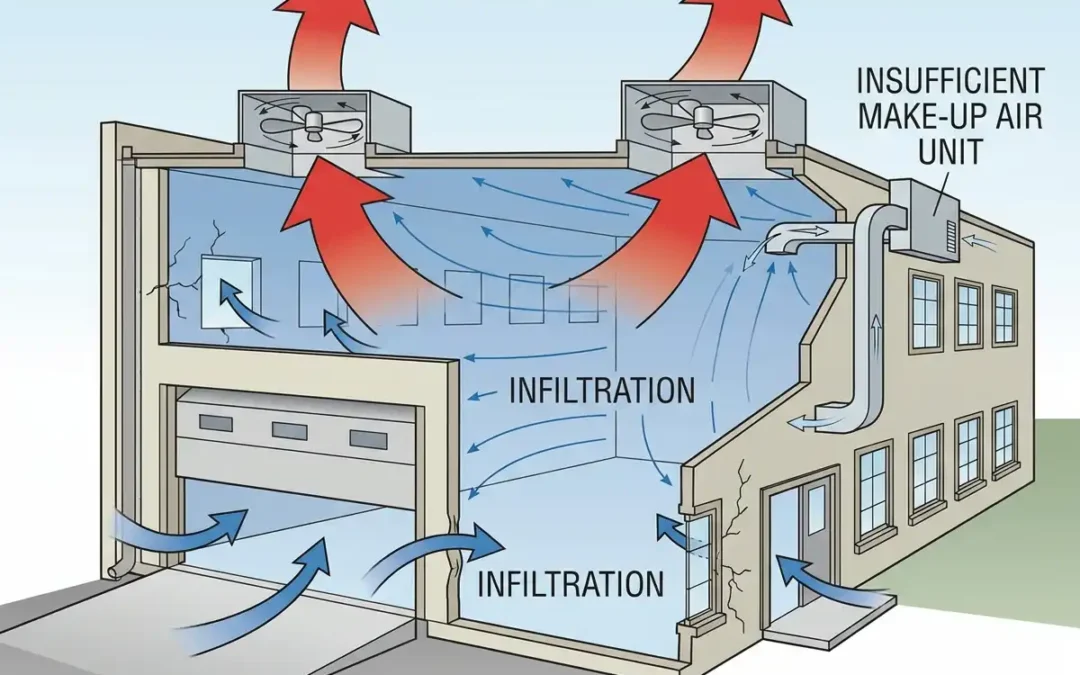
Some warehouse temperature problems are not equipment problems at all. They are building-envelope problems. If dock doors leak, seals are torn, thresholds are weak, or overhead doors are poorly insulated, conditioned air leaves the building faster than the HVAC system can control it.
- Dock seals and shelter curtains need to be in good condition
- Openings around doors, roof lines, and wall penetrations increase temperature swings
- Air curtains and high-speed doors can reduce outside-air intrusion at active docks
- Insulation gaps in walls and roof areas increase seasonal instability
Loading docks are usually one of the biggest trouble spots because they continuously expose the building to outside conditions. If dock areas are dragging the rest of the warehouse off balance, the HVAC system will keep working harder without ever fully catching up.
5. Improve Sensors, Thermostat Placement, and Control Visibility
Warehouse temperature control depends heavily on what the system thinks is happening inside the building. If thermostats and sensors are placed poorly, or if there is no visibility into conditions across the space, the building can drift out of balance without anyone realizing it until complaints pile up.
- One wall thermostat cannot tell the full story in a large open warehouse
- Sensors placed in poor locations can drive the wrong response from the system
- Multiple temperature readings across zones improve control decisions
- BMS and remote monitoring tools help identify trouble areas faster
Real-time visibility matters even more in warehouses with inventory concerns, variable staffing, or mixed-use areas. Building management systems and connected sensors can help facility teams spot temperature drift, equipment problems, and control failures before they turn into major operational issues.
We offer HVAC-R evaluations and control reviews for warehouses that need better monitoring, more accurate sensor placement, or stronger building automation support.
6. Maintain Equipment Before Performance Starts Drifting
Temperature fluctuations are often the first sign that the HVAC system is losing performance. Dirty filters, weak dampers, failing sensors, refrigerant issues, and restricted coils do not always create an immediate breakdown, but they do make consistent control much harder.
- Dirty filters reduce airflow and make temperatures less stable across the floor
- Damper and economizer issues can bring in the wrong amount of outside air
- Sensor drift can cause the system to overreact or underdeliver
- Restricted coils and low refrigerant reduce the system’s ability to keep up during peak demand
This is one reason preventative maintenance matters so much in warehouses. The system may still be “running,” but not running well enough to hold the building steady.
Skipped maintenance is also a major cause of hidden energy waste and unstable warehouse performance. Read The Hidden Cost of Skipping Maintenance on Commercial HVAC Systems if you want to understand how quickly that drift gets expensive.
Ask us about a preventative maintenance plan designed specifically for warehouse HVAC systems.
7. Know When Fluctuations Signal a Bigger System Problem
Sometimes temperature swings are a sign that the warehouse has moved beyond a control issue and into a capacity or reliability issue. Aging equipment, weak redundancy, failed components, and overloaded systems can all make the building harder to stabilize.
- Hot and cold complaints increase even after thermostat changes
- Utility costs rise while comfort still gets worse
- The system runs constantly but struggles to hold setpoints
- One equipment failure affects too much of the building at once
In larger or more critical warehouses, this is where redundancy and system design start to matter more. If one rooftop unit or one major heating component can throw a huge portion of the building out of spec, the facility may need a stronger reliability plan, not just another service call.
HVAC downtime in warehouses is not just inconvenient. It can disrupt operations, affect inventory, and put worker safety at risk during extreme weather.
Choice Mechanical offers 24/7 emergency HVAC support when system failure causes serious warehouse comfort, safety, or compliance issues.
8. Treat Warehouse Temperature Control Like a System, Not a Thermostat Problem
The most effective warehouse temperature control strategies combine airflow, zoning, envelope improvements, controls, maintenance, and emergency readiness. No single adjustment solves the whole issue on its own. The buildings that stay most stable are the ones that treat climate control as a facility-wide system instead of a one-time fix.
- Air movement and temperature control have to work together
- Dock conditions and insulation affect HVAC performance more than many teams realize
- Monitoring and automation help catch drift before it becomes a crisis
- Maintenance keeps the system capable of holding the conditions you are asking it to maintain
That approach is especially important in warehouses with sensitive goods, high worker density, or strong seasonal demand swings. In those environments, “close enough” temperature control is usually not good enough for long.
Frequently Asked Questions
Why are temperature fluctuations more common in warehouses?
Warehouses have high ceilings, large open spaces, frequent door openings, and variable insulation and airflow conditions. Those factors make them much more likely to develop hot and cold spots than smaller commercial spaces.
Do I need to zone my warehouse HVAC system?
In most cases, yes. Warehouses with offices, storage, shipping, and loading zones usually benefit from separate control strategies instead of one blanket setpoint across the entire building.
How can destratification fans help?
They pull warm air down from the ceiling and mix the building more evenly, which improves floor-level comfort and reduces wasted heating energy in high-bay spaces.
Can Choice Mechanical evaluate my warehouse HVAC system?
Yes. We offer full HVAC-R evaluations and airflow audits tailored to large commercial and industrial warehouse facilities.
Control the Climate, Control the Costs
Warehouse temperature control affects far more than comfort. It influences worker safety, productivity, product stability, HVAC runtime, and long-term operating cost. If your facility is dealing with extreme swings or recurring hot and cold zones, the answer is usually a smarter combination of airflow management, zoning, envelope control, maintenance, and monitoring.
Need fast help with an HVAC emergency? We are available 24/7 for warehouse clients across Indianapolis and Central Indiana.
Let’s talk about long-term solutions for more consistent warehouse climate control.