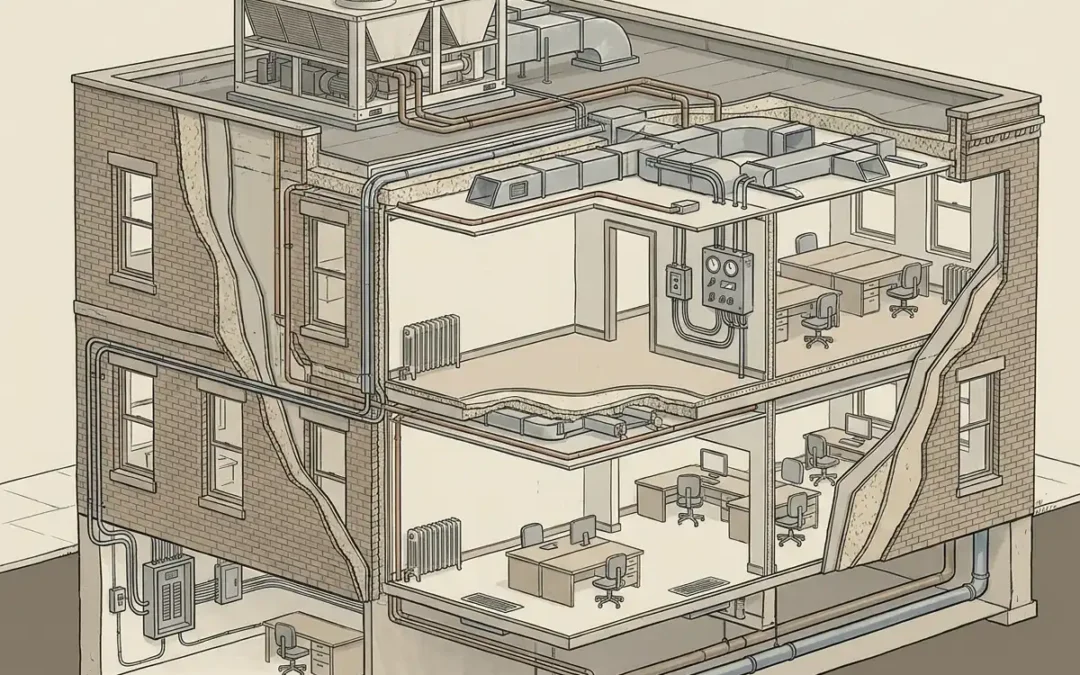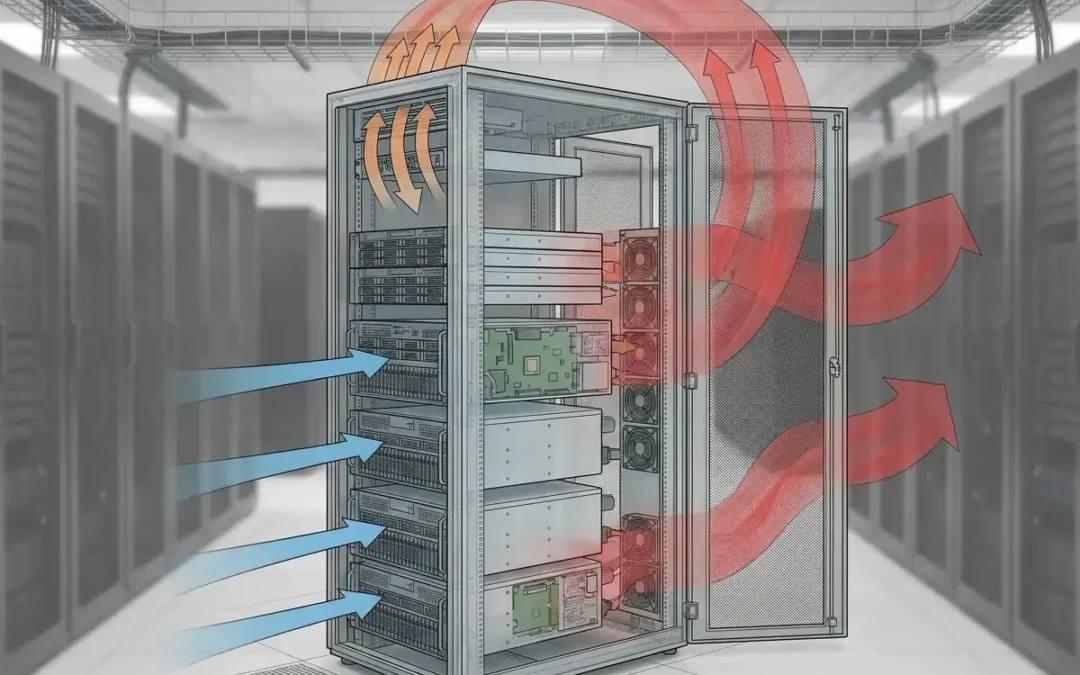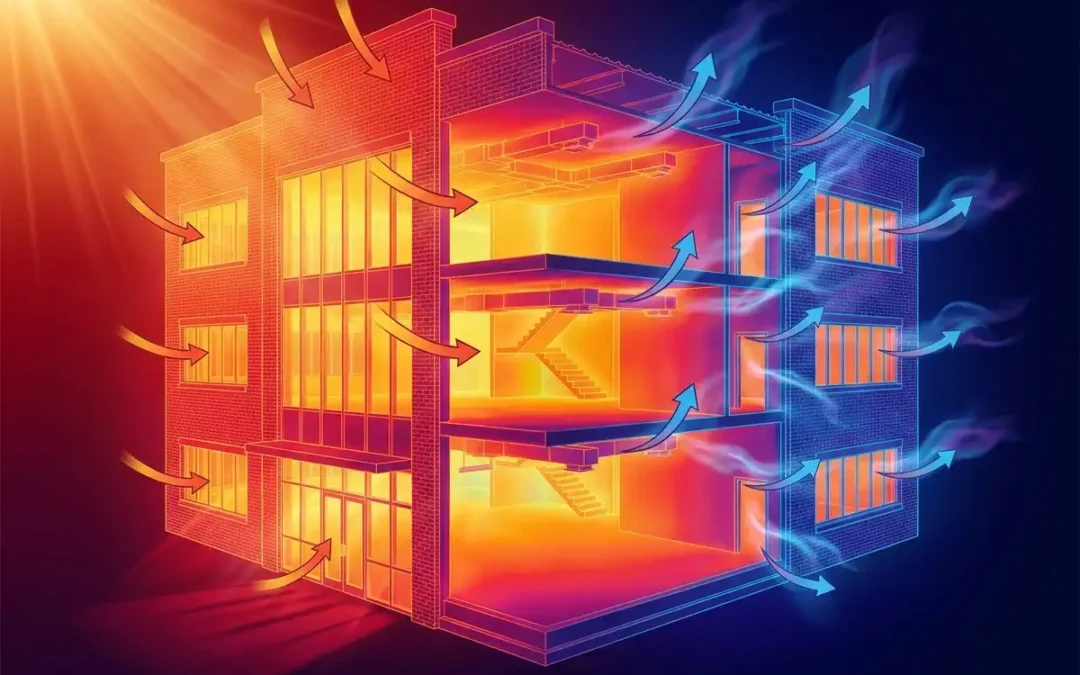
A make-up air unit can be running and still fail its job. The fan may turn while the building remains negative. The burner may fire while discharge air stays too cold. The BAS may show the outdoor-air damper open even though a broken linkage leaves the blades nearly closed.
Commercial make-up air unit repair begins with a simple question: is the unit delivering the correct amount and condition of outdoor air when the exhaust system needs it? Answering that question requires following the air path and verifying physical operation—not relying on a single status light.
Why Make-Up Air Matters
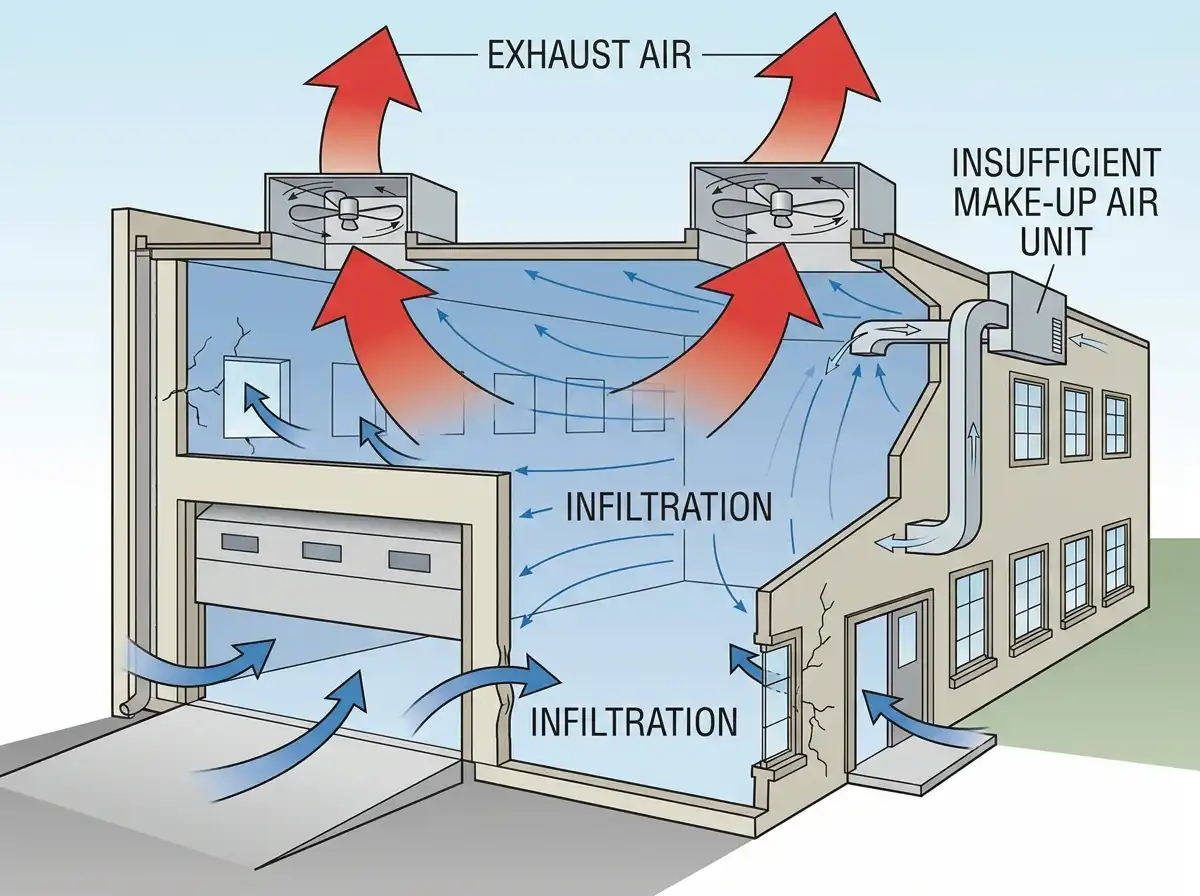
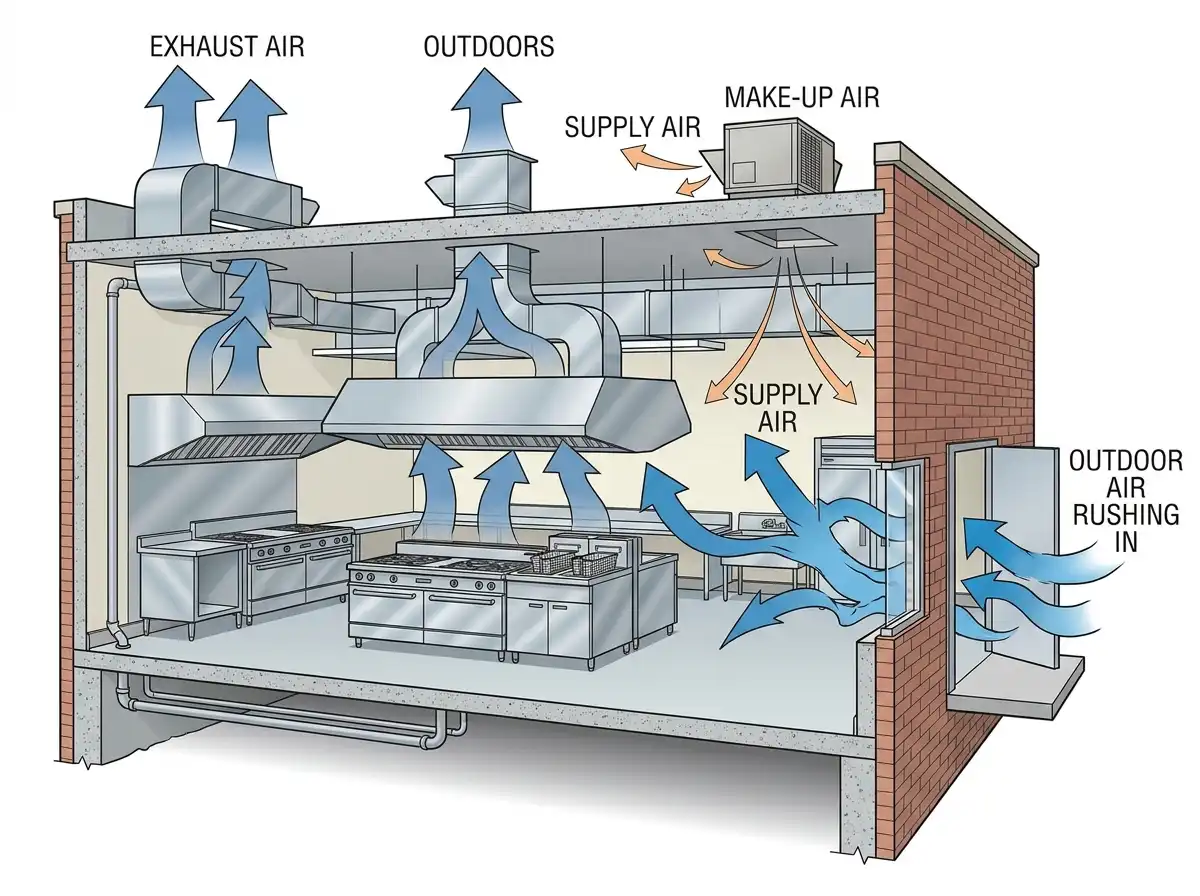
Exhaust fans remove air from kitchens, restrooms, laboratories, production areas, welding spaces, and other commercial operations. That air must be replaced. A make-up air unit introduces outdoor air in a controlled location and may filter, heat, cool, or dehumidify it before delivery.
When replacement air is insufficient, the building pulls air through doors, cracks, loading docks, wall assemblies, and other uncontrolled openings. The result may include hard-to-open doors, drafts, odor migration, poor hood capture, moisture intrusion, cold perimeter areas, and unstable space pressure. “A make-up air unit is part of an airflow balance. Before focusing on the heater or compressor, we verify whether the exhaust, replacement air, and building pressure agree.” says a Choice Mechanical lead commercial HVAC technician.
What to Check First: Follow the Air
1. Confirm the Unit Is Supposed to Be On
Review occupancy schedules, exhaust interlocks, enable commands, safeties, local disconnects, freeze protection, and fire-alarm or smoke-control interfaces as applicable. A unit that is disabled by sequence should not be treated as a failed motor. Likewise, an exhaust fan operating without its intended make-up air interlock can create a building problem even if the make-up unit itself is functional.
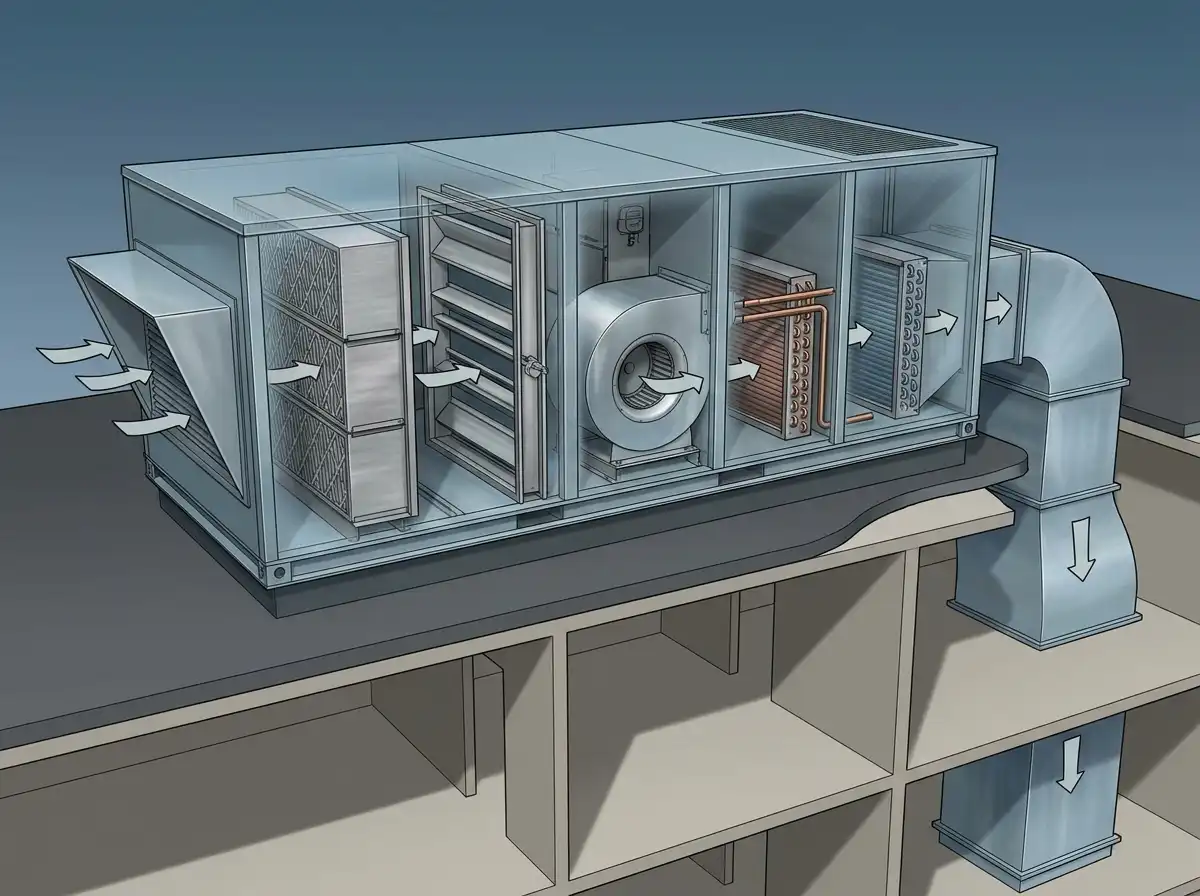
2. Inspect the Outdoor-Air Intake
Leaves, snow, grease, construction material, nesting debris, or a closed louver can restrict the intake. Intake location also matters: recirculated exhaust, cooling-tower discharge, vehicle exhaust, or wind-driven rain may create problems that equipment repair alone cannot solve.
3. Check Filters and the Pressure Drop
Loaded filters reduce airflow and can contribute to fan, burner, coil, or freeze-protection problems. Appearance is not enough. Pressure drop across the filter bank should be evaluated against the filter and unit requirements. An incorrect filter type or insufficient filter area can create excessive resistance even when filters are new.
4. Verify Damper Position Physically
Compare the controller command with actual blade and linkage position. Look for binding, loose hardware, failed actuators, damaged seals, and an end switch that reports open before the damper reaches the required position. Do not place hands inside a damper or fan section unless the equipment is safely isolated under approved procedures.
5. Confirm Fan Rotation, Speed, and Airflow
A fan can rotate backward after electrical work, a belt can slip, a sheave can wear, or a VFD can be limited to an incorrect speed. Bearing damage, dirty wheels, and loose set screws can reduce performance. Actual airflow or pressure should be measured when delivery is in doubt.
Use the Symptom to Choose the Next Branch
| Primary symptom | Next systems to investigate | Operational risk |
|---|---|---|
| No airflow | Enable, safeties, damper proof, motor, VFD, belt, fan | Severe negative pressure or loss of required ventilation |
| Low airflow | Intake, filters, damper, rotation, fan speed, duct restriction | Drafts, exhaust imbalance, poor capture, comfort complaints |
| Air too cold | Heating enable, burner or valve, fuel or hot water, airflow, discharge sensor | Freeze risk, cold spaces, burner cycling |
| Air too warm | Cooling stage, coil, refrigerant, chilled water, sensor, control sequence | Kitchen or process heat stress, indoor-temperature rise |
| Building remains negative | Actual supply versus total exhaust, duct leakage, zoning, door or relief paths | Infiltration, odor migration, moisture, door and hood problems |
| Unit repeatedly locks out | Record exact safety and operating condition before reset | Equipment damage or unsafe operation if the safety is bypassed |
Heating Failures in Indiana Winter
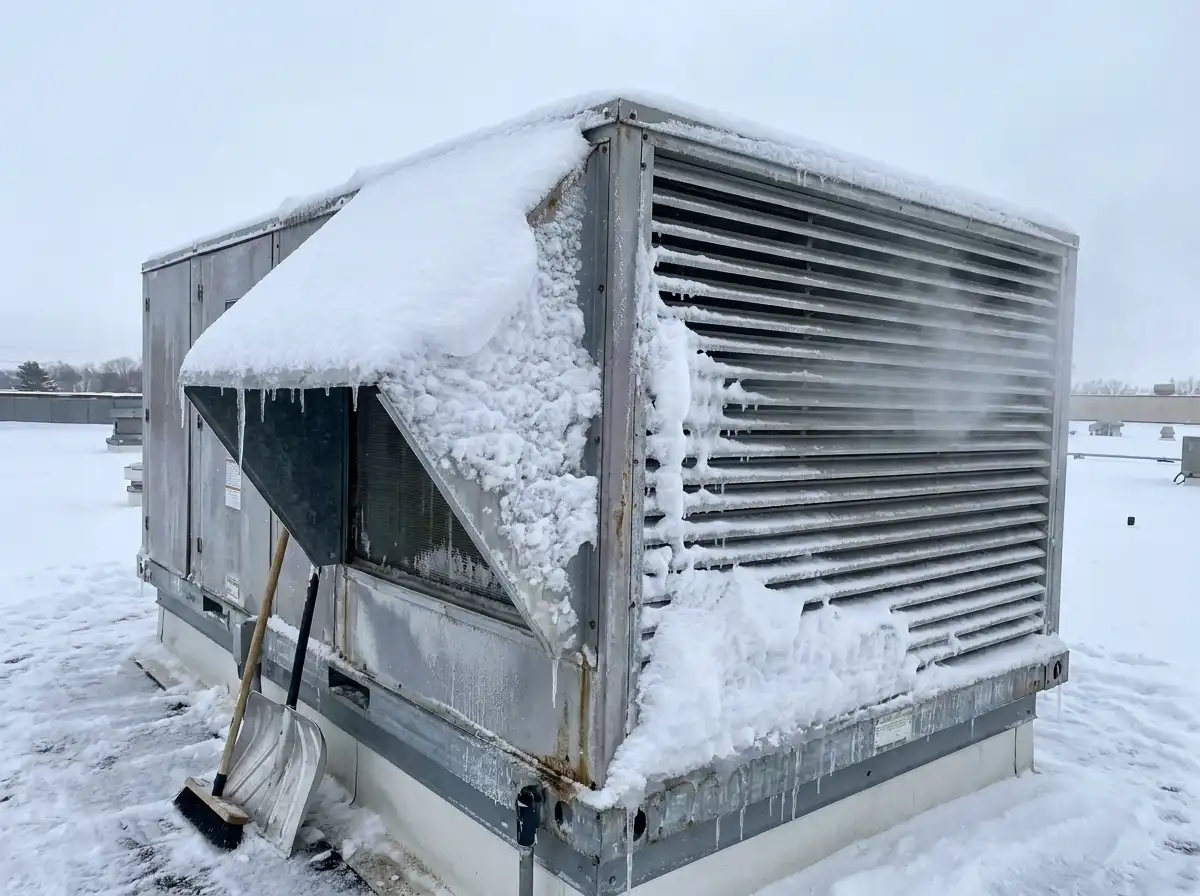
A direct-fired, indirect-fired, electric, steam, or hot-water make-up air unit has different components and safeties. Common heating complaints may involve ignition, flame proving, gas pressure, combustion air, high limits, airflow proving, valves, pumps, coils, or discharge-air controls.
Repeated burner reset is not a repair. Record the lockout code and the conditions under which it occurs. Combustion and gas work requires qualified personnel and appropriate instruments. A burner should never be forced to operate without the required airflow and safety sequence.
In hydronic units, a failed valve or pump, air-bound coil, low water temperature, blocked strainer, or frozen coil can reduce heat. Freeze damage can release substantial water when the system thaws, making early isolation and emergency response important.
Cooling and Humidity Failures in Summer
A make-up air unit may introduce a large outdoor sensible and latent load during an Indianapolis summer. Dirty coils, inadequate condenser airflow, refrigerant faults, failed chilled-water control, excessive airflow, or incorrect staging can leave discharge air too warm or humid.
The building may maintain temperature while humidity rises because other HVAC units absorb the sensible load but cannot remove the added moisture effectively. That is why make-up air performance should be evaluated with outdoor and discharge temperature and humidity—not temperature alone.
Restaurant Example: The Door Is the First Alarm
A restaurant manager notices that the rear door is difficult to open during dinner service. When it does open, outdoor air rushes toward the kitchen. The dining room develops drafts, and cooking odors move away from the hood.
The timing is important: the problem appears when all hood exhaust fans operate. A technician compares total exhaust with measured make-up air, checks the unit schedule and interlock, verifies filters and damper position, and evaluates fan delivery. Suppose a slipping belt allows the fan to run but at reduced output. Replacing and tensioning the belt addresses the immediate loss, but the service should also inspect sheaves, alignment, and the reason routine inspection did not catch the wear.
This representative scenario illustrates the connection between the unit and the operation. Choice Mechanical provides commercial HVAC and refrigeration service for restaurants and food facilities throughout Indianapolis and Central Indiana.
Building Pressure Is a Measurement, Not a Door Test
Door behavior is a useful clue but not a complete pressure assessment. Wind, stack effect, door closers, vestibules, and local airflow influence what an occupant feels. Differential pressure should be measured at appropriate locations and under documented operating modes.
A building can also require different pressure relationships by area. A kitchen may be negative to the dining room while the overall building remains slightly positive to outdoors. A medical or process space may have its own requirements. Increasing make-up air globally without understanding zones can move odors or contaminants in the wrong direction. “We do not balance a building by making every room positive. We establish the intended airflow direction for each space and then measure whether the systems create it.” says a Choice Mechanical lead commercial HVAC technician.
Information to Collect Before Requesting Repair
- Unit identification and the areas or exhaust systems it serves
- Exact alarm or lockout message
- Whether the fan, damper, heating, and cooling appear enabled
- Outdoor conditions and time of day
- Which exhaust fans, hoods, or processes were operating
- Door, odor, draft, temperature, or humidity symptoms
- Recent filter, belt, controls, roof, or kitchen work
Do not bypass damper proofs, airflow switches, freeze protection, flame safeguards, high limits, or other safeties. If there is a gas odor, smoke, electrical burning odor, severe vibration, frozen coil, or uncontrolled water, follow emergency procedures and request immediate help.
Make-Up Air Unit FAQs
Why does the make-up air unit run when the building is unoccupied?
It may be responding to an exhaust interlock, purge, pressure, freeze-protection, or schedule command. If operation is unexpected, review the sequence and actual inputs before overriding it.
Can dirty filters make a building negative?
Yes. If filter resistance reduces make-up airflow while exhaust remains constant, building pressure can become more negative.
Should make-up air be the same volume as exhaust?
Not always at each device. The required relationship depends on transfer air, outdoor air from other systems, desired zone pressures, exhaust diversity, and applicable design requirements. It should be determined and balanced as a system.
Why does a make-up air burner short cycle?
Possible causes include airflow changes, sensor location or calibration, control tuning, excessive capacity, limit operation, or burner faults. The exact event ending each cycle must be identified.
Can make-up air service be included in planned maintenance?
Yes. Choice Mechanical can include intake, filters, belts, fans, dampers, coils, drainage, controls, and operating checks in a tailored commercial maintenance program.
Where outdoor-air and relief paths are integrated with rooftop equipment, evaluate commercial economizer operation and cooling cost as part of the complete air-balance sequence.
Restore the Air Balance, Not Just the Unit
A successful make-up air repair confirms airflow, discharge condition, exhaust coordination, and building pressure after the component is fixed. Otherwise, a running unit can leave the original operational problem unresolved.
For commercial make-up air unit repair in Indianapolis or Central Indiana, call Choice Mechanical at (317) 885-0200 or schedule HVAC service. If the failure threatens safe operation, freeze protection, foodservice ventilation, or critical building pressure, Choice Mechanical also provides 24/7 emergency response.