When one office is hot and the room next door is cold, the central air handler is not always the culprit. In many commercial buildings, the last device responsible for controlling airflow to each zone is a variable air volume box. If that VAV box cannot measure airflow, move its damper, control reheat, or communicate with the building automation system, comfort can fail one room at a time.
VAV box troubleshooting is most effective when it begins with the zone and then works upstream. Replacing an actuator will not fix a bad airflow sensor. Rebalancing a diffuser will not correct a leaking reheat valve. Raising duct pressure may hide a starved zone while increasing noise and fan energy throughout the rest of the building.
What a VAV Box Is Supposed to Do
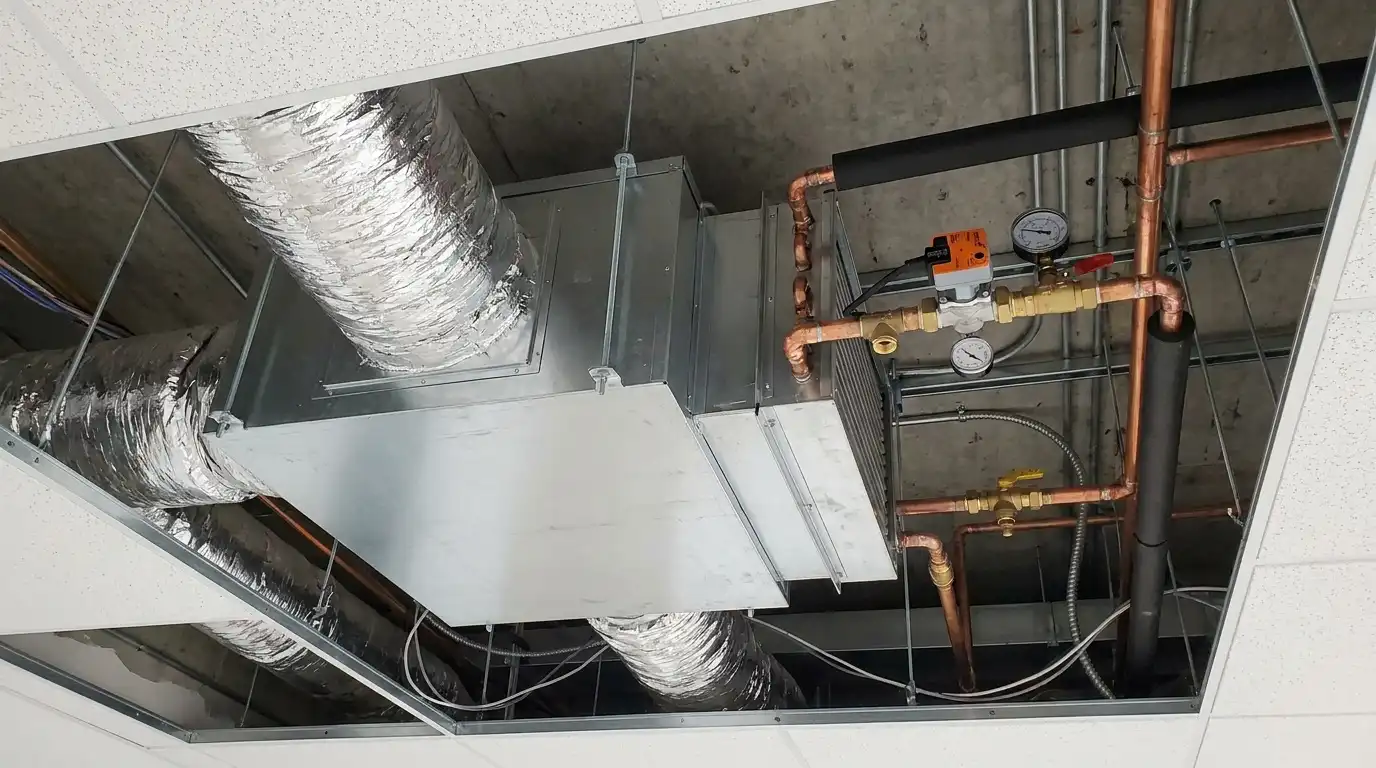
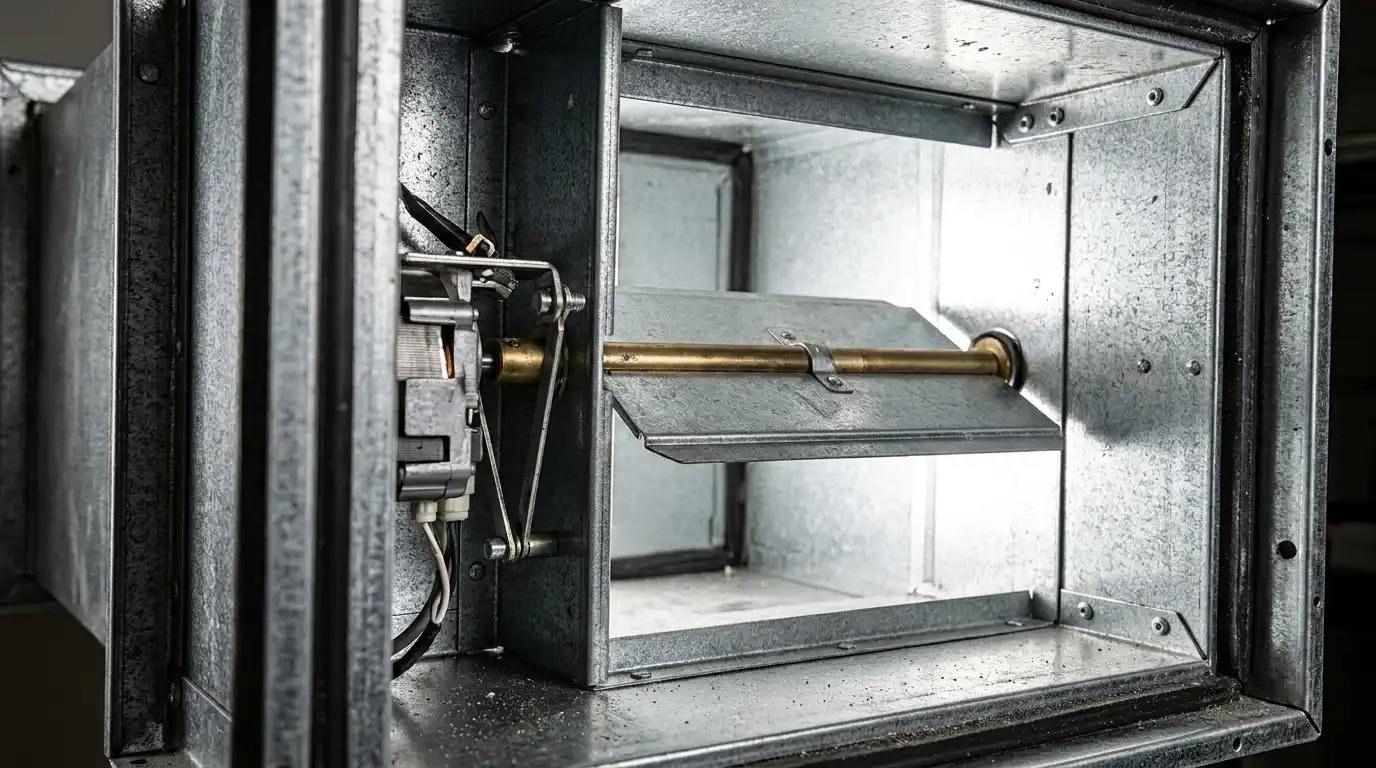
A basic cooling-only VAV terminal regulates the volume of conditioned primary air entering a zone. The controller compares zone temperature with setpoint and modulates a damper to deliver more or less airflow. Many boxes also include hot-water or electric reheat, a discharge-air sensor, occupancy logic, and minimum ventilation airflow.
The box depends on the central system. It cannot deliver air the air handler does not provide, and it cannot regulate accurately if duct pressure is unstable. Its control sequence must also agree with schedules, occupancy, supply-air temperature, ventilation requirements, and building pressure strategy.
Start With the Complaint Pattern
| Observed pattern | Likely areas to investigate | Useful BAS trend points |
|---|---|---|
| Zone stays warm with damper commanded open | Available duct pressure, actual damper position, airflow sensor, blocked duct, supply-air temperature | Zone temperature, airflow, damper command, duct static, supply temperature |
| Zone stays cold with damper commanded closed | Leaking or stuck damper, incorrect airflow calibration, sensor location, excessive duct pressure | Zone temperature, airflow, damper command, occupancy status |
| Zone alternates hot and cold | Control-loop tuning, sensor drift, reheat instability, poor deadband, changing loads | Cooling command, heating command, discharge temperature, valve position |
| Several remote zones are warm | Air-handler airflow, duct-static setpoint, sensor placement, main-duct restriction, balancing | Static pressure, fan speed, most-open damper position, zone airflow |
| Diffusers are noisy in nearby zones | Excess duct pressure, damper throttling, diffuser selection, airflow setpoints | Duct static, fan speed, damper command, measured airflow |
Seven VAV Problems That Produce Comfort Complaints
A Damper That Does Not Follow Its Command
An actuator may fail electrically or mechanically, a linkage can loosen, or the damper shaft can bind. The controller may display 100% open while the blade remains partly closed. Conversely, a failed-open damper can overcool a zone and waste reheat energy.
An Airflow Sensor That Is Dirty, Disconnected, or Out of Calibration
Many VAV controllers use a differential-pressure signal from a flow pickup. Contaminated pickup tubes, cracked tubing, incorrect connections, sensor drift, or poor inlet conditions can make reported airflow differ from actual airflow. The controller then moves the damper based on bad information.
“A VAV box can have a good actuator and still control poorly. If the airflow signal is wrong, the controller is steering with the wrong map.”
Minimum and Maximum Airflow Setpoints That Do Not Match the Zone
Airflow setpoints may remain from an old tenant layout, be copied from another box, or be changed without rebalance. A minimum that is too high can overcool the space and drive unnecessary reheat. A minimum that is too low may not support ventilation or air distribution. A maximum above the box or diffuser capability can create noise without delivering useful comfort.
Reheat That Leaks, Fails, or Operates at the Wrong Time
A leaking hot-water valve can heat while the controller calls for cooling. A stuck valve, air-bound coil, failed pump, closed isolation valve, or low hot-water temperature can leave a zone cold during heating demand. Electric reheat introduces its own safeties, stages, airflow requirements, and electrical components.
A Zone Sensor That Does Not Represent the Zone
Sensors near exterior doors, direct sunlight, copiers, break-room appliances, supply diffusers, or poorly insulated walls may see conditions different from the occupied area. Calibration drift and occupant adjustments can add further error. An independent measurement should be taken near the representative occupied location.
Unstable Duct Pressure
VAV boxes need enough inlet pressure to control, but excessive pressure makes dampers throttle and increases sound. Poor static-pressure sensor location, a failed reset sequence, or a fan operating against too many closed dampers can make airflow hunt. The related guide to commercial air balancing and hot or cold spots explains why terminal performance cannot be separated from the distribution system.
Control Logic or Network Problems
Incorrect occupancy mode, setpoint priority, deadband, morning warm-up logic, stale values, network interruption, or simultaneous heating and cooling commands can create intermittent complaints. A box may behave normally in occupied mode and fail after a schedule transition, making trend history essential.
Why “Just Increase the Static Pressure” Is Usually the Wrong First Move
If one VAV box is starved for air, raising the air-handler duct-static setpoint may increase its airflow. It also raises pressure at every other terminal. Nearby boxes close farther, diffuser sound may increase, duct leakage can worsen, and fan power rises.
The better sequence is to verify the affected box, check whether other remote boxes show the same problem, measure available pressure, and inspect the main and branch paths. If many zones are starved, the central system deserves attention. If one box is starved while adjacent boxes have pressure, the problem is more likely local.
Example: One Conference Room, Three Misleading Clues
A Fishers office building receives repeated complaints that a conference room becomes warm during afternoon meetings. The BAS shows the VAV damper at 100% open, so staff assume the box is too small. The room cools normally when empty.
A useful investigation compares occupancy load, actual airflow, design airflow, inlet pressure, supply-air temperature, and sensor readings. Suppose the controller reports design airflow, but a traverse shows substantially less air. Inspection finds a flow-sensor tube connected incorrectly after prior ceiling work. The controller believed it was delivering enough air and held an inaccurate damper position.
Correcting the tubing and recalibrating the box addresses the control error. The conference room’s peak occupant load can then be evaluated with trustworthy airflow data. This representative scenario shows why a displayed value must be verified before resizing equipment. Choice Mechanical provides commercial HVAC service in Fishers and supports office-building HVAC systems throughout Central Indiana.
A Practical VAV Troubleshooting Sequence
- Define the complaint. Identify time, occupancy, weather, affected area, and whether the problem is heating, cooling, ventilation, or noise.
- Validate the zone sensor. Compare the displayed value with an independent measurement in a representative location.
- Review commands and modes. Confirm occupancy, setpoints, airflow targets, damper command, and heating or cooling sequence.
- Verify physical response. Check actual damper and valve movement rather than relying only on graphics.
- Measure airflow and inlet conditions. Evaluate flow-sensor accuracy and available duct pressure.
- Check reheat. Confirm valve, coil, water temperature, electric stages, and applicable safeties.
- Look upstream. Review air-handler supply temperature, fan control, static pressure, and other terminal boxes.
- Correct, calibrate, and retest. Confirm stable operation across occupied and unoccupied modes.
“The repair is not complete when the actuator moves. It is complete when measured airflow, zone temperature, and the control sequence agree.”
What Facility Managers Can Gather Before the Technician Arrives
Record the zone name, VAV identifier, complaint times, number of occupants, thermostat reading, setpoint, and whether nearby zones are affected. Note recent ceiling, tenant, controls, or balancing work. If trend access is available, preserve zone temperature, airflow, damper, reheat, occupancy, supply temperature, and duct-static data.
Do not force outputs, change calibration factors, or override safeties without an approved controls procedure. Undocumented overrides can create new comfort problems and make the original sequence harder to reconstruct.
VAV Box FAQs
How long should a VAV actuator last?
There is no universal service life. Cycle count, temperature, installation, linkage condition, control stability, and actuator quality all matter. Frequent hunting can increase wear.
Can a VAV box cause high energy bills?
Yes. Excess minimum airflow, leaking reheat, simultaneous heating and cooling, high duct pressure, and inaccurate sensors can waste fan, cooling, and heating energy.
Why is a VAV zone cold even when the damper is closed?
The damper may leak or fail to close physically, airflow calibration may be wrong, duct pressure may be excessive, or the zone sensor may not represent the room.
Does every VAV box require rebalancing after an actuator replacement?
The need depends on the repair and system. At minimum, damper movement, airflow sensing, setpoints, and delivered airflow should be verified. Calibration or balancing may be necessary when measured performance does not match the intended values.
Can preventative maintenance include VAV boxes?
Yes. A commercial maintenance agreement can be tailored to include representative terminal inspection, controls review, trend analysis, sensor checks, and prioritized testing based on complaint history and criticality.
Resolve the Zone Without Destabilizing the Building
VAV comfort problems deserve a zone-level diagnosis that also respects the central system. The goal is not simply to make one damper move; it is to deliver the correct airflow, temperature, and ventilation without causing noise or energy waste elsewhere.
For recurring hot and cold zones in Indianapolis or Central Indiana, call Choice Mechanical at (317) 885-0200 or schedule commercial HVAC service. Include the zone ID, complaint schedule, occupancy pattern, and any BAS trends so the service team can begin with evidence rather than guesswork.