Packaged rooftop units are the workhorses behind many office buildings, retail spaces, and light industrial facilities across Indiana. They heat, cool, and move air with very little attention until something starts going wrong. Then the same question comes up fast: should you repair the unit, recommission it, or replace it?
If you are weighing RTU repair vs replace, the right answer depends on more than age alone. Operating cost, comfort complaints, service history, and how critical the unit is to your building all matter.
Need help evaluating a rooftop unit before you spend money in the wrong place? Choice Mechanical Services provides commercial HVAC-R service for office, retail, and industrial buildings throughout Indianapolis and Central Indiana.
1. Start With the Symptoms, Not the Serial Number
Age matters, but it should not be the first thing you look at. Some older RTUs still perform reasonably well with good maintenance, while newer ones can become problem units if they were neglected, poorly installed, or constantly overridden.
- Hot and cold spots in the areas served by the unit
- Long runtimes with poor cooling or heating performance
- Frequent service calls or nuisance lockouts
- Higher energy use without a clear change in occupancy or weather
- More complaints from tenants or staff tied to the same zone
These symptoms tell you the unit needs attention, but they do not automatically mean replacement. In some cases, the issue is airflow, controls, economizer setup, or deferred maintenance rather than a failed RTU cabinet.
If your building is dealing with repeat comfort issues, contact our team for a site review before deciding whether the unit is a repair, recommissioning, or replacement case.
2. Repair Makes Sense When the Problem Is Specific and Limited
Repair is usually the best option when the issue is isolated, the cabinet is still in decent shape, and the overall unit is performing well outside of one failed part or one service problem.
- Failed contactors, capacitors, sensors, relays, or igniters
- Belt, motor, or fan problems in otherwise healthy equipment
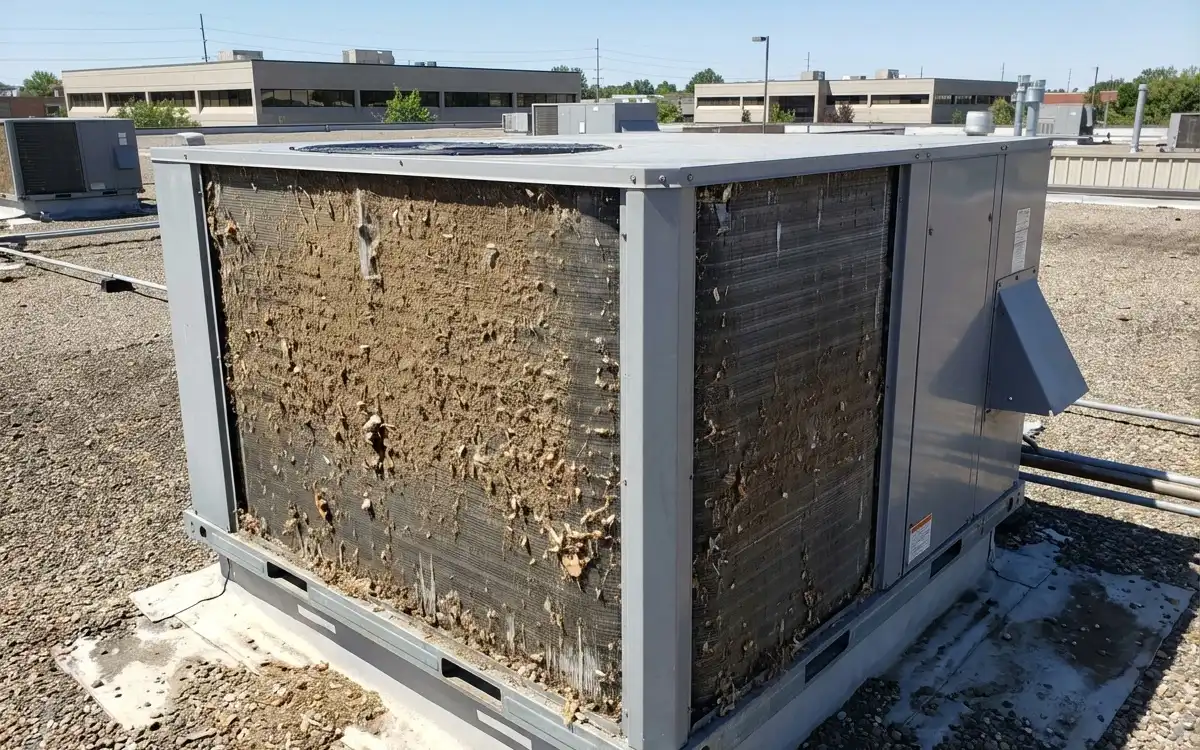
- Drain issues, clogged filters, or dirty coils causing poor performance
- Minor refrigerant leaks that can be repaired without major system rework
If the unit has a solid maintenance history and the repair cost is reasonable compared to the age and condition of the equipment, repair is often the most practical path.
It is also worth remembering that some “major” complaints come from maintenance gaps, not failed equipment. Our article on the cost of skipping maintenance on commercial HVAC systems explains how small neglected issues often snowball into much larger service calls.
When the issue is targeted and the unit still has life left in it, repair can buy you time and protect your capital budget.
3. Recommissioning Makes Sense When the Unit Runs, But Not Well
Recommissioning sits between repair and replacement. It is the right move when the RTU is technically operational, but no longer performing the way it should. This is common in office and retail buildings where schedules, tenant layouts, controls, and airflow needs have changed over time.
- Thermostats are reading incorrectly or fighting the actual space conditions
- Economizers are disabled, stuck, or not set up correctly
- Occupancy schedules no longer match how the building is used
- Airflow is out of balance after tenant build-outs or layout changes
- The unit cools and heats, but comfort and efficiency are still poor
Recommissioning usually includes control review, sensor calibration, airflow checks, economizer testing, setpoint adjustments, and general performance tuning. It is a strong option when replacing the whole unit would be premature, but basic repair alone will not solve the underlying problem.
This is especially relevant in multi-tenant properties. If you have been chasing complaints with thermostat changes and repeated small repairs, the root issue may be control strategy. Our guide on questions facility managers should ask their HVAC contractor can help you frame that conversation more clearly.
If the RTU still runs but never quite feels right, recommissioning may be the smartest investment you can make before considering replacement.
4. Replacement Makes Sense When Reliability and Cost Are Both Moving the Wrong Way
Replacement is usually the right call when the unit is becoming too expensive, too unreliable, or too risky to keep. A unit that fails repeatedly during peak weather, serves a critical area, or drains operating dollars month after month should be looked at closely.
- Repeated compressor failures or major refrigerant problems
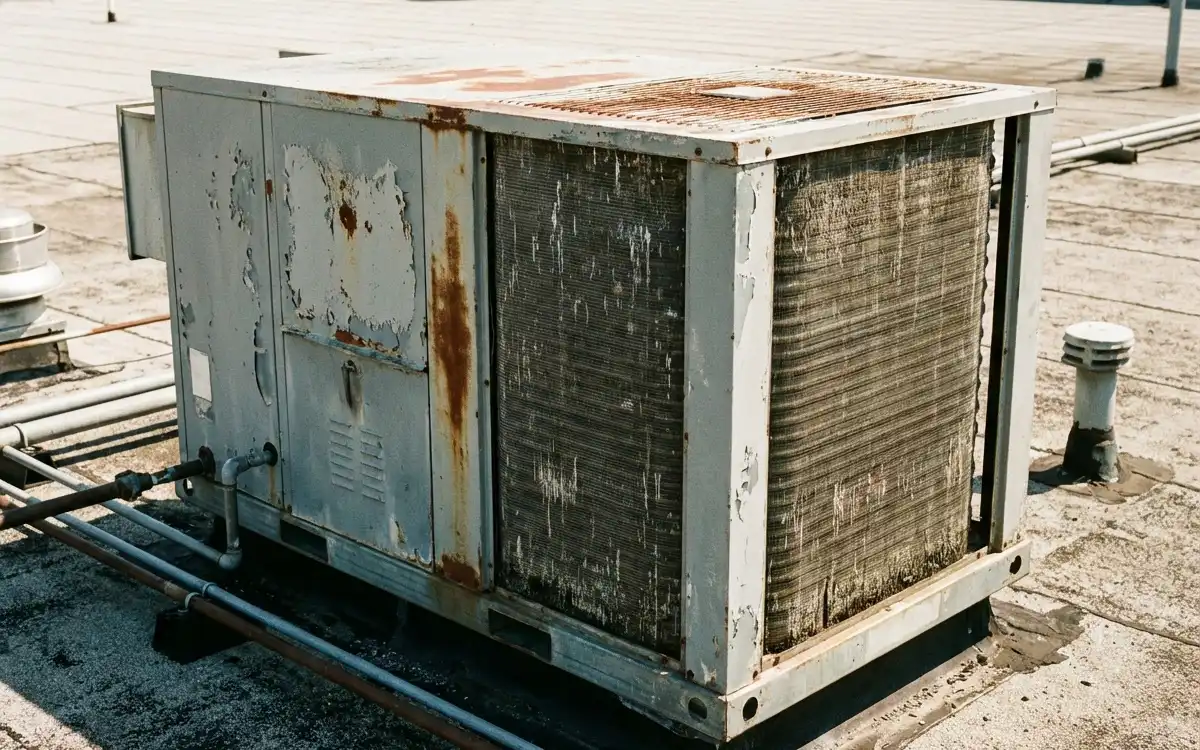
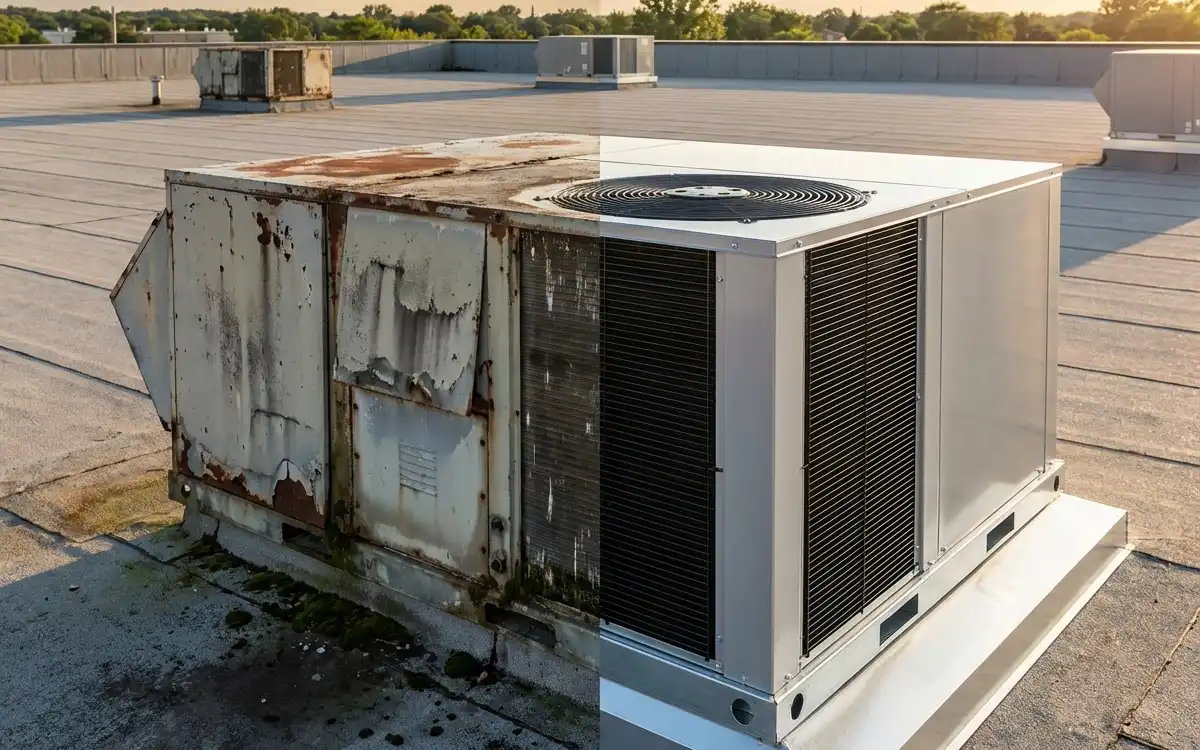
- Corroded cabinet, failing base rails, or severe coil deterioration
- Parts availability becoming a problem due to age or obsolete components
- Service costs adding up across multiple calls each season
- Energy use staying high even after maintenance and control adjustments
For some buildings, replacement is not just about efficiency. It is about reducing risk. If the unit serves a busy office floor, a customer-facing retail area, or a light industrial process space, the cost of one more failure may be higher than the cost of planned replacement.
If you are already considering broader mechanical upgrades, this is a good time to step back and review the bigger picture. Our article on how to build a reliable HVAC infrastructure is a useful next read when rooftop units are part of a longer-term facility plan.
If the unit has become a budget and reliability problem, replacement usually costs less in the long run than continuing to patch it.

5. Look at Repair Cost in Context, Not in Isolation
A repair quote can look reasonable until you compare it to how often the unit has needed service, how much energy it uses, and what happens if it fails again in July or January. That is why RTU repair vs replace should always be tied to total cost, not just the current invoice.
- How many service calls has the unit needed in the last 12 to 24 months?
- Has the unit already had multiple major repairs?
- Is the current issue one more item in a pattern?
- Will the repair actually solve the performance problem or only buy a short delay?
In many buildings, repeated small repairs become more expensive than one planned upgrade. That is especially true when downtime affects tenants, business hours, or customer experience.
If you are trying to weigh cost against long-term value, our article on summer energy saving strategies for commercial HVAC systems and our piece on whether your warehouse HVAC system is wasting energy can help frame the operational side of the decision.
6. Think About the Space the RTU Serves
Not every rooftop unit has the same importance. A unit serving a low-traffic storage zone is a different conversation than one serving a leased office suite, a storefront, or a light industrial production area.
- Office buildings: comfort, tenant retention, and predictable scheduling matter most
- Retail spaces: customer comfort and business-hour reliability are critical
- Light industrial: temperature swings may affect equipment, workflow, or product
If the RTU serves a high-value or highly visible area, replacement may make sense earlier because the cost of failure is higher. If it serves a less critical zone, repair or recommissioning may be enough while you phase in future replacement.
Need help prioritizing multiple rooftop units across a property? We can help you rank units by risk, condition, and business impact so your decisions are based on data instead of guesswork.
7. Maintenance History Changes the Whole Decision
A well-maintained RTU deserves a different evaluation than one that has been ignored for years. Service history tells you whether the unit has really reached the end of its useful life or whether it has simply been under-serviced.
- Regular filter changes, coil cleaning, and control checks support longer life
- Poor maintenance often creates problems that look worse than they really are
- Documented service history helps you justify repair or replacement to ownership
In some cases, recommissioning plus a stronger maintenance plan can stabilize a struggling unit and buy useful time. In others, poor history plus poor current condition means replacement is the better path.
That is why so many building owners fold rooftop units into a recurring service plan once they have gone through one expensive decision cycle. Our commercial Maintenance Agreements are built to reduce that uncertainty and give you a better basis for future repair vs replacement calls.
If your RTU history is incomplete or inconsistent, now is the time to clean that up before another season puts more pressure on the equipment.
Frequently Asked Questions
What is the difference between repairing and recommissioning an RTU?
Repair fixes a specific failed component or problem. Recommissioning is broader. It focuses on getting the entire unit and control sequence operating the way it should through tuning, calibration, airflow checks, and schedule review.
When should an RTU be replaced instead of repaired?
Replacement usually makes more sense when the unit has repeated major failures, poor efficiency, structural deterioration, outdated parts, or serves a critical area where another failure would be too disruptive.
Can recommissioning improve comfort without replacing the unit?
Yes. Many rooftop units still have useful life left but perform poorly because controls, economizers, airflow, or schedules are off. Recommissioning can often improve comfort and efficiency without full replacement.
How do I know if my RTU decision is urgent?
If the unit serves a critical tenant area, is failing during peak weather, or is generating repeated emergency calls, you should move the conversation up quickly. Choice Mechanical also provides emergency HVAC service if the issue becomes immediate.
Conclusion: Make the RTU Decision Before the Unit Makes It for You
The best time to decide on RTU repair vs replace is before the unit fails at the worst possible moment. A practical review of condition, cost, service history, and building impact usually makes the right path much clearer.
For office, retail, and light industrial properties in Indianapolis and Central Indiana, Choice Mechanical Services helps owners and facility managers sort through those options with honest assessments and commercial-focused recommendations.
Contact us today to evaluate your rooftop units and build a repair, recommissioning, or replacement plan that fits your facility and your budget.