Save Money with these Simple Strategies
When Indiana summer heat settles in, commercial HVAC systems start working overtime. Utility bills rise, equipment runs longer, and small control issues suddenly become expensive problems. Many facility managers search for commercial HVAC energy savings summer strategies that actually work without making the building uncomfortable.
The good news is that you do not need complex engineering to make real progress. A handful of practical changes in controls, scheduling, and maintenance can cut summer energy use while keeping your building productive and comfortable.
Want a partner to review your current setup? Choice Mechanical Services provides commercial HVAC-R service across Indianapolis and Central Indiana and can help you put these strategies into practice.

1. Start With Your Summer Operating Schedules
The simplest energy savings often come from adjusting when your HVAC system runs. Many commercial buildings keep equipment on schedules that were never revisited after move-in or tenant changes. In summer, that can mean cooling empty spaces for hours at a time.
- Review weekday and weekend start and stop times for air handlers and rooftop units
- Match schedules to actual occupancy instead of default office hours
- Use gradual morning warmup or cooldown so equipment ramps up smoothly
- Reduce runtimes in low use zones such as storage rooms or unoccupied wings
Even small changes, like turning systems off an hour earlier in selected areas, can add up over a full Indiana cooling season.
Not sure how to tighten your schedules without upsetting occupants? Our guide on how to reduce utility costs with a smart commercial HVAC control strategy walks through scheduling ideas that balance comfort and savings. You can also talk with our HVAC-R team about updating schedules on your existing controls.
2. Dial In Summer Temperature Setpoints
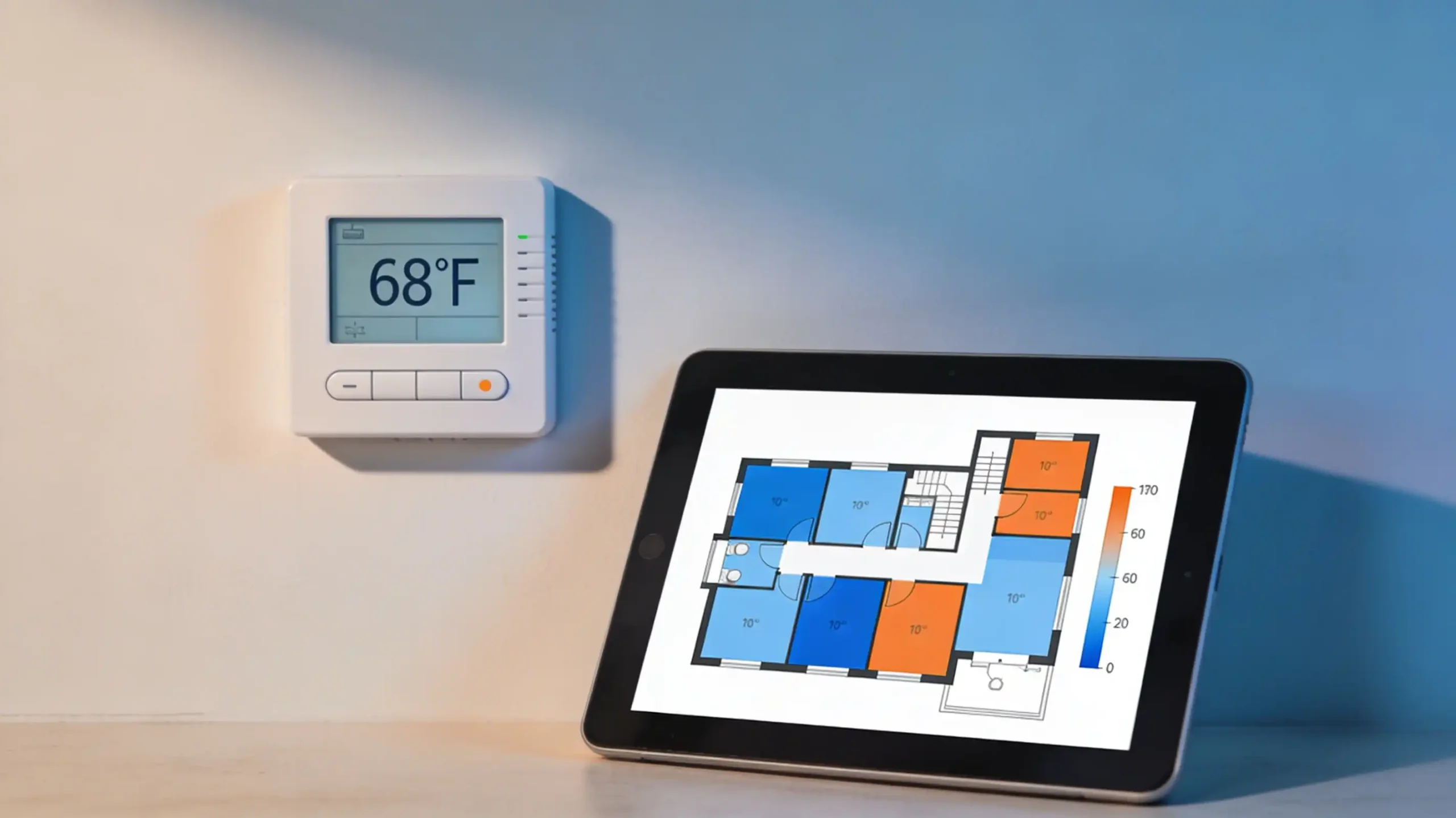
Thermostat setpoints have a direct impact on your energy use. Every degree of unnecessary cooling increases compressor runtime and power draw. Many commercial buildings can raise cooling setpoints slightly once people understand that comfort is about consistency, not a specific number.
- Set realistic cooling targets, often in the 72 to 75 degree range for most offices
- Avoid frequent manual overrides that push temperatures down out of habit
- Use wider deadbands so equipment is not cycling on and off every few minutes
- Align setpoints across zones so one area is not fighting against another
A one or two degree increase that occupants barely notice can produce noticeable savings when multiplied across the entire building and all of summer.
If your team constantly fights over thermostat settings, it may be time to review how controls are configured. Choice Mechanical Services can evaluate your thermostats and control strategy and help you set up summer-friendly setpoints that reduce wasted cooling.
3. Keep Coils, Filters, and Airflow in Good Shape
No control strategy can make up for poor airflow. Dirty coils and clogged filters force fans and compressors to work harder than they should, especially on hot days. That extra strain shows up on your utility bill and shortens equipment life.
- Replace air filters on a schedule that matches your building load and environment
- Clean condenser and evaporator coils before peak summer heat arrives
- Verify supply and return grilles are not blocked by furniture, racking, or storage
- Check fan belts and motors for wear that could reduce airflow
These are basic maintenance tasks, but skipping them turns into higher runtime, more energy use, and a greater chance of nuisance shutdowns during extreme heat.
If it has been more than a season since your last full cleaning, consider wrapping these tasks into a structured program. Our Maintenance Agreements are built to keep coils, filters, and fans in good condition so your summer energy savings do not depend on guesswork.
4. Use Smart Controls To Avoid Wasted Cooling
Modern controls can do far more than simply turn equipment on and off. Even modest upgrades to your control strategy can help you avoid overcooling, reduce peak demand, and react to real occupancy instead of assumptions.
- Use occupancy based control where offices, conference rooms, or common areas sit empty for long periods
- Set up setbacks for evenings and weekends that match how the building is actually used
- Leverage demand limiting or staged startup so not all units come on at once
- Trend key points, such as supply air temperatures and space conditions, to spot wasted energy
Controls do not need to be complicated to be effective. The goal is to let your system respond intelligently to changing conditions instead of running at full output by default.
Interested in taking a step beyond basic thermostats? Our article on smart commercial HVAC control strategies explains how zoning, scheduling, and monitoring work together. For a site specific plan, you can schedule a controls review with the Choice Mechanical team.
5. Make Economizers and Ventilation Work For You, Not Against You
Economizers and outdoor air systems are powerful tools in spring and early summer, but only if they are operating correctly. When dampers are stuck or misadjusted, you can end up conditioning more hot, humid air than necessary, which drives up costs.
- Verify outdoor air dampers move freely and close tightly when commanded
- Confirm economizer logic uses appropriate temperature or enthalpy setpoints
- Check that minimum outdoor air positions satisfy ventilation needs without overshooting
- Inspect sensors used for outdoor air and return air conditions for proper placement
In Indiana, shoulder seasons often provide hours of cooler outside air that can be used instead of mechanical cooling. Getting your economizers back in working shape lets you take advantage of those conditions.
If economizers have been disabled or ignored for several seasons, it may be time to recommission them as part of your summer plan. Our HVAC-R services include economizer inspection, repair, and control tuning so they support both comfort and energy savings.
6. Reduce Internal Heat Gains Where You Can
Not every energy saving measure lives inside the mechanical room. Internal heat gains from lighting, equipment, and solar load affect how hard your HVAC system has to work. Small changes here can reduce cooling demand without any change to the equipment itself.
- Use occupancy sensors or scheduling for lighting in seldom used rooms
- Consolidate high heat equipment into rooms that are already conditioned and ventilated
- Encourage blinds or shades on sun-facing windows during peak afternoon hours
- Seal obvious gaps around doors to reduce hot air infiltration
These steps will not eliminate the need for cooling, but they can flatten peaks and give your existing systems a better chance to keep up without excessive runtime.
Not sure which loads are hurting you most? A site visit from our commercial HVAC-R team can help identify low cost adjustments that reduce internal heat gains and support your mechanical strategy.

7. Plan Strategic Upgrades With Fast Payback
Some of the best summer savings come from targeted upgrades. You do not need to replace every piece of equipment at once to see benefits. Focusing on a few high impact improvements can deliver a strong return while you plan longer term capital work.
- Replace failing or oversized rooftop units with right sized, high efficiency models
- Add or improve controls on systems that currently run in simple on or off modes
- Upgrade variable frequency drives on fans or pumps that run many hours in summer
- Address chronic problem zones with zoning or air distribution improvements
When you target equipment that runs the most hours or serves large areas, even modest efficiency gains can pay back quickly in avoided energy and repair costs.
Looking for upgrade ideas with real numbers behind them? Our article on 5 HVAC upgrades that deliver fast ROI for Indiana businesses highlights projects that make sense for many commercial facilities. To prioritize upgrades at your site, you can request an on site evaluation from Choice Mechanical Services.
Frequently Asked Questions
What is the easiest way to start saving on summer HVAC costs?
For most commercial buildings, the easiest starting point is to review schedules and setpoints. Make sure systems are not running full cooling during unoccupied hours and that thermostats are set to realistic temperatures. Pair this with basic maintenance such as filter changes and coil cleaning.
Do I need a full building automation system to save energy?
No. While a building management system can help, many facilities see savings by improving how existing thermostats and simple controls are used. The key is to align runtimes and setpoints with actual building use and keep equipment in good mechanical condition.
How often should I have my HVAC system serviced in the summer?
At minimum, commercial systems should be inspected before cooling season starts. Many facilities benefit from a mid season check to verify coils are still clean, filters are in good shape, and controls are performing as expected during sustained hot weather.
Will energy saving strategies make my building less comfortable?
They should not. The goal is to remove waste, not comfort. When strategies are implemented correctly, most occupants notice fewer hot and cold spots and more stable conditions, not less comfort. Clear communication and gradual adjustments help keep everyone on board.
Turn Summer From a Cost Spike Into a Controlled Season
Indiana summers will always challenge commercial HVAC systems, but rising utility bills do not have to be accepted as a fixed cost. With better schedules, tuned setpoints, strong maintenance, and smart upgrades, your building can stay comfortable while using less energy.
Choice Mechanical Services partners with commercial facilities across Indianapolis and Central Indiana to put practical summer energy strategies into action, from control changes to full system evaluations.
Ready to tighten up your summer energy use? Contact us today to review your current approach and build a plan that fits your facility, your budget, and your goals.