Get Your Commercial Rooftop HVAC System Ready for Summertime
When summer hits Indiana, rooftop units work harder than any other time of year. If your RTUs are not ready before the first heat wave, you can expect hot offices, comfort complaints, and surprise service calls that eat into your budget. A simple, focused checklist for commercial rooftop unit maintenance helps keep your cooling steady and predictable all season.
This guide walks facility managers through practical steps to get RTUs serving offices, retail spaces, and light industrial buildings ready for hot weather in Indianapolis and across Central Indiana.
Want a technician to walk your roof with you? Choice Mechanical Services provides commercial HVAC-R service for rooftop units across the region and can turn this checklist into a concrete plan for your facility.
1. Start With a Spring RTU Inspection
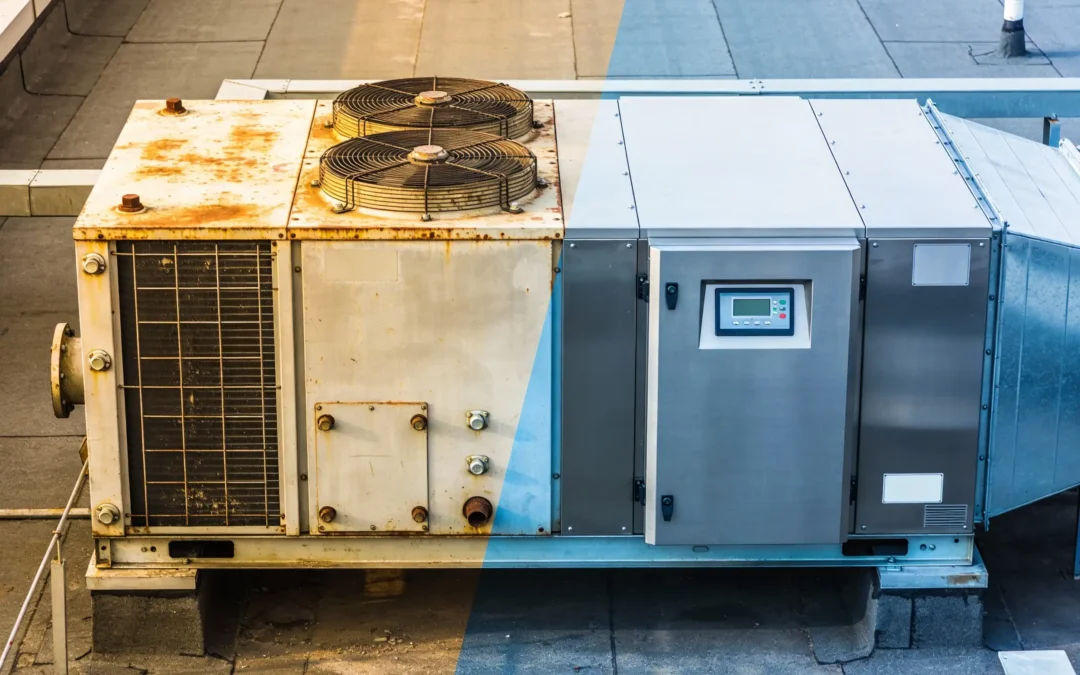
Every good summer prep begins with a thorough visual and mechanical inspection. The goal is to catch obvious issues before your units are running at full load day after day.
- Open panels and inspect internal components for dirt, corrosion, or loose wiring
- Check cabinet integrity and panel seals to keep water and debris out
- Verify electrical connections are tight and free of overheating marks
- Confirm model numbers, serial numbers, and locations are documented for each unit
A structured inspection gives you a clear starting point. You know which units are in good shape and which need attention before summer hits.
Not sure where to begin with a multi unit roof? Our HVAC-R service team can build a rooftop survey for your facility and help you prioritize repairs by risk, age, and condition. You might also consider reading our article on when to repair vs replace an aging HVAC system.
2. Clean Coils To Restore Heat Transfer
Dirty coils are one of the biggest reasons RTUs struggle in July and August. Dust, pollen, and debris create a layer of insulation on the coils that forces compressors to work harder and longer.
- Clean condenser coils from the outside in, using proper fin safe methods
- Inspect evaporator coils for dirt and biofilm that restrict airflow
- Straighten bent fins where possible to improve air movement
- Verify that coil guards and screens are in place but not restricting air
Clean coils allow your rooftop units to move heat efficiently. That means fewer nuisance trips, better capacity on hot days, and lower power consumption.
If coils have not been cleaned in several seasons, it is time to roll this into a formal program. Our commercial Maintenance Agreements include coil cleaning on a planned schedule so you are not guessing when it was done last.
3. Replace Filters and Check Airflow
Clogged filters choke airflow and quickly turn into comfort problems. In commercial buildings with high occupancy or dusty loading areas, filters often need more frequent attention as summer approaches.
- Replace all RTU filters with the correct size and MERV rating for your system
- Inspect filter racks for gaps that allow air to bypass the filter media
- Check supply and return grilles inside the building for blockages
- Verify that fan wheels and housings are free of heavy dust buildup
Healthy airflow keeps coils from freezing, helps maintain design air volumes, and supports even temperatures across your space.
If you are dealing with chronic hot and cold spots inside the building, combine filter changes with a broader airflow review. Our HVAC-R services team can look at air balancing and fan performance, not just the filters themselves. You should also read our article, is your warehouse HVAC system wasting energy?
4. Inspect Belts, Motors, and Fans
RTU fans work hard in the summer. If belts are worn or motors are struggling, you will see reduced airflow and higher risk of failures right when you need cooling the most.
- Check belt tension and alignment on supply and return fans
- Look for cracking, glazing, or fraying on belt surfaces
- Listen for unusual noises from fan bearings or motor housings
- Verify fan blades or wheels are secure and free of damage
Replacing a belt or addressing a suspect motor in the spring is much easier than dealing with a downed unit in the middle of a heat wave.
If you have units that lose fans every summer, a maintenance program can keep belts, bearings, and motors on a predictable schedule. Ask about including fan inspections in your Maintenance Agreement so they do not get overlooked.
5. Test Economizers and Outdoor Air Dampers
Economizers can save a meaningful amount of energy in Indiana shoulder seasons, but only if they work correctly. Stuck or misadjusted outdoor air dampers also create comfort problems and can affect humidity control.
- Confirm outdoor air dampers open and close smoothly through their full range
- Verify actuators and linkages are intact and not seized or disconnected
- Check economizer sensors for proper placement and secure wiring
- Make sure minimum outdoor air positions meet ventilation requirements
When economizers are working, your RTUs can use cool outdoor air when conditions allow, taking some load off compressors and improving indoor air quality.
If economizers have been disabled or neglected over the years, talk with us about recommissioning. As part of our commercial HVAC-R services, we can repair or upgrade economizer sections and tie them into your overall energy strategy.
6. Verify Controls, Setpoints, and Schedules
Controls that were fine for heating season may not be ideal for cooling. Small changes to setpoints and schedules can make a big difference in both comfort and energy use once temperatures climb.
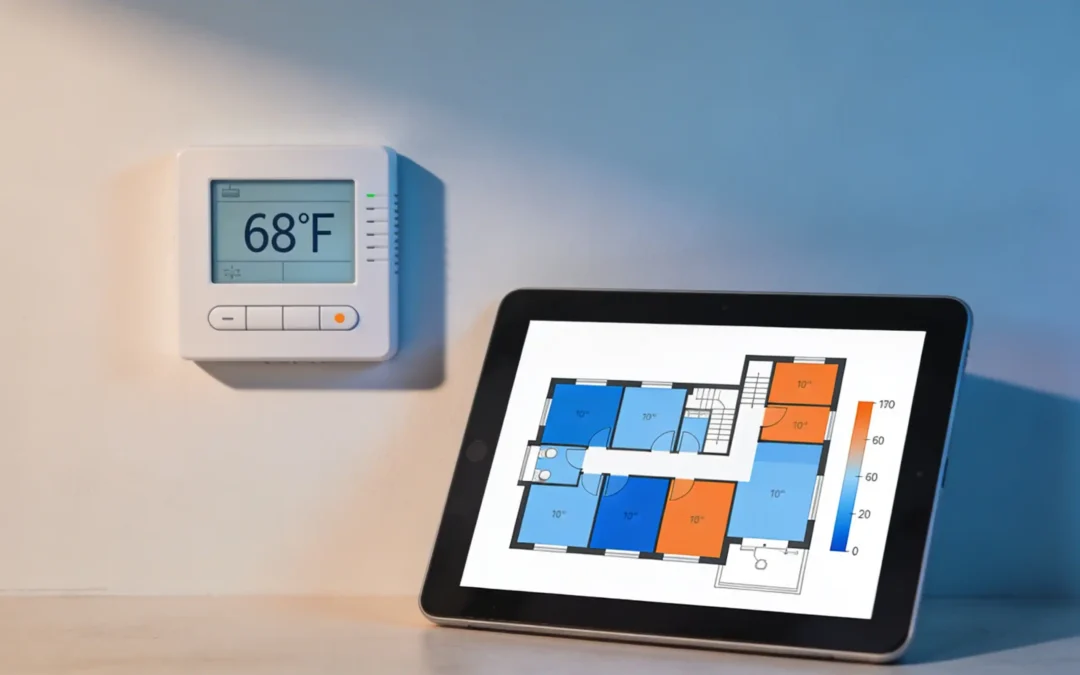
- Confirm thermostats are reading correctly and located away from heat sources
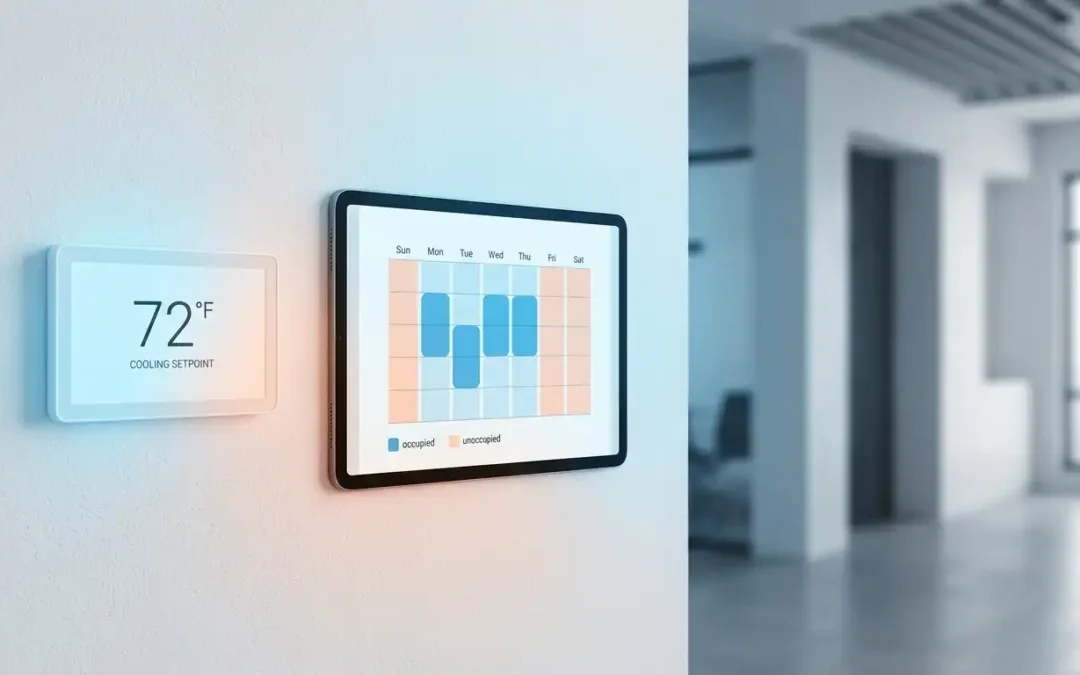
- Review summer occupied and unoccupied schedules for each RTU
- Check that stages of cooling operate in the correct order
- Test alarms and trend logs if units are tied into a building management system
Dialed in controls keep rooftop units from short cycling, help avoid overcooling, and reduce the number of manual overrides from staff inside the building.
If you want controls to do more of the heavy lifting, add RTUs to your broader strategy for smart controls and scheduling. Our team can integrate rooftop units into a larger plan supported by ongoing maintenance and seasonal tune ups.
7. Clean and Test Condensate Drains
Summer humidity in Indiana means your RTUs will be pulling a lot of moisture out of the air. If condensate pans and drains are not clear, that water will back up where you do not want it.
- Clean condensate pans and remove sludge, algae, or debris
- Flush drain lines and confirm they are sloped correctly
- Verify trap configuration is correct for the unit and static pressure
- Test safety float switches that shut down equipment on high water
Blocked condensate systems lead to leaks into ceilings, water damage, and nuisance shutdowns that are completely avoidable with simple seasonal maintenance.
If you have had water issues below your rooftop units in past summers, mention that when you schedule service. Our technicians can focus on drains as part of a complete commercial rooftop unit maintenance visit.
8. Document High Priority Units and Emergency Plans
Not every RTU in a building carries the same risk. Some units serve critical areas like server rooms, high density offices, key retail zones, or production spaces. Part of summer prep is understanding which units are truly critical and how you will respond if one fails.
- Identify rooftop units that serve temperature sensitive or revenue driving spaces
- Note locations that would trigger safety or compliance concerns if they lose cooling
- Keep a current list of RTU locations, access notes, and panel labeling
- Confirm who is responsible for calling in emergency HVAC service after hours
When something does go wrong, this groundwork shortens response time and helps technicians focus on the most important units first.
Need a partner that is ready when units fail at the worst time? Choice Mechanical Services offers 24/7 commercial emergency HVAC service for rooftop units and other systems across Indianapolis and Central Indiana, so your team is never left guessing who to call.
9. Lock In a Maintenance Plan For The Whole Cooling Season
A single spring visit helps, but RTUs perform best when they are supported by a structured maintenance plan. Regular attention keeps performance consistent and lets you plan repairs instead of reacting to breakdowns all summer.
- Schedule at least pre cooling and mid season checks for busy facilities
- Bundle coil cleaning, filter changes, and basic diagnostics into a recurring program
- Use service visits to track trends and equipment condition over time
- Plan repairs and upgrades during slower seasonal windows instead of peak periods
Facilities that treat rooftop unit care as an ongoing process see fewer surprises, lower utility costs, and longer equipment life.
If you are ready to move past one off service calls, talk with us about Maintenance Agreements that cover commercial rooftop unit maintenance, emergency response, and long term planning for your Indiana facilities. You would also benefit from reading our article on questions facility managers should ask their HVAC contractor.
Frequently Asked Questions
How often should commercial rooftop units be serviced?
Most commercial RTUs should see at least two planned visits each year, one before cooling season and one before heating season. Facilities with heavy usage, dirty outdoor environments, or critical cooling loads often benefit from additional mid season checks.
What is the most important part of summer prep for RTUs?
There is no single item, but coil cleaning, filter replacement, and a good visual inspection catch a large share of common summer problems. Ignoring coils and airflow is a quick way to end up with high energy bills and nuisance shutdowns when the weather turns hot.
Can rooftop unit maintenance really lower energy costs?
Yes. Clean coils, proper airflow, and well tuned controls allow equipment to move heat with less effort. That reduces runtime and compressor strain. Over the course of an Indiana summer, those savings can be significant, especially on larger buildings with multiple units.
What should I do if an RTU fails during a heat wave?
Protect people and product first. Then isolate which spaces are affected, document any alarms or error codes, and call a commercial contractor with 24/7 coverage. If you partner with Choice Mechanical’s emergency HVAC service, our team can dispatch a technician and already be familiar with your rooftop layout and equipment list.
Get Your Rooftop Units Ready Before The Heat Arrives
Rooftop units are easy to forget until something goes wrong. A focused, springtime checklist for commercial rooftop unit maintenance keeps equipment ready for the first heat wave and reduces the chance of mid season emergencies.
Choice Mechanical Services partners with commercial facilities across Indianapolis and Central Indiana to inspect, clean, and tune rooftop units before summer starts, and to support them with emergency service when needed.
Contact us today to schedule RTU maintenance and build a plan that keeps your building cool and comfortable all summer.