It usually starts as one odd reading, one uncomfortable zone, or one alarm that clears before anyone reaches the equipment. Excessive resistance in a duct system forces fans and connected equipment to operate outside intended conditions. In an Indianapolis commercial building, that “small” symptom can quickly affect tenants, production, inventory, energy use, or the next shift’s ability to operate.
This guide explains high static pressure HVAC through the lens of real commercial operations: what changes first, what facility teams can document safely, how an experienced technician separates causes from symptoms, and when waiting creates unnecessary risk. The goal is a repair that holds, not another reset that buys only a few hours.
“When we see high static pressure HVAC, we do not assume the first visible symptom is the root cause. We verify loaded filters, blocked or undersized ductwork, and the system sequence before recommending a repair.”
Why This Issue Matters to a Commercial Facility
Commercial mechanical equipment operates as a system. Controls, sensors, fans, pumps, piping, heat exchangers, terminal equipment, ventilation, and the building load all influence one another. A problem that appears to belong to one component may begin with flow, heat transfer, water quality, a control command, or a change in how the facility is used.
Early investigation provides two benefits. It reduces the chance that a manageable condition becomes an outage, and it creates better information for repair and capital decisions. Trend data, alarm history, operating measurements, and service records are more useful than repeated resets or assumptions based on one symptom.
Common Causes to Investigate
1. Loaded filters
This condition can change airflow, temperature, pressure, heat transfer, electrical load, or the sequence that keeps the system stable. The visible symptom may occur at another component, so replacing a part before verifying operating conditions can leave the initiating problem unresolved.
2. Blocked or undersized ductwork
This condition can change airflow, temperature, pressure, heat transfer, electrical load, or the sequence that keeps the system stable. The visible symptom may occur at another component, so replacing a part before verifying operating conditions can leave the initiating problem unresolved.
3. Closed dampers and VAV boxes
This condition can change airflow, temperature, pressure, heat transfer, electrical load, or the sequence that keeps the system stable. The visible symptom may occur at another component, so replacing a part before verifying operating conditions can leave the initiating problem unresolved.
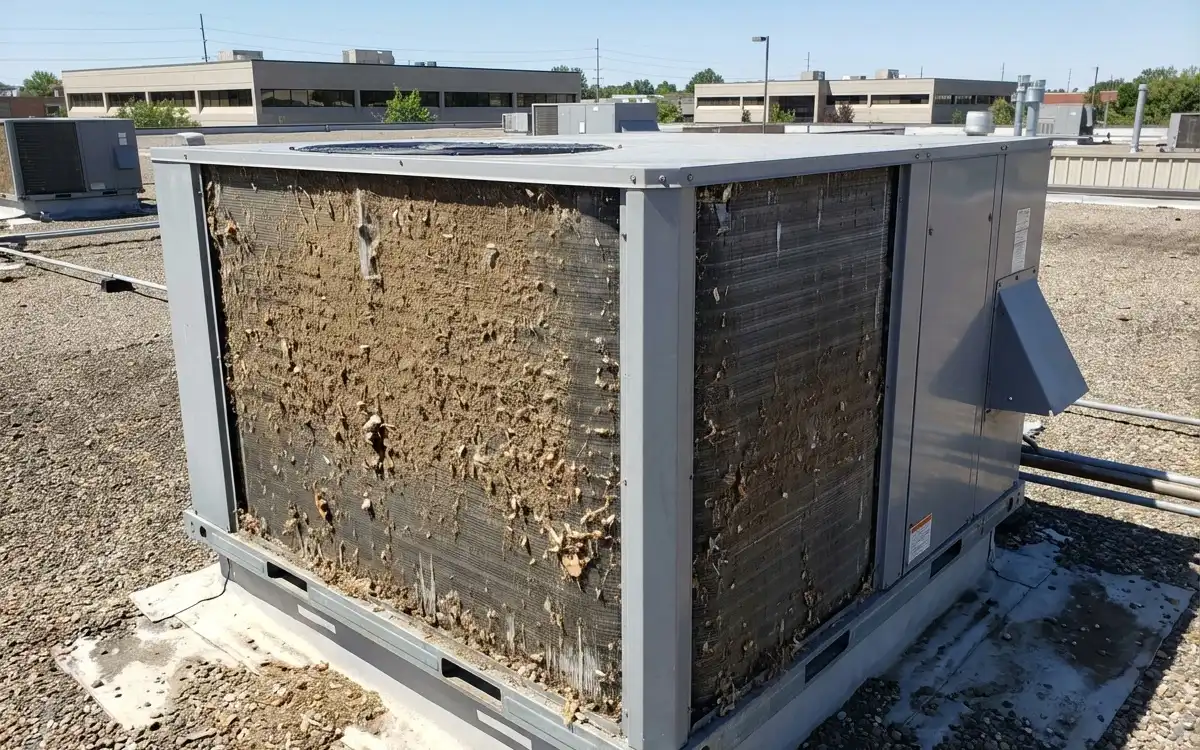
4. Dirty coils
This condition can change airflow, temperature, pressure, heat transfer, electrical load, or the sequence that keeps the system stable. The visible symptom may occur at another component, so replacing a part before verifying operating conditions can leave the initiating problem unresolved.
5. Incorrect fan speed
This condition can change airflow, temperature, pressure, heat transfer, electrical load, or the sequence that keeps the system stable. The visible symptom may occur at another component, so replacing a part before verifying operating conditions can leave the initiating problem unresolved.
Warning Signs Facility Teams Should Document
The following observations do not prove a specific failure, but they help establish when the condition occurs and how it affects the building:
- Whistling or noisy ducts
- Low airflow at diffusers
- Hot or cold complaints
- Fan or belt failures
- High fan energy
Record the date, time, outdoor conditions, occupancy or production state, equipment identifier, controller messages, and any recent service or operating changes. Photos of accessible displays and visible conditions can also help, provided they can be taken without opening equipment or entering a hazardous area.
What the Problem Can Look Like in Central Indiana Facilities
Indianapolis and Central Indiana facilities range from downtown offices and medical buildings to restaurants, warehouses, municipal properties, and production plants. The same mechanical fault can have a very different operational consequence in each setting.
| Facility example | Why the issue matters there |
|---|---|
| Downtown Indianapolis office building | Tenant schedules, perimeter exposure, and VAV zoning can make a small control or airflow fault visible on only one floor. |
| Central Indiana warehouse | Open dock doors, tall storage areas, and changing exhaust loads can expose capacity and building-pressure problems. |
| Indianapolis medical facility | Temperature, humidity, pressure relationships, and reliability can affect more than comfort, so alarms need a defined response. |
These examples are scenarios based on common commercial operating conditions, not claims about specific Choice Mechanical customers. Explore Choice Mechanical’s HVAC services for office buildings and mechanical services for warehouses to see how service priorities change by facility type.
The most useful service note connects the symptom to business impact. For example, “north-zone temperature rose after the dock exhaust started,” not simply “unit not working.”
What Facility Personnel Can Do Safely
- Measure total external static pressure.
- Inspect filters, coils, dampers, and fan operation.
- Compare readings with equipment data.
- Correct the restriction instead of increasing fan speed blindly.
Follow the facility’s safety, product-protection, and shutdown procedures. Do not remove energized panels, bypass safeties, work on live electrical components, open a refrigerant circuit, adjust combustion equipment, or enter restricted rooftop or mechanical spaces without the required training and authorization. A safety that repeatedly opens is evidence to diagnose, not an obstacle to defeat.
How a Commercial Technician Diagnoses the Root Cause
A technician first confirms the complaint and identifies the exact command, limit, or operating condition associated with it. The investigation may include control trends, calibrated temperature and pressure measurements, airflow or water-flow checks, electrical testing, heat-transfer inspection, vibration or combustion testing, and comparison with manufacturer data. The appropriate tests depend on the equipment and symptom.
Diagnosis should also consider the surrounding system. Dampers, valves, pumps, towers, exhaust, make-up air, water treatment, schedules, and zone controls can make central equipment appear faulty. Establishing a measured baseline makes it possible to verify that the repair restored stable performance instead of merely silencing an alarm.
“A good diagnosis should explain what caused the condition, what measurement confirmed it, and how the final repair restored stable operation.”
Choice Mechanical brings more than 25 years of commercial and industrial mechanical experience to commercial HVAC and refrigeration services in Indianapolis and across Central Indiana. The team works across HVAC/R, boilers, chillers, refrigeration, piping, and controls, which matters when the initiating fault sits outside the component showing the alarm.
When to Request Emergency Service
Seek immediate help when the condition involves smoke, burning odors, arcing, repeated breaker trips, a suspected combustion or refrigerant hazard, uncontrolled water, severe vibration, rapidly changing pressure or temperature, or risk to occupant safety, critical temperatures, servers, production, or business continuity. Protect people first and use the facility’s emergency procedures.
Choice Mechanical offers 24/7 emergency mechanical service. For urgent assistance, call (317) 885-0200.
How Planned Maintenance Reduces Risk
Planned maintenance creates opportunities to find contamination, wear, drift, leakage, loose connections, and unstable control behavior before peak conditions expose them. The work should be based on equipment type, operating hours, environment, criticality, manufacturer guidance, and service history rather than a generic checklist alone.
A customized preventative maintenance program can establish recurring measurements and clear documentation. Comparing current readings with prior visits helps distinguish normal seasonal changes from gradual deterioration and supports better repair-versus-replacement planning.
Get a Root-Cause Diagnosis from Choice Mechanical
Excessive resistance in a duct system forces fans and connected equipment to operate outside intended conditions. If the warning signs are new, recurring, or affecting operations, schedule a professional evaluation before the condition develops into a larger failure.
Ready to stop tracking the same symptom from shift to shift? Schedule a service call or call (317) 885-0200. Share the equipment ID, alarm history, timing, affected areas, and business impact so the Choice Mechanical team can prepare for the visit. Commercial service is available throughout Indianapolis, Carmel, Fishers, Greenwood, Brownsburg, Columbus, Bloomington, and communities across Central Indiana.
Frequently Asked Questions
Does whistling or noisy ducts confirm the cause?
No. It is a useful clue, but loaded filters, blocked or undersized ductwork, and other system conditions can create overlapping symptoms. A technician should compare measured operation with the control sequence and equipment requirements.
Should facility staff reset the equipment?
Follow the approved site procedure and equipment instructions. Avoid repeated resets. A lockout or open safety may be preventing equipment damage or an unsafe condition, and clearing it repeatedly can erase useful diagnostic information.
Will preventative maintenance eliminate every failure?
No maintenance program can eliminate all failures. It can reduce avoidable problems, identify deterioration earlier, improve documentation, and make planned repairs more likely than emergency work.
Can the equipment keep operating while service is scheduled?
That depends on the fault, safety controls, affected load, and manufacturer requirements. Do not continue operating equipment with smoke, burning odor, repeated electrical trips, uncontrolled water, severe vibration, or a suspected combustion or refrigerant hazard. For other conditions, follow the facility’s procedures and obtain qualified guidance.
What information should be ready before calling for service?
Provide the facility address, equipment identification and location, observed symptoms, alarm text, when the issue began, affected spaces or processes, recent work, and any immediate safety or product risk. Also explain access requirements and the best on-site contact.
Does Choice Mechanical serve facilities outside Indianapolis?
Yes. Choice Mechanical serves commercial and industrial facilities throughout Indianapolis and Central Indiana with repair, installation, maintenance, and 24/7 emergency support.