When outdoor conditions are right, your commercial HVAC system may not need to rely entirely on mechanical cooling. That is where economizers come in. A properly operating economizer can use cooler outdoor air to reduce compressor runtime, lower energy demand, and ease the load on rooftop units during Indiana’s shoulder seasons and milder summer mornings.
For facility managers looking for practical ways to lower cooling costs, understanding how economizers work is well worth the effort. The challenge is that many economizers are disabled, stuck, or out of adjustment, which means buildings miss out on energy savings without anyone realizing it.
If you want help checking whether your economizers are actually doing their job, Choice Mechanical Services provides commercial HVAC-R service for office buildings, retail centers, and light industrial facilities across Indianapolis and Central Indiana.
1. What an Economizer Actually Does
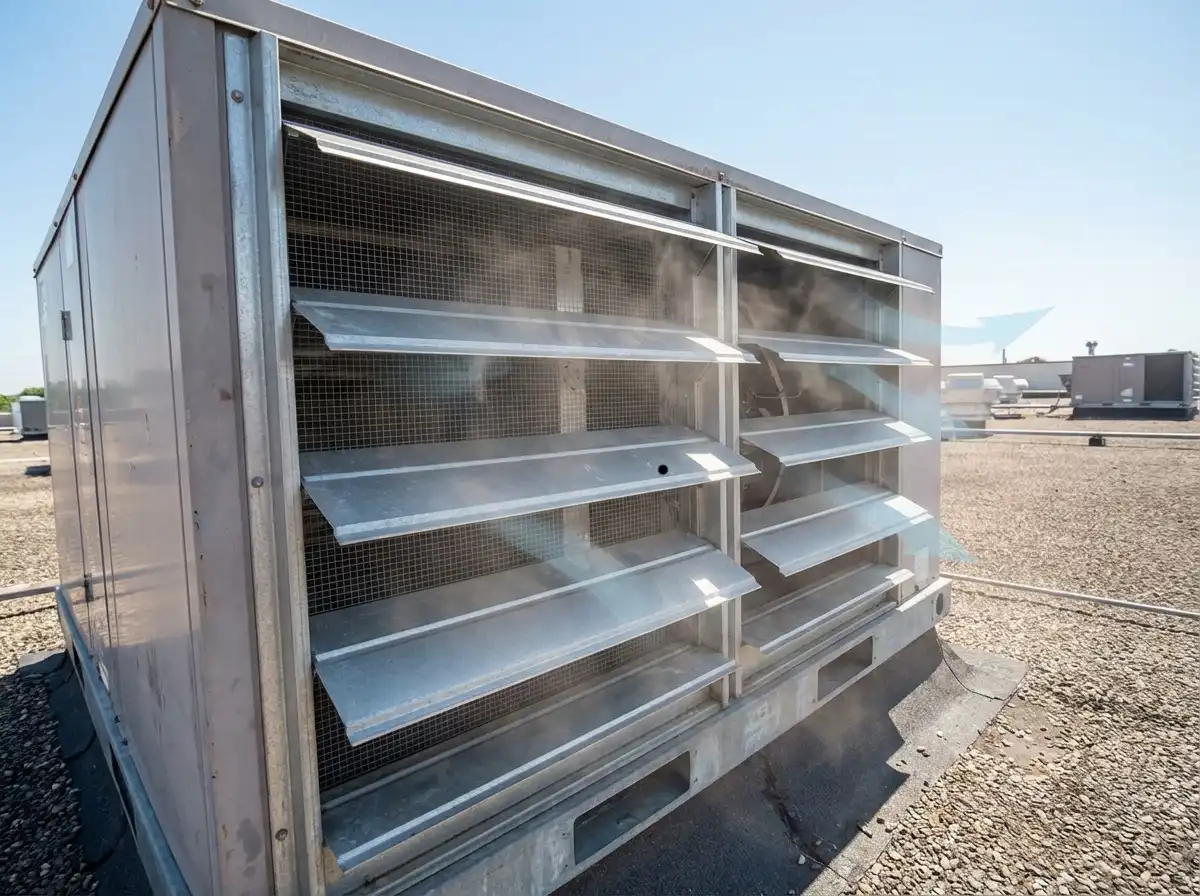
An economizer is a control strategy that allows your HVAC system to bring in outdoor air for cooling when outside conditions are favorable. Instead of running the compressor to cool return air, the unit can use outside air to satisfy part or all of the building’s cooling demand.
- Outdoor air dampers open further when outside conditions are cool enough
- Mechanical cooling stages stay off or run less often
- The building still receives ventilation while reducing cooling cost
In Indiana, this can be especially useful during spring, early summer mornings, and cooler days when outside air can do part of the work for free.
If your building uses packaged rooftop units, this is one more reason to stay on top of seasonal RTU preparation and make sure those outdoor air sections are not being ignored.
2. Why Economizers Save Money in Summer
The biggest value of an economizer is simple. It reduces how often the refrigeration cycle has to run. When the system can cool with outside air instead of compressors, power use drops.
- Compressors run less during cooler outdoor conditions
- Peak demand can be lower because not every unit needs full mechanical cooling
- Equipment wear is reduced because major components cycle less often
Those savings may seem modest hour by hour, but over the course of an Indiana cooling season they can add up, especially in buildings with multiple rooftop units or long operating hours.
If summer utility bills are already a concern, our article on summer energy saving strategies for commercial HVAC systems gives a broader view of where economizers fit into the bigger picture.
Want to know whether your building is leaving savings on the table? Contact us and we can review how your equipment is currently operating.
3. Common Reasons Economizers Stop Helping
Economizers can save money, but only when they are working properly. In many commercial buildings, they are not. Dampers stick, sensors drift, actuators fail, and control logic gets bypassed over time.
- Outdoor air dampers fail to open or close correctly
- Actuators and linkages become disconnected or worn
- Outdoor air sensors read the wrong temperature or humidity level
- Control sequences are disabled after a past service issue and never restored
When that happens, the building either loses the benefit of free cooling or takes in more outdoor air than it should, which can raise humidity and waste energy instead of saving it.
That is one reason economizer checks belong in a recurring service plan, not just a one-time startup. Our Maintenance Agreements help commercial buildings keep components like dampers, sensors, and controls from becoming hidden problems.

4. How to Tell If an Economizer May Not Be Working
Economizer problems are easy to miss because the building can still cool. The rooftop unit may just be using more mechanical cooling than necessary. A few common signs usually point to trouble.
- Cooling bills rise faster than expected during mild outdoor weather
- Units run compressors on days that seem cool enough for outside-air cooling
- Occupants notice humidity or stuffiness near certain times of day
- Technicians find dampers stuck in one position during maintenance visits
Facility teams often do not notice the issue until they compare expected summer performance to actual utility costs. At that point, the economizer may have been out of service for quite a while.
If your unit is cooling, but not efficiently, the issue may be bigger than filters and coils. Our guide on smart commercial HVAC control strategy explains how economizers, schedules, and controls all need to work together.
5. Economizers Need the Right Control Strategy
An economizer is only as good as the logic controlling it. For some buildings, dry bulb temperature alone is enough to decide when outside air should be used. In others, enthalpy or humidity also needs to be considered, especially in the Midwest where summer air can feel cool but still carry a lot of moisture.
- Dry bulb control looks at outside air temperature only
- Enthalpy control accounts for both temperature and moisture content
- Minimum outdoor air settings must still meet ventilation needs without overdoing it
- Cooling stages should transition smoothly when the economizer alone is not enough
If the logic is wrong, the unit may bring in humid air that creates comfort problems, or it may fail to take advantage of conditions that could reduce compressor runtime.
If your building uses older controls or has a history of overrides, this is a good time to review how rooftop units are staged and scheduled. Choice Mechanical’s HVAC-R team can help test the sequence and tune it for your building’s actual operating pattern.
6. Why Economizers Matter So Much on Rooftop Units
Economizers are especially important on packaged rooftop units because those systems often serve offices, retail spaces, and light industrial zones with predictable daytime occupancy. That makes them a strong match for outside-air cooling during mornings, spring transitions, and moderate summer conditions.
- RTUs often run long hours during occupied periods
- Even partial savings across several units can add up quickly
- Economizer problems can affect both comfort and utility cost at the same time
If your building relies heavily on rooftop equipment, a neglected economizer can quietly erase one of the most useful built-in energy-saving tools the unit has.
That also makes economizer performance part of the larger HVAC upgrade and ROI conversation. Sometimes the best return comes from recommissioning and correcting what is already there rather than replacing equipment right away.
7. Add Economizer Checks to Your Seasonal Maintenance Routine
Economizers should not be something you only think about when a problem is obvious. They should be checked as part of normal spring and summer preparation, just like filters, coils, and controls.
- Inspect dampers for free movement and full travel
- Test actuators, linkages, and sensor readings
- Verify minimum and maximum outdoor air settings
- Confirm the economizer sequence is enabled and staged correctly
Seasonal maintenance is what keeps energy-saving hardware from becoming dead weight on the roof. In many cases, recommissioning an economizer is far cheaper than paying for another full summer of unnecessary compressor runtime.
If your building has not had an economizer review in a while, now is a good time to schedule one through our commercial maintenance program so the system is ready before peak summer demand sets in.
Frequently Asked Questions
What is an economizer on a commercial HVAC unit?
An economizer is a section of the HVAC system that uses outdoor air for cooling when outdoor conditions are favorable. It helps reduce compressor use and can lower summer operating costs.
Can economizers really make a noticeable difference in energy use?
Yes. In buildings with multiple rooftop units or long operating hours, even moderate reductions in mechanical cooling can translate into meaningful seasonal savings.
Why would an economizer be disabled?
This often happens after a control issue, sensor problem, or damper failure. Sometimes it is shut off as a temporary fix and never brought back into normal operation.
How often should economizers be checked?
They should be reviewed during seasonal maintenance, especially before peak cooling season. Buildings that rely heavily on rooftop units benefit from regular inspection and control verification.
Conclusion: Economizers Only Save Money When They Work
Economizers can be one of the easiest ways to cut cooling costs in commercial buildings, but only if they are properly maintained and correctly controlled. When dampers, sensors, and sequences drift out of line, the savings disappear and the building ends up spending more than it should. For commercial properties in Indianapolis and Central Indiana, economizer performance deserves a real place in your summer maintenance and energy strategy.
Choice Mechanical Services helps facility managers inspect, recommission, and maintain rooftop units so built-in efficiency features like economizers actually deliver value.
Contact us today to schedule a rooftop unit review and make sure your economizers are helping, not hurting, your summer cooling costs.