How Dirty Ductwork Impacts Energy Costs in Warehouses and Office Buildings
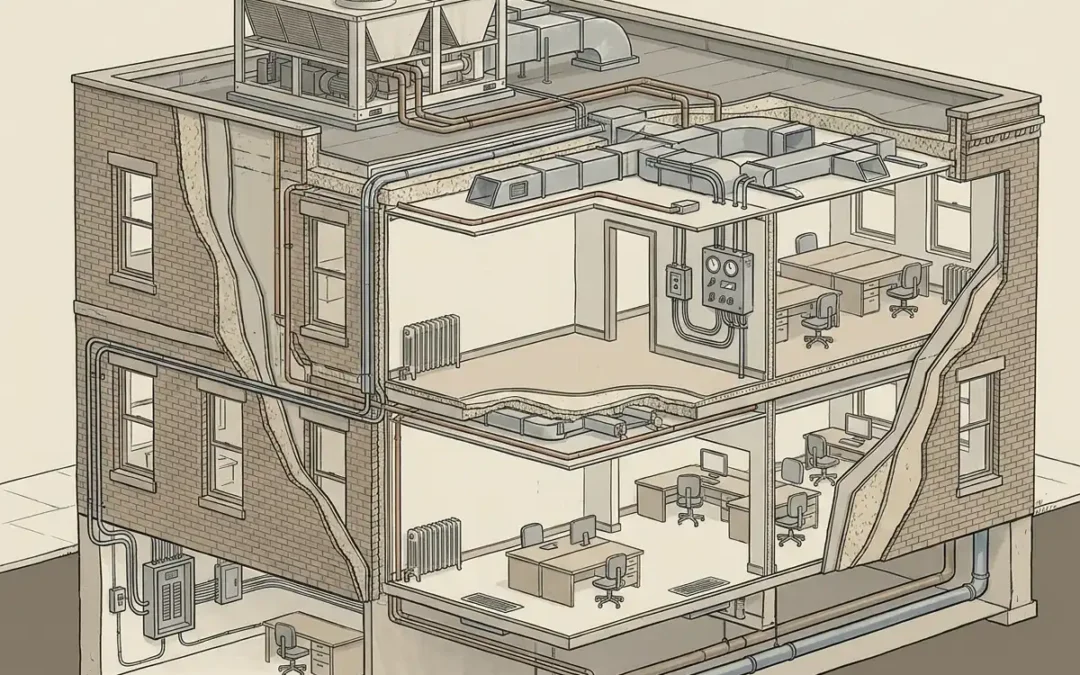
Dirty ductwork is one of the most overlooked energy thieves in commercial buildings. It does not usually cause a dramatic failure. There is no loud bang, no smoke, and no obvious shutdown. Instead, dust, lint, grease, and debris build up quietly inside supply and return ducts, forcing fans to work harder, reducing airflow, and dragging down the performance of the entire HVAC system.
In warehouses and office buildings, dirty ducts do not always look the same, but the energy penalty is very real in both environments. In warehouses, dust from cardboard, pallets, forklifts, and loading docks can choke high-volume systems and weaken airflow to the occupied zone. In office buildings, lint, construction dust, return-plenum debris, and fouled VAV components can quietly drive up fan energy and trigger costly simultaneous heating and cooling.
If you are seeing uneven temperatures, rising utility bills, or airflow complaints, dirty ductwork may be part of the problem. Need help assessing your HVAC system? Choice Mechanical Services provides expert HVAC-R services to commercial and industrial facilities across Indiana.
1. Dirty Ducts Increase Static Pressure and Waste Fan Energy
The core energy problem starts with airflow resistance. Commercial HVAC fans are designed to move a specific amount of air against a planned level of static pressure. When duct interiors become lined with dust, lint, or sticky buildup, that resistance climbs. The fan now has to work against a system that is rougher, narrower, and less efficient than it was designed to serve.
- Dirt buildup increases friction loss inside the duct system
- Rougher duct surfaces create more turbulence through elbows, dampers, and transitions
- Higher static pressure means the system either moves less air or uses more energy trying to maintain it
- VFD-controlled systems may ramp fan speed up to compensate, which can drive energy use sharply higher
That is one reason dirty ductwork becomes such a silent energy tax. The building still runs, but it runs at a higher cost. In some facilities, even a modest increase in duct resistance can push fan energy noticeably upward and force longer HVAC runtimes across the building.
Want to restore proper airflow? Ask us about adding duct inspections and airflow review to your HVAC maintenance agreement.
2. Dirty Ductwork Does Not Stay in the Ductwork
Dust and debris inside the duct system rarely stay there. Fine particles move downstream and begin coating the components that do the real heating and cooling work. That is where dirty ductwork starts affecting more than fan energy. It starts reducing heat transfer, increasing compressor workload, and making the whole system less efficient.
- Dust that bypasses filters can coat evaporator and heating coils
- Fouled coils transfer heat less efficiently and force longer runtimes
- Restricted airflow can lower system performance even when the equipment is technically still running
- Higher strain on coils and compressors usually leads to higher electrical use and more wear
This is part of what makes dirty ductwork so expensive. It is not just a duct issue. It becomes a fan issue, a coil issue, a compressor issue, and eventually a maintenance-cost issue.
3. Warehouses Have a Different Kind of Duct Dirt Problem
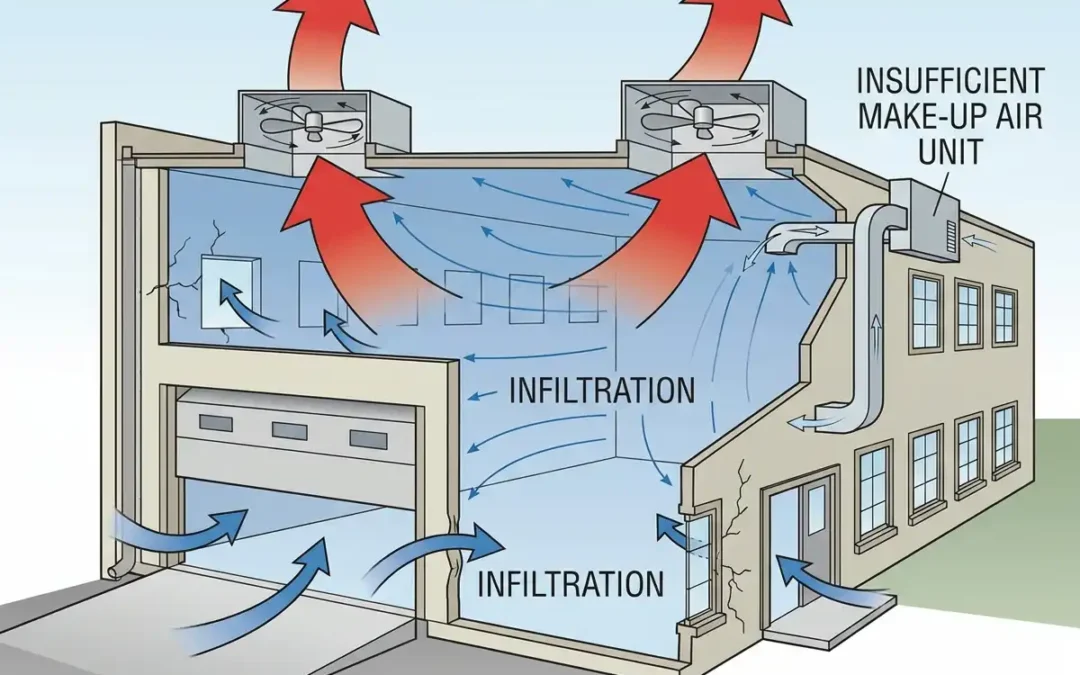
Warehouses create some of the harshest conditions for duct cleanliness. Cardboard dust, wood pallet debris, forklift traffic, outdoor dirt pulled in through dock doors, and long intervals between filter changes can all load up the system quickly. In these facilities, the duct system often becomes a high-volume dust pathway.
- Make-up air units and large supply ducts can lose effective free area as dust builds up
- High-bay warehouses often suffer from poor airflow delivery to the floor even while fans run hard
- Return-air openings and high-level returns are often neglected and become major restriction points
- Fabric duct systems can load with dust and lose their intended airflow pattern over time
In a warehouse, dirty ductwork often shows up as weak air delivery, hotter floor conditions, more stratification, and a building that seems to run constantly without ever feeling fully under control. The system keeps spending money, but not where it counts.
If warehouse comfort and efficiency are already an issue, you may also want to read Is Your Warehouse HVAC System Wasting Energy? and How to Control Temperature Fluctuations in Large Warehouses.
4. Office Buildings Usually Hide the Problem Better
Office buildings often look cleaner on the surface, but duct-related energy waste can be just as serious. Return plenums collect years of dust, ceiling returns load up with lint, and VAV boxes become less reliable when sensors and airflow components get coated with debris. The problem is quieter, but the efficiency damage is still there.
- Return grilles can become restricted with lint and dust buildup
- Ceiling plenums often accumulate debris from tenant work, ceiling dust, and insulation fibers
- Dirty sensors and airflow pickups in VAV systems can distort readings
- Overcooling followed by reheat becomes more likely when VAV boxes start hunting for the wrong airflow target
This is where dirty ductwork can drive up energy costs in ways that are hard to spot. The building still feels “operational,” but it may be wasting money by overcooling air, reheating it, and running fans harder than necessary just to overcome restrictions and bad feedback.
5. Dirty Ducts Can Interfere With Sensors and Controls
Modern commercial HVAC systems rely on good data. If sensors inside or near the ductwork start reading poorly because they are coated with dust or debris, the control system starts making bad decisions. That can lead to wasted heating, wasted cooling, and operating sequences that never quite stabilize.
- Dust on airflow pickups can throw off VAV box readings
- Temperature sensors in mixed-air sections can misread real conditions
- Economizer logic may behave poorly when control inputs are compromised
- Controls may over-deliver or under-deliver air, forcing more runtime elsewhere in the system
That means dirty ductwork can create an energy problem even when airflow is not dramatically blocked. The controls themselves may start chasing false conditions and driving waste deeper into the building.
This is one reason a stronger maintenance and controls strategy matters. You may also want to read How to Reduce Utility Costs with a Smart Commercial HVAC Control Strategy.
6. The Hidden Costs Go Beyond the Utility Bill
Dirty ductwork does not just drive up energy use. It also creates the same downstream costs that show up in other neglected HVAC conditions. Higher fan strain, weaker airflow, dirtier coils, and poor air quality all add risk beyond the monthly electric bill.
- Fan motors and belts wear faster when airflow resistance climbs
- Compressors and coils work harder when air side performance drops
- Dust and mold circulation can affect indoor air quality and occupant comfort
- In some facilities, accumulated lint and dust can even increase fire risk
This is why dirty ductwork should not be treated as a purely cosmetic issue. It affects energy, maintenance, indoor air quality, and equipment life all at the same time.
Our commercial HVAC maintenance plans can help you stay ahead of the airflow, coil, and system-strain problems that dirty ducts often create.
7. How to Tell If Dirty Ductwork May Be Costing You Money
You do not always need to see inside the entire duct system to know there may be a problem. Commercial buildings usually start showing symptoms long before anyone schedules a duct inspection.
- Visible dust streaks around supply diffusers or return grilles
- Persistent high filter pressure even with relatively new filters
- Weak airflow in zones that used to perform better
- VAV boxes or reheat zones behaving erratically in mild weather
- Fan motors trending higher in amperage or runtime over time
- Musty or dusty odors when the system starts
If those signs are showing up in a warehouse or office building, there is a good chance the system needs more than another thermostat adjustment.
Schedule a ductwork and airflow assessment if these warning signs sound familiar in your building.
8. Duct Cleanliness Should Be Built Into Your Maintenance Strategy
The best way to control duct-related energy loss is to keep dirt from becoming a long-term system condition. That starts with filters, coils, and airflow maintenance, but it should also include periodic duct inspections in buildings where dust load, tenant turnover, or long service gaps make buildup more likely.
- Inspect filters regularly and make sure they fit correctly without bypass gaps
- Keep coils, drain pans, and return grilles clean so dirt does not keep moving downstream
- Use borescope or access-door inspection for representative duct sections
- Include return paths and VAV components in the inspection plan, not just main supply ducts
- Rebalance the air system after major duct cleaning or airflow restoration work
In buildings with years of buildup, professional duct restoration can become one of the higher-ROI energy projects available because it addresses both fan energy and downstream heating and cooling waste.
Frequently Asked Questions
Can dirty ductwork really increase energy costs that much?
Yes. Dirty ducts increase static pressure, reduce airflow, and force fans and downstream HVAC components to work harder. In larger commercial buildings, that wasted energy can add up quickly.
Do warehouses and office buildings have the same ductwork problems?
No. Warehouses usually deal with heavier dust, dock infiltration, and high-volume airflow issues. Office buildings are more likely to suffer from return-plenum debris, VAV box control problems, and persistent lint buildup in return paths.
How often should commercial ductwork be inspected?
That depends on the facility type, dust load, filtration quality, and maintenance history. Warehouses and other high-dust environments usually need closer attention than standard office spaces.
Can duct cleaning help lower HVAC energy use?
Yes, especially when buildup has already increased static pressure, weakened airflow, or contributed to coil fouling and control problems. In those cases, cleaning and rebalancing can deliver meaningful energy savings.
Do Not Let Dirty Ducts Drain Your Budget
Out of sight should not mean ignored. Dirty ductwork can quietly raise fan energy, reduce heat-transfer performance, interfere with controls, and push both warehouses and office buildings into higher operating costs year after year.
Choice Mechanical Services helps warehouses, office buildings, and large commercial facilities in Central Indiana stay efficient with smarter HVAC strategies, stronger airflow performance, and custom maintenance agreements.
Contact us today to schedule a ductwork assessment, airflow review, or commercial HVAC evaluation.