Why HVAC Breakdowns Are a Restaurant’s Worst-Case Scenario
In most commercial buildings, an HVAC failure is a serious inconvenience. In a restaurant, it can become a full operational crisis in a matter of hours. Restaurants depend on temperature control, ventilation, and refrigeration at every level of the business. If the HVAC system goes down, the damage does not stop at discomfort. It can hit revenue, food safety, labor, customer experience, and reputation all at once.
That is why Choice Mechanical Services provides 24/7 commercial HVAC support for restaurants across Indianapolis and Central Indiana. If temperature control fails in your kitchen, dining room, or walk-in cooler, you are not dealing with a minor maintenance issue. You are dealing with a worst-case scenario for the business.
If you want to reduce the chances of that happening, you should also read our Restaurant HVAC Maintenance Checklist.
1. Lost Cooling Can Turn a Busy Service Into Lost Revenue Fast
Restaurants do not have much room to absorb operational disruption. If the dining room becomes hot, humid, or uncomfortable, guests start leaving and new tables stop coming in. Unlike an office building, a restaurant cannot just limp through the afternoon with open doors and a few fans. The guest experience is part of the product, and when that breaks down, revenue follows it out the door.
- Dining rooms that feel hot, sticky, or stale lose guests quickly
- A disrupted dinner rush can erase a full night of sales
- Takeout rarely replaces the lost dine-in check average
- Alcohol, dessert, and higher-margin add-ons often disappear first
That is what makes a restaurant HVAC emergency so damaging. The clock starts the moment the space becomes uncomfortable, not the moment the repair invoice arrives.
2. Food Safety and Inventory Can Be Hit at the Same Time
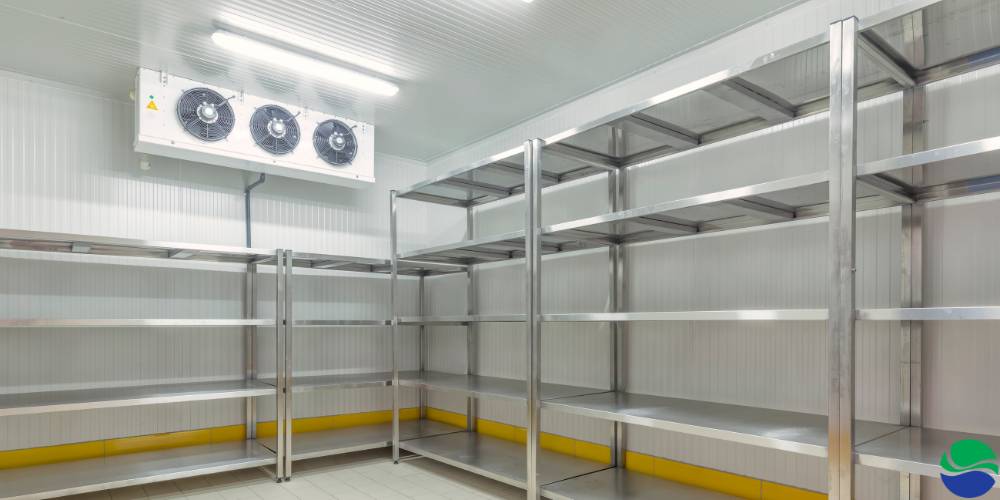
Restaurants do not just need conditioned air for comfort. They also depend on controlled temperatures to protect food. A failure in the kitchen AC, refrigeration, or related mechanical systems can put product at risk quickly, especially when hot kitchens and overloaded walk-ins are part of the same event.
- Walk-in coolers and freezers may drift above safe holding temperatures
- Hot kitchens can speed spoilage and make food handling harder to control
- Failed cooling can force disposal of expensive prepped inventory
- Refrigeration systems may become less stable when ambient kitchen temperatures climb
This is where HVAC failure becomes much more than a comfort issue. It becomes an inventory event, a food safety event, and in some cases a regulatory event. One bad afternoon can create thousands of dollars in product loss before service is even restored.
3. Health Code and Compliance Problems Can Escalate Quickly
Restaurants operate under stricter environmental expectations than many other commercial spaces. Ventilation, make-up air, temperature control, and humidity all affect whether the building can stay in a compliant operating condition. When those systems break down, the risk is not just discomfort. It is failed inspections, forced product holds, and in some cases temporary closure.
- Poor ventilation allows smoke, grease, and heat to build up in the kitchen
- Excess humidity can create moisture, mold, and sanitation concerns
- Improper holding temperatures can create food safety exposure
- Severe indoor heat can attract the wrong kind of inspector attention fast
Restaurants do not get much grace when the environment is no longer safe or sanitary. A yellow closure notice or a failed inspection leaves a mark long after the system is repaired.
4. Guest Experience Can Collapse Before the Repair Crew Arrives
People remember how a restaurant felt almost as much as how the food tasted. If the dining room is hot, drafty, humid, smoky, or stale, that experience is instantly damaged. In today’s review environment, that damage does not stay inside the building.
- Guests leave early when the room feels uncomfortable
- Odors and trapped kitchen air can spill into dining areas
- Humidity makes the space feel dirtier and less inviting
- Bad reviews can outlast the HVAC repair by months
One of the hardest parts of a restaurant HVAC breakdown is that the reputation damage starts in real time. Guests do not wait for a manager’s explanation. They post photos, leave reviews, and move on to the next place.
5. Kitchen Staff Safety and Retention Take a Hit
The kitchen is already the hottest, most physically demanding part of the building. When air conditioning, ventilation, or make-up air fails, the kitchen can become unsafe fast. That affects speed, quality, morale, and in some cases whether the team can keep working at all.
- High heat increases fatigue, dehydration, and burnout risk
- Ventilation failure traps smoke, grease, and heat where staff are working
- Unsafe conditions slow output during the exact period when demand is highest
- A bad shift in unbearable conditions can push staff to quit
For restaurants already dealing with labor pressure, this matters a lot. A failed HVAC system can outlast the repair by creating staffing problems that continue into the next week or longer.
6. HVAC Failure Can Trigger Other Equipment Problems
Restaurant HVAC systems do not operate in isolation. When cooling and ventilation fail, the stress spreads to other critical systems. That is one reason restaurant breakdowns tend to feel so expensive. The original issue is often only the start.
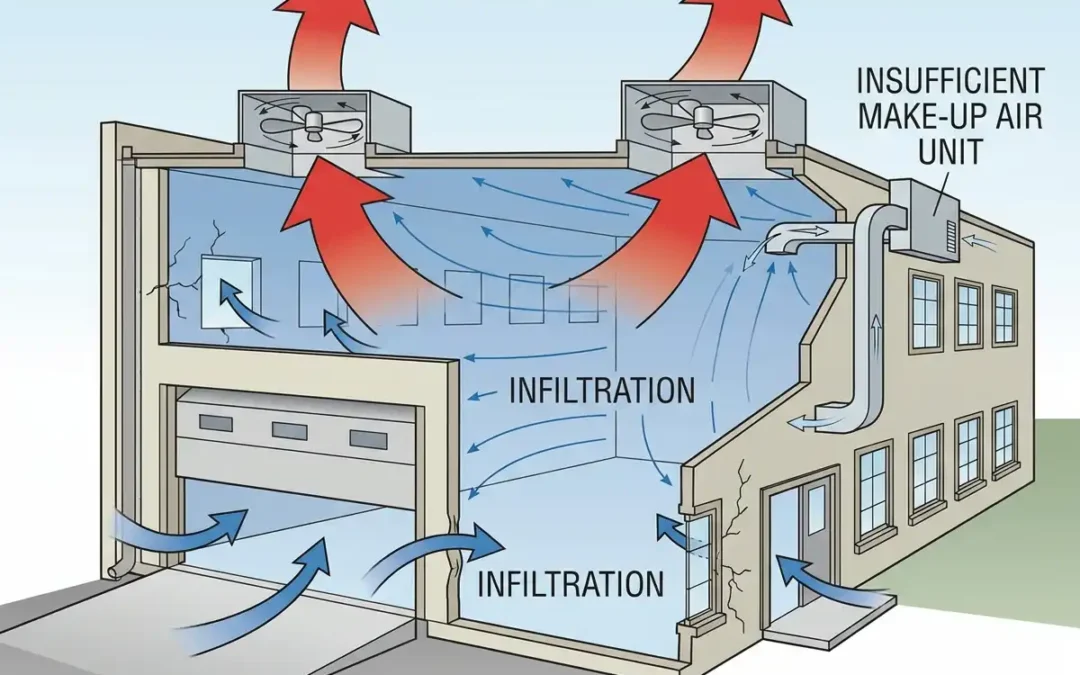
- Make-up air problems can reduce hood performance and trap grease and heat
- Hot kitchen conditions can raise the load on nearby refrigeration equipment
- Humidity can affect finishes, millwork, and flooring over time
- One mechanical failure can create a chain reaction across the kitchen
This is where deferred maintenance becomes especially dangerous. The clogged coil, the slipping belt, or the ignored refrigerant issue does not always stay isolated. In a restaurant, it can cascade into several expensive problems in the same afternoon.
If you have noticed warning signs already, do not wait for them to stack into a bigger failure.
7. The Financial Hit Comes in Multiple Waves
Restaurant owners often think about the repair bill first. In reality, that is usually only one part of the damage. The real financial pain usually arrives in three waves at the same time: emergency repair cost, lost revenue, and spoiled inventory. After that comes the harder-to-measure cost of reputational damage and lost repeat business.
- Emergency repairs are more expensive than planned maintenance
- Lost service hours and canceled covers cannot be recovered later
- Spoiled food and prep loss create an immediate inventory hit
- Negative customer experiences may continue hurting the business long after the system is repaired
This is one reason restaurants cannot afford to treat HVAC as a “fix it when it breaks” item. The total cost of failure is almost always larger than the service invoice.
8. A Restaurant-Specific Emergency HVAC Plan Matters
Many restaurants do not think about HVAC until the system is already down. By then, the team is reacting under pressure with guests in the dining room, heat building in the kitchen, and inventory at risk in the back. That is a bad time to start figuring out who to call and what the next step should be.
- Know which systems are most critical to food safety and ventilation
- Make sure managers know who to call after hours
- Plan for rapid response before the hottest and busiest months
- Use preventative maintenance to reduce the chances of failure during service
A restaurant-specific HVAC strategy gives your team a real response path instead of a panic reaction. It also reduces the odds that one failure turns into a shutdown.
Frequently Asked Questions
What qualifies as a restaurant HVAC emergency?
Anything that affects food storage, kitchen safety, ventilation, guest comfort, or the ability to keep serving. That includes failed AC units, failed make-up air systems, broken walk-ins, and major exhaust issues.
Can HVAC failure cause health code violations?
Yes. Problems with ventilation, temperature control, humidity, or food holding conditions can create sanitation and compliance problems quickly in a restaurant environment.
What should I do if my HVAC system fails during service?
Document the issue, alert your staff, protect food quality as best you can, and call a commercial contractor immediately. Choice Mechanical is available 24/7 across Central Indiana.
Do you provide restaurant-specific emergency service?
Yes. We support restaurants, commercial kitchens, and food service operations with 24/7 emergency HVAC service designed for real-world restaurant pressure.
In a Restaurant, HVAC Failure Is More Than a Repair Problem
Restaurant owners and managers already operate with enough pressure. HVAC breakdowns should not be the thing that pushes the business into lost revenue, spoiled inventory, failed inspections, staff burnout, and bad reviews all at once. In restaurants, that is exactly what can happen when critical systems fail at the wrong time.
From walk-in coolers to kitchen exhaust and dining room comfort, your HVAC system supports both safety and profitability. With Choice Mechanical Services, you get a commercial HVAC partner that understands how much is riding on every hour of restaurant uptime.
Contact us today to set up emergency HVAC support and avoid costly restaurant disruptions.