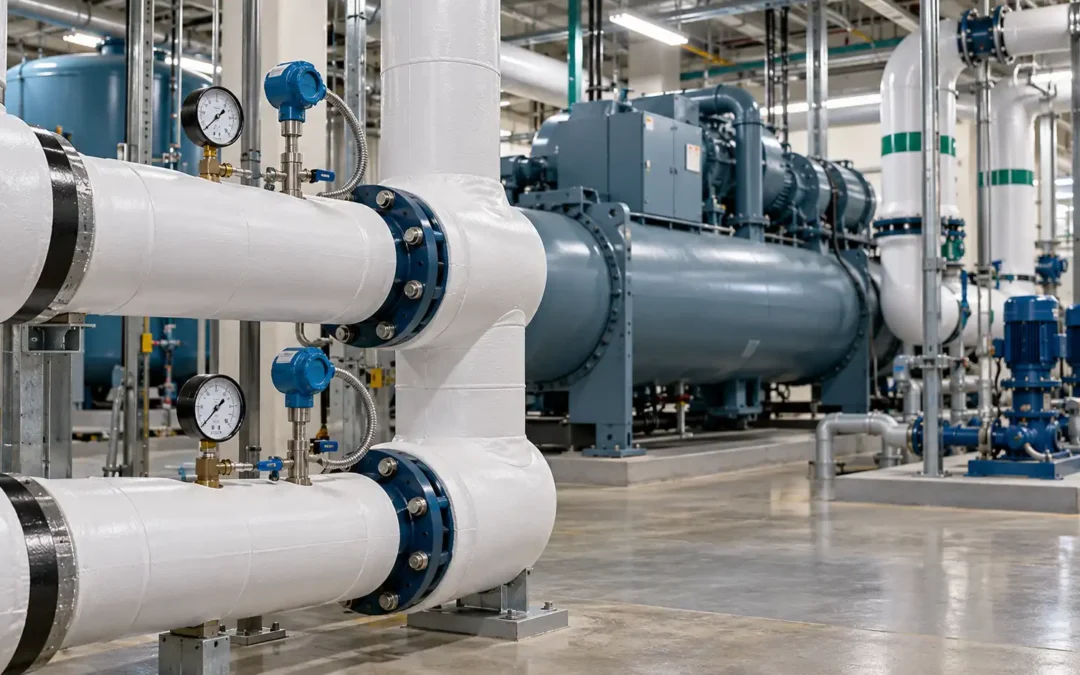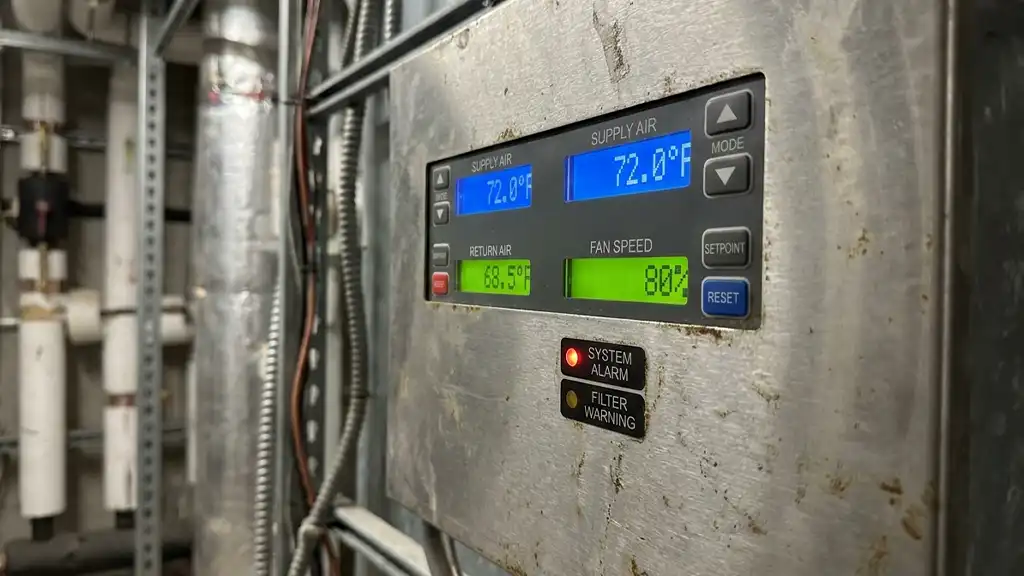
Chiller approach temperature compresses a great deal of heat-transfer information into one number. When trended correctly, it can reveal fouling, flow problems, refrigerant-side issues, sensor drift, and declining capacity before the chiller fails to maintain leaving-water temperature.
Approach is only useful when everyone agrees on the definition. “Chiller approach” may refer to the evaporator or condenser, and the temperature points differ by chiller type and manufacturer. A value should always be labeled with the temperatures used to calculate it.
Two Common Approach Calculations
| Metric | Common calculation concept | What it reflects |
|---|---|---|
| Evaporator approach | Leaving chilled-water temperature compared with saturated evaporating refrigerant temperature | Heat transfer between chilled water and refrigerant in the evaporator |
| Condenser approach | Saturated condensing refrigerant temperature compared with leaving condenser-water temperature | Heat transfer between refrigerant and condenser water |
| Cooling-tower approach | Cold condenser-water temperature compared with outdoor wet-bulb temperature | Tower heat-rejection performance, not the chiller heat exchanger |
Exact definitions and displayed points can vary. Use the chiller documentation and BAS point descriptions before comparing values.
“An approach number without its formula, load, and flow is just a number. The trend becomes useful when we compare the same calculation under comparable conditions,” says one of the lead commercial and industrial chiller service technicians at Choice Mechanical Services in Indianapolis.
Why Approach Increases
A heat exchanger needs a temperature difference to move heat. When a surface becomes fouled or flow distribution deteriorates, a larger temperature difference may be required for the same transfer. Approach can rise.
Potential contributors include:
- Scale, biological growth, sediment, or tube fouling
- Reduced or maldistributed water flow
- Air or noncondensable gases where applicable
- Refrigerant charge or distribution problems
- Oil affecting refrigerant-side heat transfer
- Sensor bias or incorrect saturation-temperature calculation
- Operation at a load or condition unlike the baseline
Condenser Approach and Water Treatment
Water-cooled condenser tubes see open cooling-tower water, making scale, biological material, corrosion products, and suspended solids important. A rising condenser approach under comparable load and flow can support a tube-inspection or cleaning decision.
Do not jump directly to cleaning. Verify condenser-water temperatures, flow, refrigerant pressure, purge operation where relevant, and sensor accuracy. A water-treatment excursion may explain why fouling returned quickly after a prior cleaning.
Evaporator Approach and Chilled-Water Flow
Evaporator approach can change when tubes foul, flow falls, refrigerant distribution changes, or sensors drift. Low flow may also increase chilled-water delta T and trigger minimum-flow concerns.
Confirm pump status, valve position, strainers, differential pressure, flow meter, and the chiller’s required range. The same approach value can mean something different at 30% load than at full load.
Sensor Error Can Mimic Fouling
Approach is often only a few degrees. A small error in leaving-water temperature or refrigerant pressure can produce a large percentage change in the calculated value.
Validate:
- Water-temperature sensors against a calibrated reference
- Sensor insertion, thermal contact, and insulation
- Pressure transducer accuracy and refrigerant selection
- Displayed saturation-temperature conversion
- BAS scaling, units, and timestamp alignment
Replace or recalibrate the faulty measurement before ordering mechanical work based on a false trend.
Build a Comparable Baseline
The best baseline is recorded when the heat exchanger is known to be clean and the chiller is stable. Capture approach with:
- Chiller load or tons
- Chilled- and condenser-water flow
- Entering and leaving water temperatures
- Refrigerant pressures and saturation temperatures
- Compressor power
- Condenser-water and outdoor wet-bulb conditions
- Active compressors, circuits, or stages
Future data can then be filtered into similar load bands. Comparing a lightly loaded spring morning with a peak summer afternoon may create a misleading conclusion.
Example: Rising Condenser Approach After Cleaning
An Indianapolis chiller plant records a low condenser approach immediately after annual tube cleaning. Six weeks later, approach has risen under similar load, and compressor power is higher.
Repeated cleaning would address the deposit but not the rate of return. Investigation reviews tower-water chemistry, conductivity, blowdown, filtration, makeup, basin condition, and tube deposit. Suppose the treatment feed pump has lost output intermittently. Repairing it and restoring the water program protects the cleaning investment.
This representative scenario shows why approach is a maintenance trigger and a systems clue. Choice Mechanical provides commercial chiller optimization for Indianapolis and Central Indiana facilities.
“Cleaning restored the number once. If approach climbs again quickly, we investigate what is rebuilding the resistance,” explains a commercial and industrial chiller service technician at Choice Mechanical Services.
Approach Is Not the Same as Efficiency
Low approach supports effective heat transfer, but chiller efficiency depends on lift, compressor performance, load, staging, water temperatures, flows, auxiliaries, controls, and mechanical condition. A chiller can have acceptable approach and poor kW per ton for another reason.
Use a performance dashboard that keeps approach beside:
- kW per ton or other verified efficiency metric
- Evaporator and condenser water delta T
- Chilled-water setpoint and reset
- Condenser-water temperature
- Compressor lift and loading
- Pump and tower-fan energy
When Approach Warrants Service
Investigate a sustained rise from a validated clean baseline, especially when it accompanies higher power, reduced capacity, high condensing pressure, unstable leaving-water temperature, or repeated alarms. Rapid change may indicate a measurement fault or abrupt flow or refrigerant issue.
Trend-based maintenance should still respect manufacturer limits and scheduled inspection. Do not continue operating equipment outside required conditions simply because approach has not crossed a site-created threshold.
Chiller Approach Temperature FAQs
What is a good chiller approach temperature?
Use the manufacturer’s data and a verified clean baseline at comparable load and flow. No single number applies to every chiller.
Does high condenser approach always mean dirty tubes?
No. Flow, sensors, refrigerant conditions, noncondensables, and operating point can also affect it.
Can approach be negative?
A physically implausible value often points to sensor, pressure, saturation conversion, units, or point-definition problems. Verify the formula and measurements.
Should approach be checked daily?
Automated trending can monitor it continuously, while operator review frequency should reflect criticality and plant practice. Data quality must be maintained.
Can tube cleaning lower approach?
Yes, when water-side fouling is the cause. Cleaning method must suit the tube material and deposit, and water treatment should prevent rapid recurrence.
Turn One Number Into a Defensible Maintenance Decision
Approach temperature becomes meaningful when its definition is clear, sensors are accurate, conditions are comparable, and the result is evaluated with flow, load, and energy. Used that way, it can help time maintenance before lost heat transfer becomes a chiller outage.
For rising approach, high head pressure, lost capacity, or chiller-performance trending, call Choice Mechanical at (317) 885-0200 or request commercial chiller service. Provide recent approach, load, water-temperature, flow, and energy trends if available.