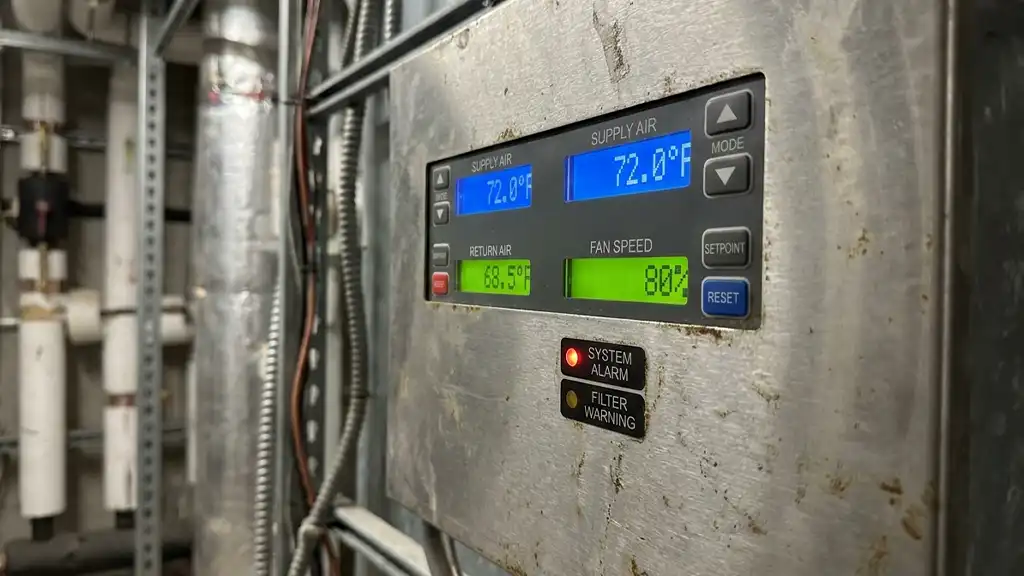
A chilled-water plant is designed to send cold water into the building and receive it warmer after coils absorb heat. When return water comes back only slightly warmer, the plant has low delta T. The immediate temptation is to blame the chiller, but the cause often lives in water flow, control valves, air handlers, bypasses, or the building load.
Low delta T syndrome becomes a plant problem when the reduced temperature difference forces excess flow, limits distribution capacity, or causes additional chillers and pumps to operate before the building’s cooling load justifies them.
Delta T Connects Load, Flow, and Temperature
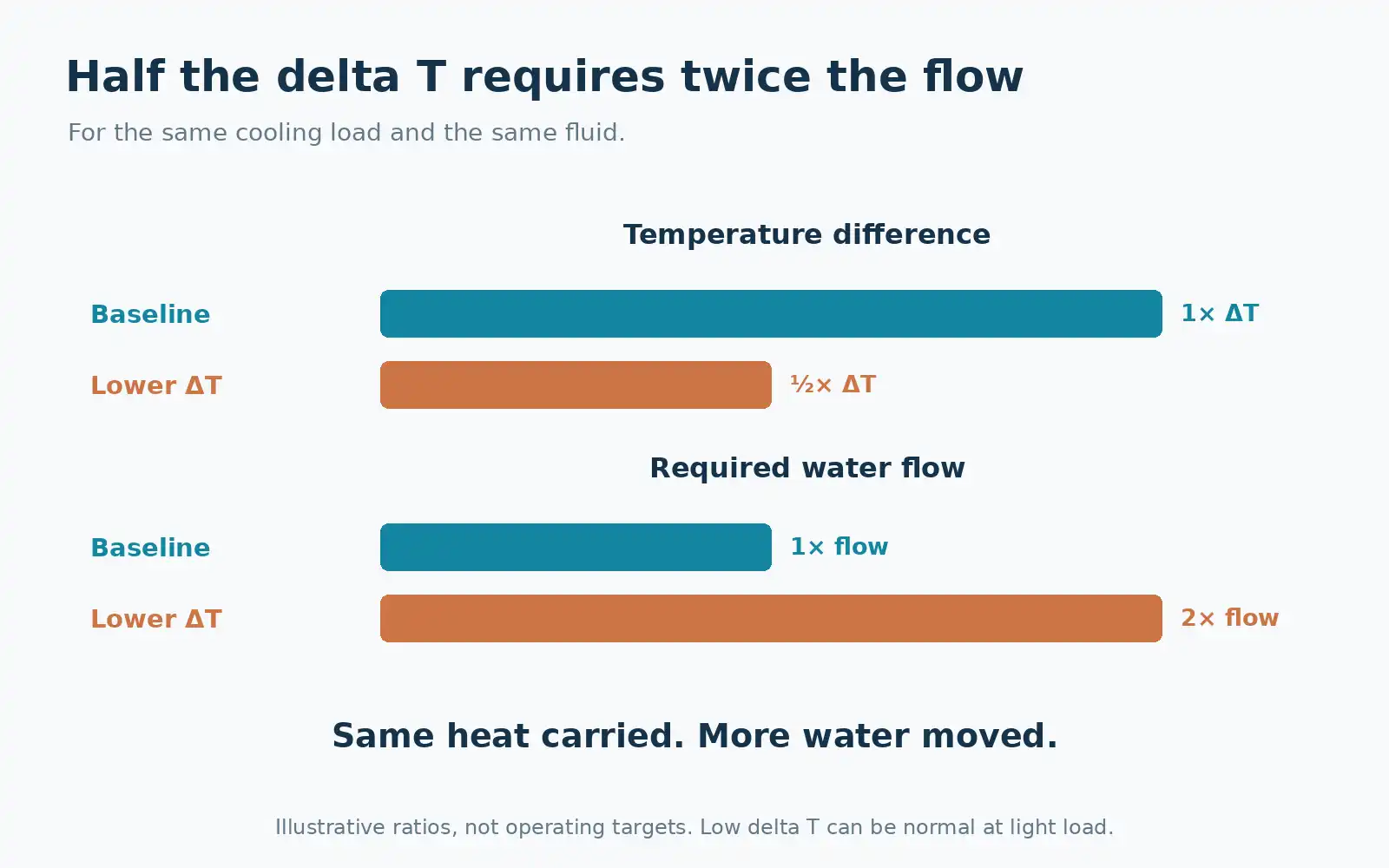
In a water system, heat transfer is related to water flow and the difference between entering and leaving temperature. For a given cooling load, lower delta T requires more flow. For a given flow, lower delta T means the water picked up less heat.
That relationship is simple; diagnosis is not. Low delta T can be normal at low load, temporary during startup, or expected for particular equipment. It becomes “syndrome” when it persists in ways that impair plant operation.
“Low delta T is not one failed part. It is a mismatch between the cooling load, the water sent to the building, and the heat the coils actually transfer into that water.” says one of the lead commercial and industrial chiller techs at Choice Mechanical Services in Indianapolis.
First Decide Where Delta T Is Lost
| Measurement boundary | What it can reveal | Useful comparison |
|---|---|---|
| Entire plant | Overall supply and return temperature difference | Plant load, total flow, enabled chillers, bypass flow |
| Building or branch | Which area returns unusually cold water | Branch flow, schedule, served loads, differential pressure |
| Air-handling unit coil | Whether a coil transfers expected heat | Valve position, airflow, entering air, water flow, coil condition |
| Chiller evaporator | Chiller-side water temperature difference | Evaporator flow, load, sensor accuracy, manufacturer limits |
Plant averages can conceal a few poor performers. Measuring or trending branches and major coils helps identify where cold return water enters the system.
Cause 1: Control Valves Leak or Never Close
A two-way valve that passes water when commanded closed can send chilled water through an unloaded coil. The water returns cold because little heat was available to absorb. Across many coils, valve leakage can create substantial excess flow.
Verify command, signal, actuator movement, stem position, differential pressure, and actual temperature response. A controller display of zero percent does not prove tight shutoff.
Cause 2: Differential Pressure Is Higher Than the System Needs
Excess pump pressure pushes more water through open valves and can worsen leakage through closed valves. Control valves lose authority and operate near the bottom of their stroke, making stable control difficult.
A differential-pressure reset strategy can reduce pump speed when terminal valves are mostly closed, provided remote coils receive enough pressure and chiller minimum-flow requirements are protected.
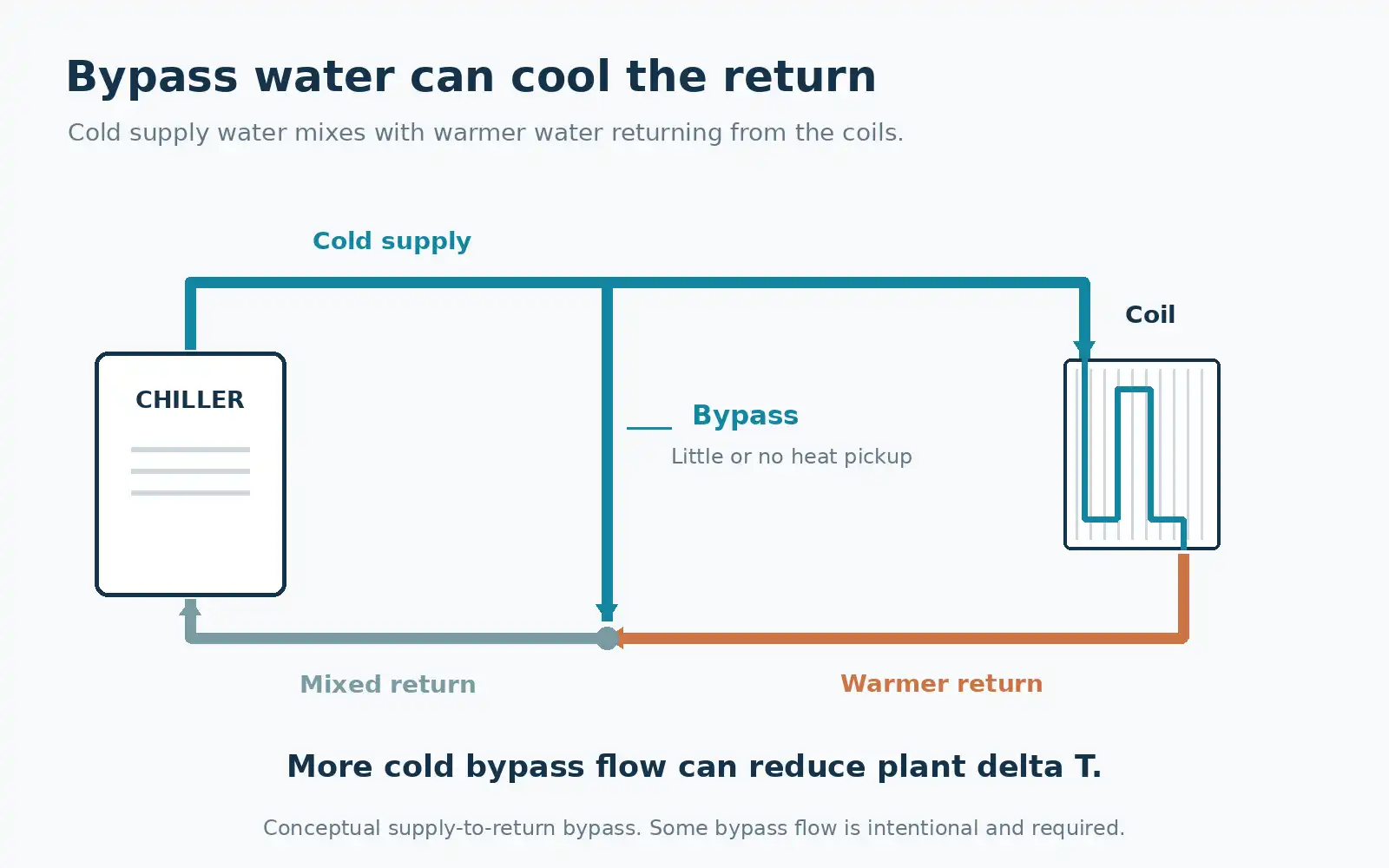
Cause 3: Three-Way Valves or Bypasses Return Cold Water
Three-way valves may bypass water around coils to maintain constant flow. Decoupler flow, minimum-flow bypasses, open manual bypasses, and incorrectly piped bridges can also mix supply water into return.
Some bypass is intentional. The question is whether its direction and quantity match the plant’s current operating mode. Temperature and flow on both sides of the connection help show what is occurring.
Cause 4: The Coil Cannot Transfer Heat
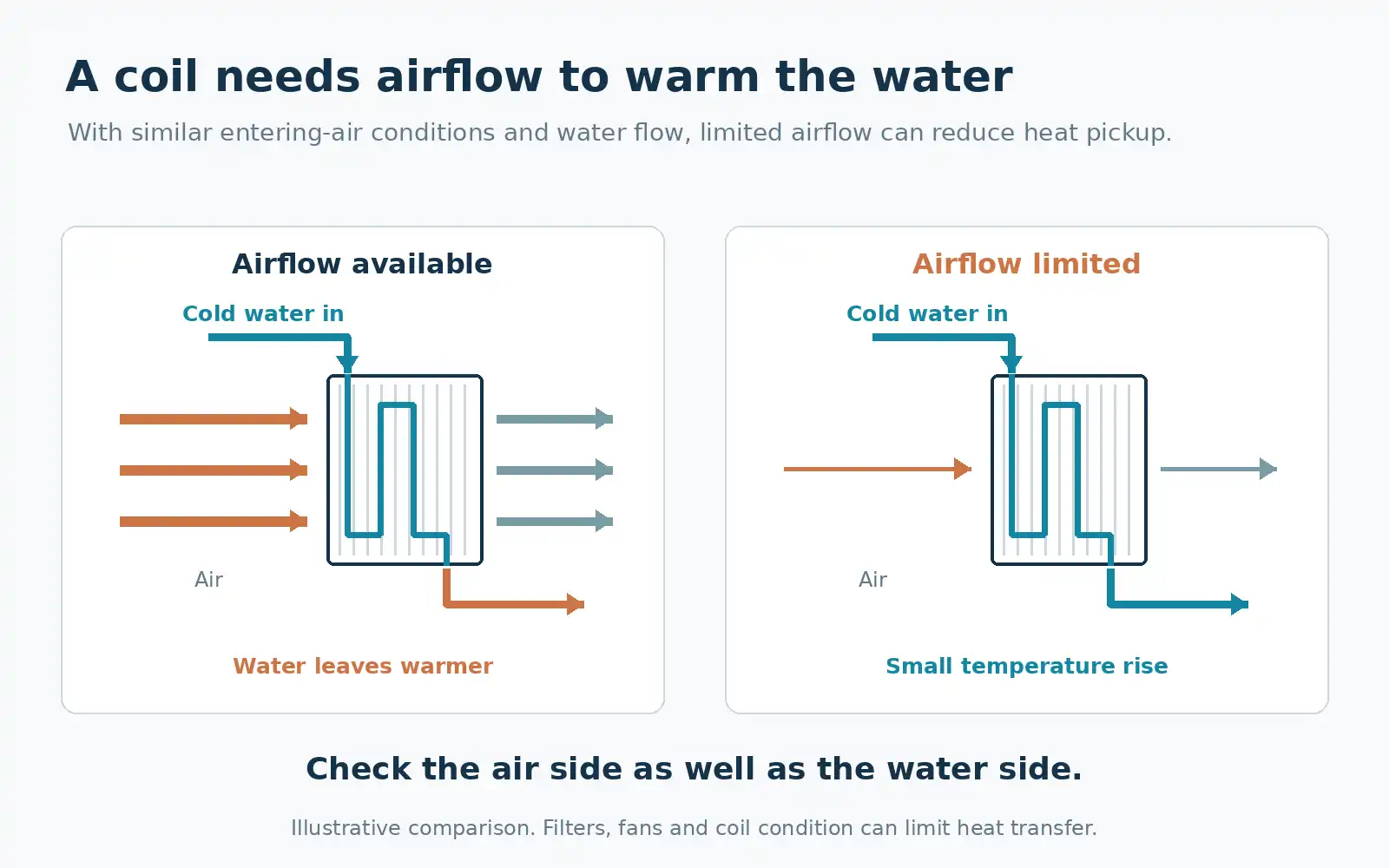
A dirty air filter, failed fan, fouled coil, blocked airflow, low entering-air load, air-bound circuit, plugged strainer, or poor water distribution can reduce coil heat transfer. Increasing water flow through a coil with little air load often lowers delta T further.
Evaluate the air side and water side together: airflow, entering and leaving air conditions, entering and leaving water conditions, valve position, flow, and cleanliness.
Cause 5: Sensor Error Creates an Artificial Problem
A small bias between supply and return sensors can materially distort a small temperature difference. Sensors should be calibrated, properly immersed, insulated from ambient effects, and located where water is well mixed.
Confirm trend timestamps too. Comparing a current supply temperature with a delayed or filtered return value can create a false delta T during rapid load changes.
Why Low Delta T Can Force Another Chiller On
A distribution system can move only a finite volume of water. If each gallon carries less heat because delta T is low, the system reaches its flow limit before the cooling load reaches design. Operators may enable another chiller or pump to increase flow even though the active chiller still has compressor capacity.
The additional equipment adds auxiliary energy and may leave multiple chillers lightly loaded. Plant efficiency and reliability can decline while the root cause remains in the distribution system.
“If the plant runs out of flow before it runs out of tons, another chiller treats the symptom. The real capacity is trapped in the missing temperature difference.” says one of the lead commercial and industrial chiller techs at Choice Mechanical Services in Indianapolis.
Example: Office Coils With Excess Pressure
An Indianapolis office building shows low plant delta T every afternoon. Chillers maintain supply temperature, but secondary pumps run near full speed and an additional chiller starts during moderate weather.
Trend review groups air handlers by branch. Several nearby coils return unusually cold water and their valves operate below 15% open. Field measurement finds excessive differential pressure near the plant and leaking control valves. The correction combines valve repair, pressure reset, remote-point verification, and rebalancing.
This representative example shows why coil and plant controls must be addressed together. Choice Mechanical provides commercial chiller energy-efficiency optimization and supports office-building mechanical systems across Central Indiana.
A Low Delta T Investigation Sequence
- Validate plant supply and return sensors.
- Trend load, total flow, delta T, pump speed, and enabled chillers.
- Separate low-load periods from flow-limited periods.
- Measure branches to locate cold return water.
- Rank coils by delta T, flow, valve position, and load.
- Inspect control valves, bypasses, strainers, coils, and airflow.
- Review differential-pressure sensor location and reset logic.
- Correct mechanical faults before rewriting plant staging.
- Verify minimum chiller and equipment flows.
- Compare post-correction plant flow, delta T, and kW per ton.
Low Delta T FAQs
What should chilled-water delta T be?
Use the system design, equipment data, load, and operating mode. There is no universal target for every chilled-water plant.
Does low delta T mean the return water is too cold?
Often, but the supply temperature may also be warmer than intended or sensors may be inaccurate. Evaluate both temperatures and flow.
Can low building load cause low delta T?
Yes. At light load, coils may transfer little heat. The concern is whether controls reduce flow and equipment operation appropriately.
Will reducing pump speed fix low delta T?
It may improve valve authority and reduce excess flow, but leaking valves, bypasses, fouled coils, airflow problems, and sensor errors may still require correction.
Can low delta T damage a chiller?
The condition primarily affects capacity and efficiency, but improper flow and unstable operation can contribute to chiller alarms or operating problems. Manufacturer flow limits must be maintained.
Recover Capacity by Restoring Heat Transfer
Low delta T is solved by finding where chilled water returns without absorbing its intended share of heat. The strongest repair plan combines calibrated sensors, branch analysis, coil performance, valve control, pumping, bypass flow, and plant sequencing.
For a chilled-water plant that reaches flow limit early, starts extra chillers, or shows persistent low return temperature, call Choice Mechanical at (317) 885-0200 or request commercial chiller service. Bring plant trends, flow data, sequences, and a list of the largest air handlers if available.